
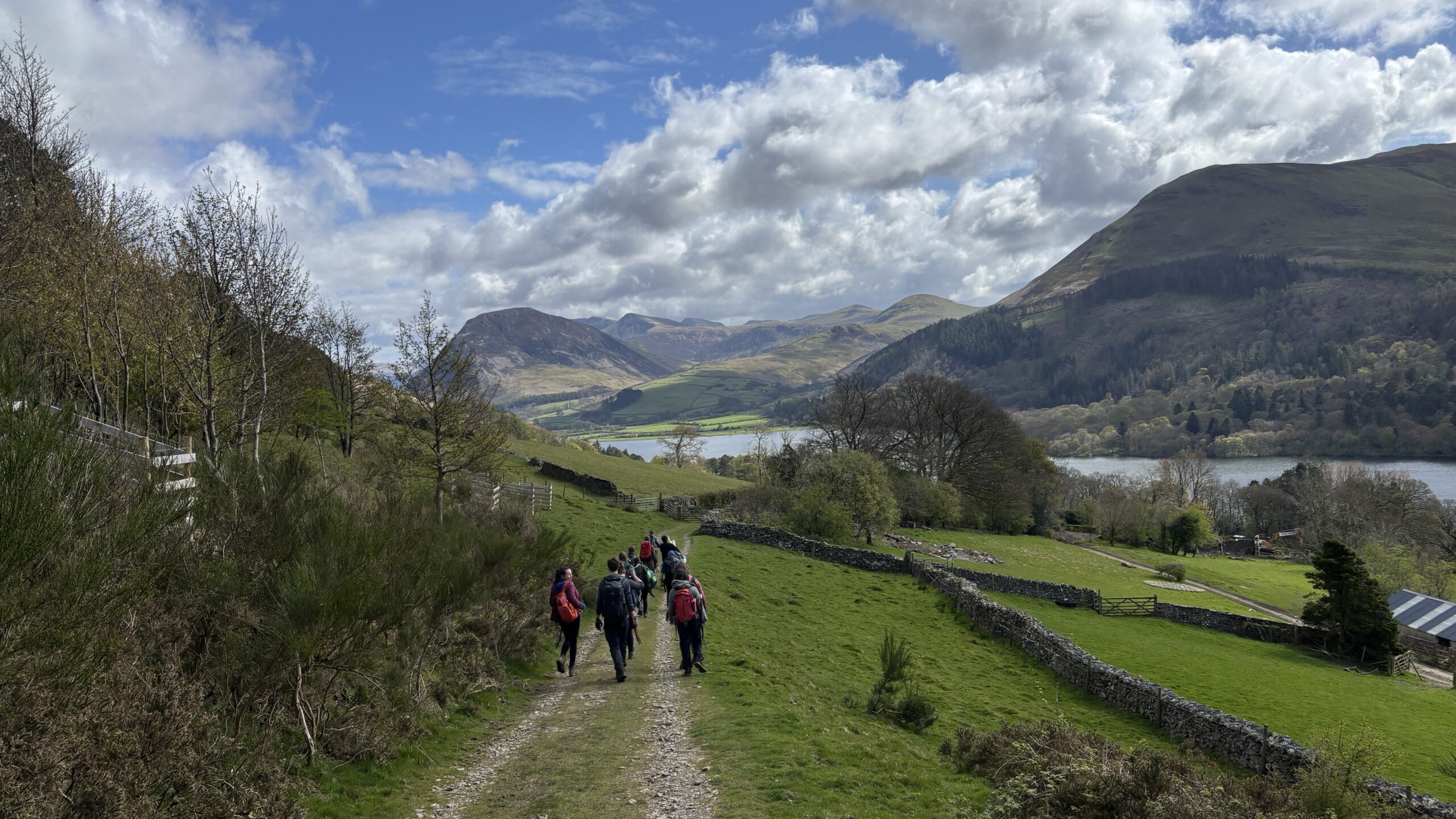
Young Rangers create natural flood defenses along river
Trees, hedges and dams
Across three different locations in West Cumbria, (Loweswater, Mosser and Askhill Farm), nine of the Lake District National Park Authority Young Rangers teamed up with West Cumbria Rivers Trust to create natural flood defenses using different techniques. These included tree planting and woodland maintenance, beat up hedge planting, and leaky dam creation.
Mosser
At Mosser, tree planting and young woodland maintenance took place to replace some trees in a failed hedge and scatter more throughout the wooded area. Approximately 50 trees were planted to cool catchment water as it runs down into Loweswater by installing shade and overhanging branches. This is important for spawning fish in the lake and increasing biodiversity, and it will take around 20 years for this project to have full impact.
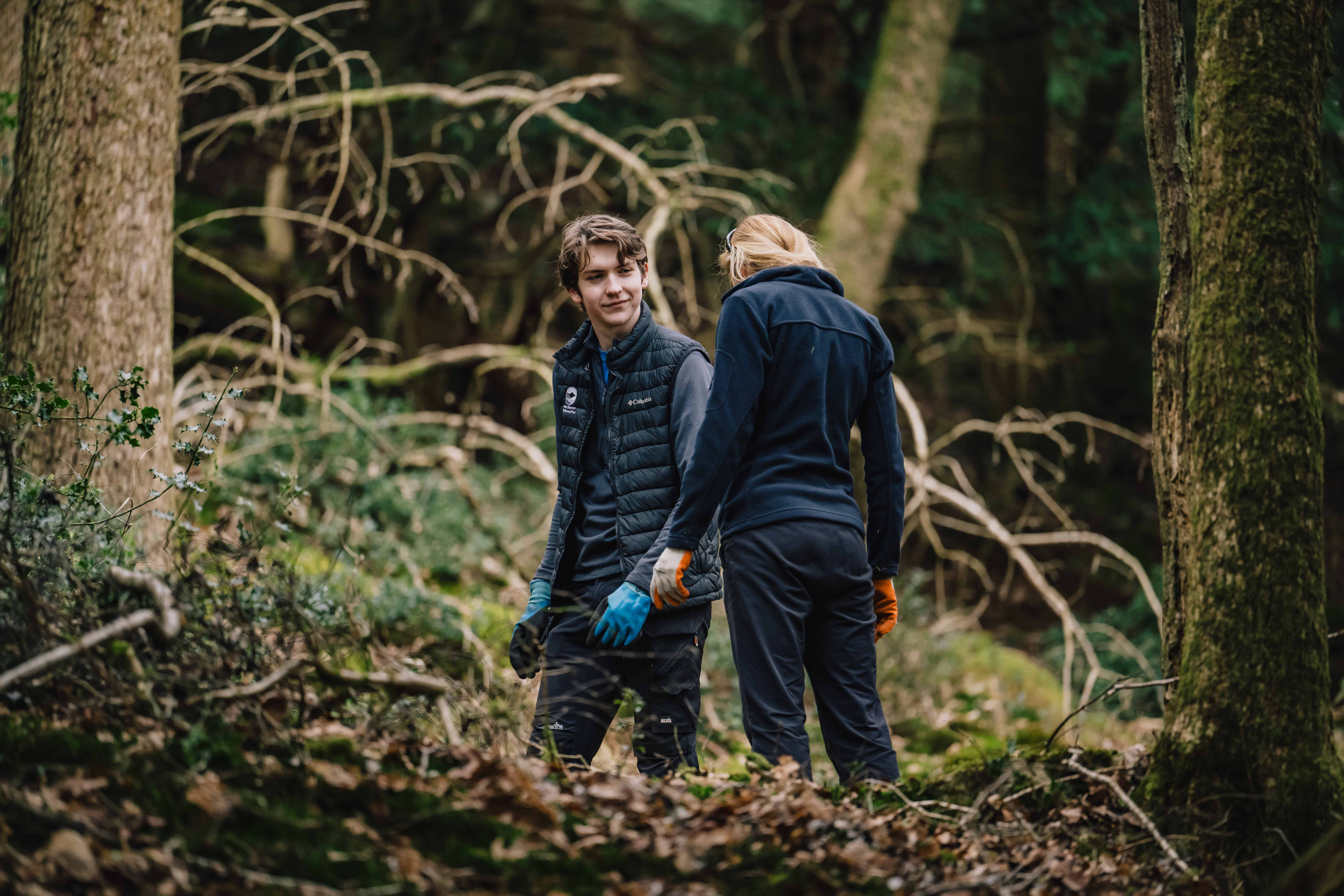
Maintenance included removing old tree guards, replacing broken stakes, and putting in extra stakes where needed. The Young Rangers also attended to trees that had blown over or were at risk of blowing over, and they used loppers to remove excess branches and hand saws to coppice where necessary. Finally, the Young Rangers added in additional hedging plants.
Askhill Farm
At Askill Farm, the Young Rangers took part in some beat up hedge planting. This involves filling in gaps in the hedge on a field boundary and removing old guards, vegetation, and replacing failed trees. This creates an important biodiversity corridor along the boundary of a field and strengthens the field’s natural flood defenses.
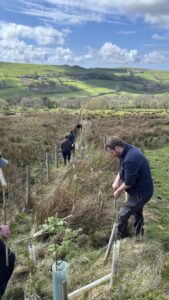
Dub Beck near Loweswater
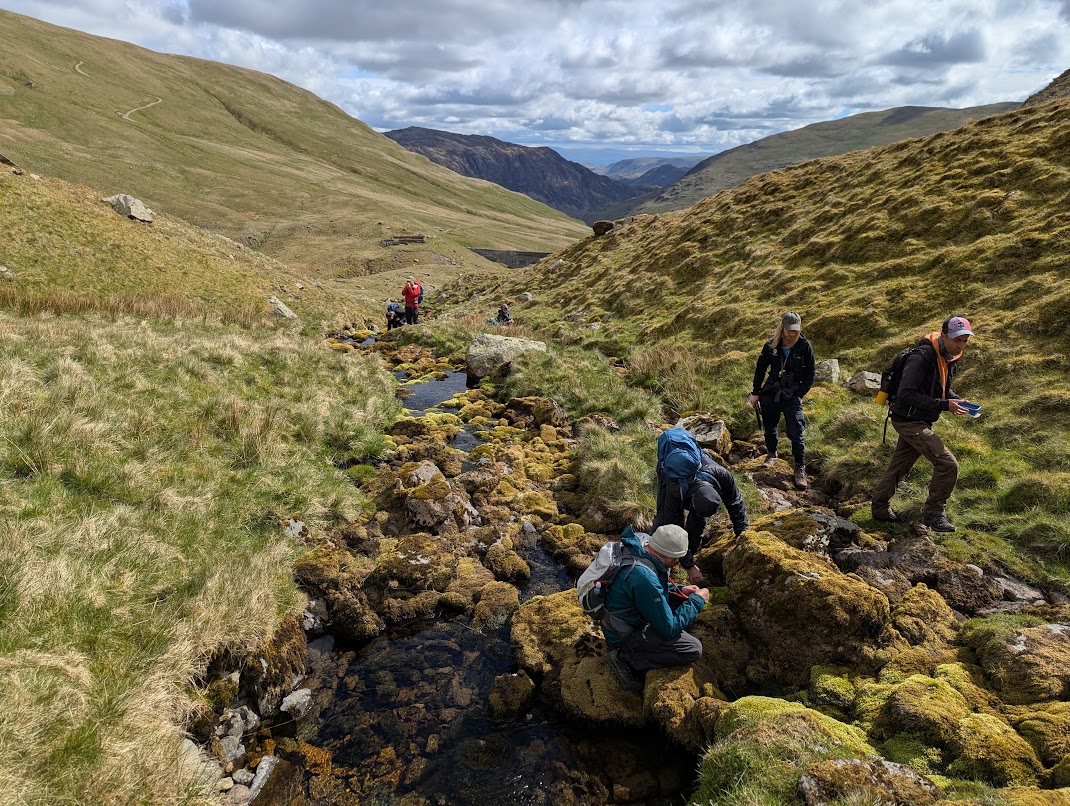
Finally, the Young Rangers visited a re-meandered beck which West Cumbria Rivers Trust have been working on. The Trust have been using Ground Penetrating radar to identify the ancient meandering water course, and redirect the water flow and re-establish shallow, slow-moving water for fish spawning. With this improved habitat, some success in fish populations has been already monitored.
The Young Rangers cut and processed willow sourced from the site into small pegs and installed them to create living leaky dams along the beck which leads into Loweswater. The Young Rangers also used loppers to cut willow pegs and planted them adjacent to the beck. The willow pegs were pushed into the soft ground as far as possible or aided by lump hammers where necessary.
Final reflections
Tom Malone, Project Officer at West Cumbria Rivers Trust, said:
“Sunday’s Young Ranger day went really well. The group did a fantastic job, and I estimated we got between 300-400 trees in the ground as well as maintaining a small woodland. The new trees included approximately 250 hedging plants, and 100-150 willow whips we processed and pushed into the ground.
There were great questions coming from the Young Rangers and some good practical skills on show. Big thanks to them and the adult leaders who are incredibly helpful to be there on the day.”
More details on the area they were working: River Cocker — West Cumbria Rivers Trust
More info on Natural Flood Management: Natural Flood Management (NFM) — West Cumbria Rivers Trust
The Lake District National Park Authority Young Rangers take part in a range of activities, from tree planting to footpath maintenance, at sites across the National Park. The sessions are supported by dedicated and knowledgeable adult volunteer leaders. To find out more about the Young Rangers and the work they do, visit the Young rangers webpage.