
Growing up on an upland Lake District fell farm
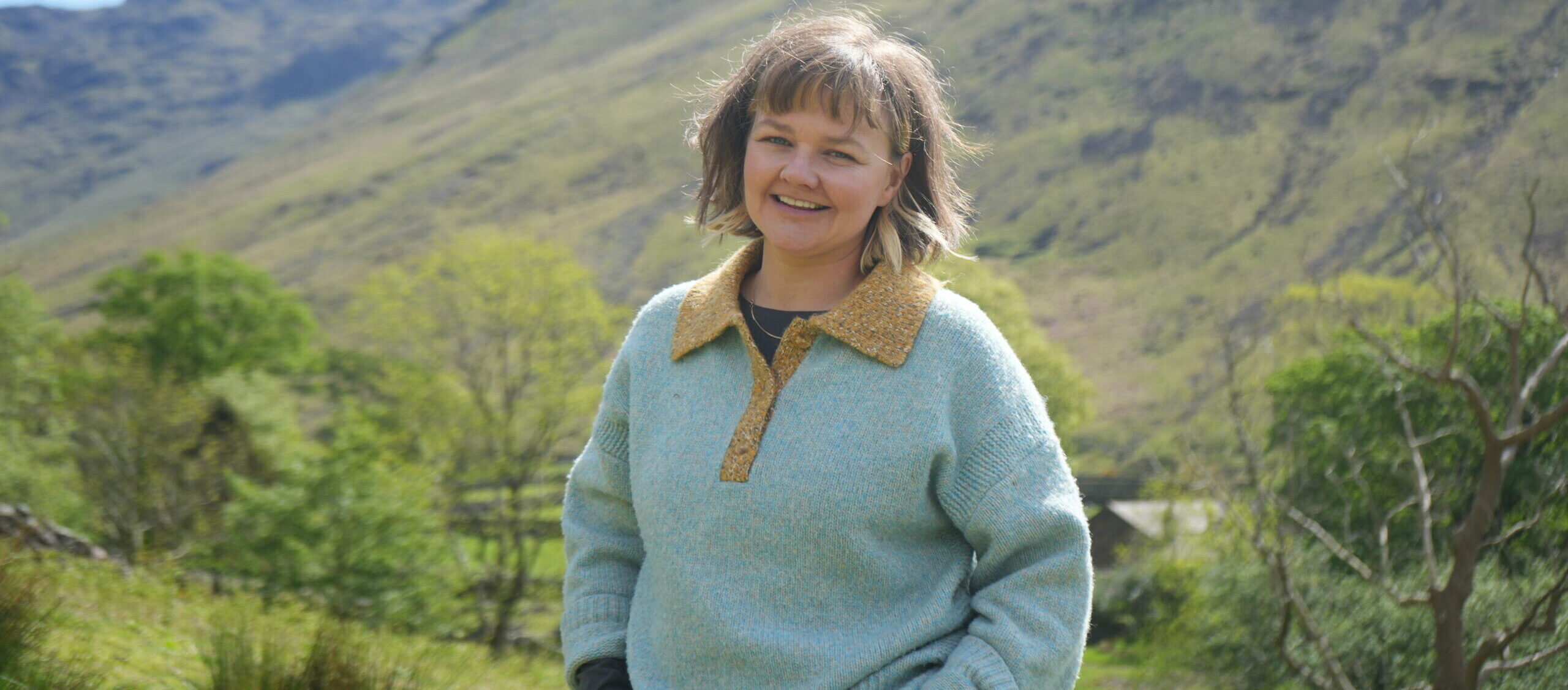
Meet Helen Race
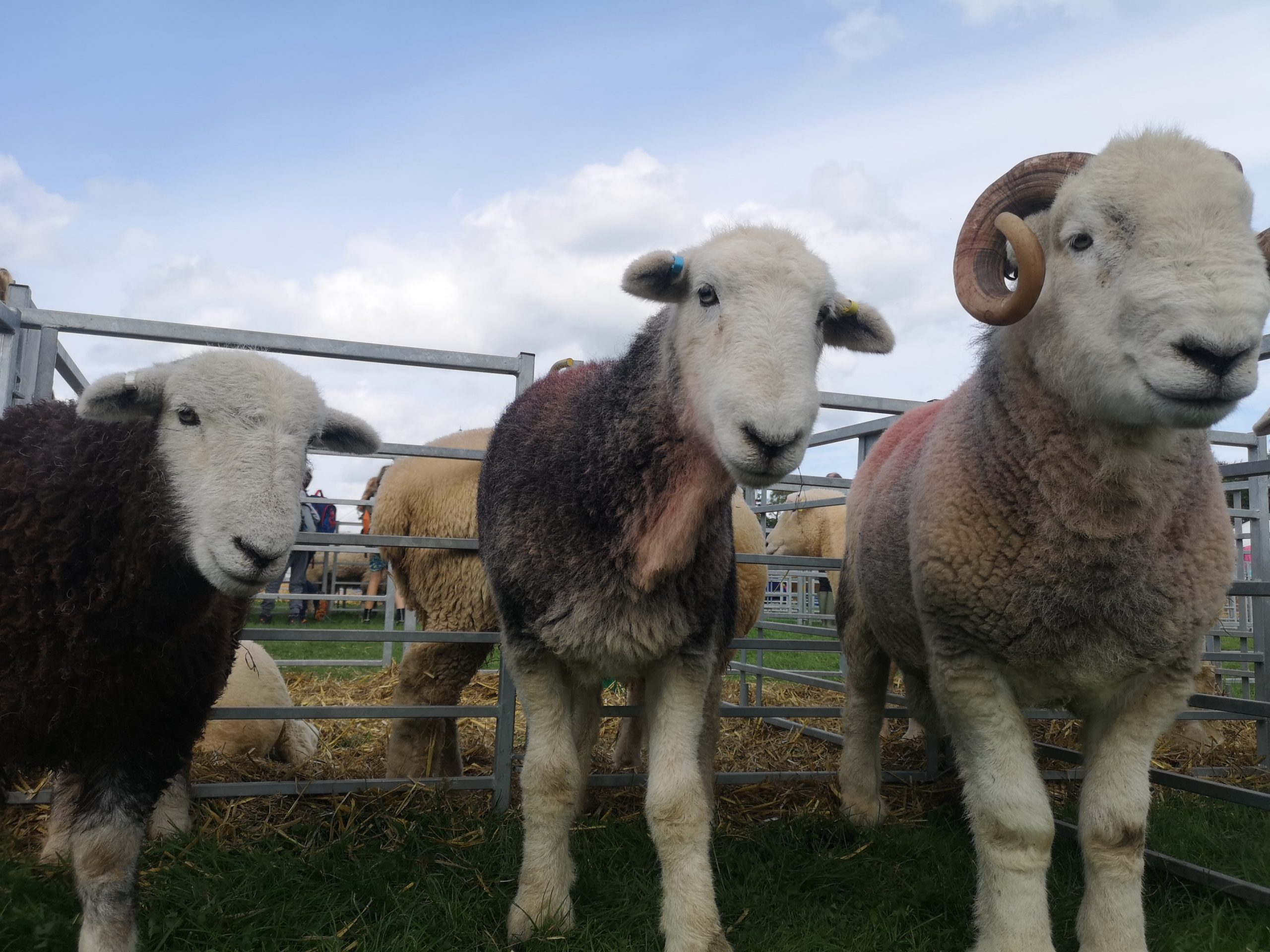
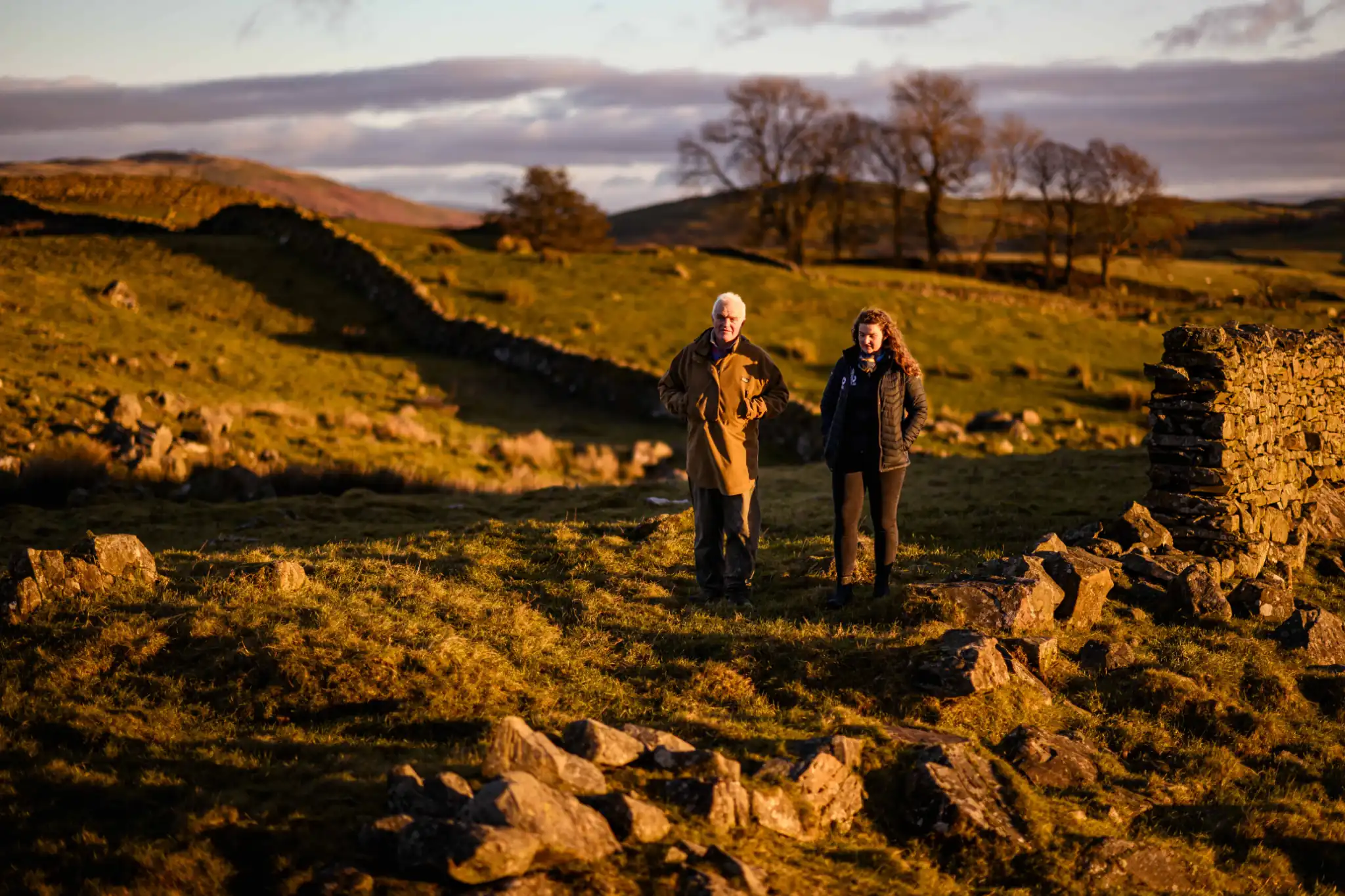
Helen Race comes from an upland fell farming family at Burnthwaite in the Wasdale valley, in the west of the Lake District, where her family breed native Herdwick sheep, cross white ewes and Galloway cattle. After spending time travelling on the other side of the world after university, Helen returned to the family farm five years later after realising the rare value of fell farming as a way of life.
Celebrating fell farming in the 75th year of the National Park
The way our landscapes are worked and enjoyed in the Lake District has evolved in the last seven decades, including on our farms. But with a delicate balance to strike between preserving cultural heritage, nurturing the environment and supporting a thriving visitor economy, farmers in the Lake District face a unique set of challenges as they work with communities to keep the upland farming tradition alive.
The farming heritage of the Lake District is integral to its cultural identity. To mark the National Park’s 75th anniversary, Helen talked to us about the realities and rewards of farming in the Lake District today. She also discussed her work for the West Lakeland Community Interest Company, which is helping to secure the sustainable future of fell farming for the next generation.
These conversations highlight how multi–generational farming continues to shape the Lake District’s World Heritage site, with long standing farming traditions retained alongside evolving approaches that contribute to its distinctive character and enduring sense of place. This heritage and the landscape it has created are at the core of the Lake District’s “Outstanding Universal Value”.
Are you a Lake District farmer or landowner?
Farming in Protected Landscapes is an initiative that provides funding to farmers and landowners in the Lake District to support projects that deliver on four key themes: people, place, climate and nature. Find out about potential projects and how to apply here.
Could you tell me about your family and your farm?
We’re originally from a lowland farm in the North East, and we moved to the Lake District about 23 years ago. We didn’t have any connection to the Lake District prior to moving here – it was just me, my mum and my dad. I do have a brother, but he stayed in the North East because he was at college at the time.
Now we farm around 500 hectares at Burnthwaite, and the fell is most of that, at around 450 hectares. The farm has a bed and breakfast, and that was a new venture as well.
The building itself is really old. It used to be a few farms which have been put together as one. There were once lots of little farming families within the valleys and as time has gone on there are a lot less.
Do you feel like you’ve grown to have a unique connection with the Lake District?
I was 11 at the time we moved, and it wasn’t the easiest transition for me. We were living in a village before but it was near a town, and it wasn’t that far from Newcastle, so it wasn’t as rural as Burnthwaite!
I would help out on the farm as much as I could, but I wasn’t necessarily interested in farming as a teenager; I just wanted to be out with my friends. I went to university in Carlisle and I was into more creative ventures then – I did Fine Art and then I did a course called Performance Festivals and Events, which I loved.
But then I went travelling for five years, and while I was away I took a step back and appreciated things differently. I had a few jobs on farms and in hospitality in Australia, and when I came home I was like wow, this place is special. I realised I want to understand Lake District farming more. So, I started working full-time for my dad on the farm and I just loved it.
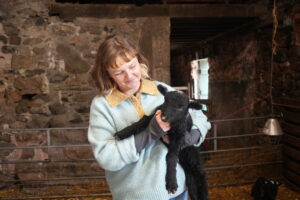
With an artistic background, do you feel like you grew to have an appreciation of the cultural side of the Lake District—its heritage, and what’s special about that?
Yeah absolutely. I think it’s taken me a while to figure out my place within the landscape. For a while I was farming full-time and I really liked it and then I had to make a decision on whether that was the direction I wanted to go. But I don’t think I had the passion enough for the farming to be a full-time farmer. It’s a real lifestyle choice.
But I knew I wanted to be involved, and it’s that heritage and culture that that I see as really important. And it’s partly the farming community that built the Lake District—it’s just a really special place.
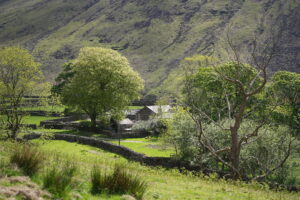
Could you tell me more about your involvement in the farming community now and what it is you do?
I still do work for my dad when he needs the help. Sometimes it’s a few days a week, sometimes it’s none. It’s really just a phone call the week before. I still do the gathers, and have a sheepdog that lives at the farm, and I help out with lambing time and other key jobs—dipping, dosing and shearing and so on.
Mainly, I work with the West Lakeland Community Interest Company. We were set up in 2021 up as a cluster group for farmers to help navigate the bureaucratic landscape. The goalposts for farmers have changed a lot recently and the schemes haven’t really settled down. We’ve got about 40 farms within the group – from Ennerdale over Kinniside, over Stockdale, Moor, Nether Wasdale and Wasdale Head including my dad’s farm. And then we’ve got some surrounding farms, in Gosforth and the Calderbridge area, that make up the edges of the map of the CIC.
One of the things that I understand is how hard it is to work on a farm and then also figure out all the other administrative stuff. When you’re a farmer and that’s all you want to do, you now you have to sit in an office and figure out what schemes are out, how you get into them, what’s my carbon footprint, all these things – it can feel like a minefield.
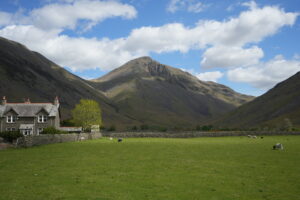
What sort of work has the West Cumbria CIC enabled?
We did a lot of soil sampling on farms, habitat mapping, and everybody’s carbon footprint. We’ve done a lot of workshops in the past through Farming in Protected Landscapes (FiPL). Our first four years were funded by FiPL and we did a lot of workshops helping get our farmers to a certain level of thinking in terms of the environmental actions they could be doing, or what they may already be doing.
We’ve just finished a NERF project which ran for two years, which is the Natural Environment Investment Readiness Fund, getting land ready for private investing. We were kind of focused on how we can hold water back in the uplands through pond creation, leaky dams, whether tree planting would help with that, re-wetting areas, peat restoration, things like that.
And through that, we built a great working relationship with the Rivers Trust, the Lake District National Park, and the National Trust. We have built ourselves up to be able to work with all these different organisations and have their input and knowledge, and we can also share our input with them. I think we’re at a really great place from where we started.
Why is the work you do important for the future of the Lake District?
I think it’s a crucial time for farming. There are a lot of people who have opinions of what should happen in the Lake District, and a lot of people are perhaps working towards a similar goal but not always working together.
One of the goals of the CIC was that we would bring farmers together to work as a group because we’re stronger in numbers.
We could potentially lose these farms due to government subsidies or schemes not being as accessible for upland farms. The farms in the uplands are not as viable, but they’ve become dependent on these schemes, and when they’re not accessible it’s difficult to know what to do.
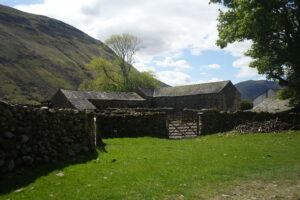
Are there any specific skills that you’ve learnt as a farmer in the Lake District that might be important to pass on to the next generation?
I think it’s all really important and I’ve learned so much.
The uncle of two shepherds I gather with used to farm Burnthwaite where we farm, so they have a knowledge of past times and what the farm used to look like, which I just think is fascinating. I also learned how to dry-stone wall from a neighbouring farmer.
I recently helped with the Shepherd’s Guide, doing all the smit marks and ear marks that each farm has. Finding out the history of that, and why we have it, is so interesting.
I love my job because of that. It’s steeped in history and knowledge that nobody really knows about unless you’re inside this community. It’s a whole way of life, a whole community, a whole culture that’s at risk of being lost.
Up here you have to have a really deep connection with the landscape and nature to farm these fells, because you just have to—there’s no other way. You can’t fight against it, you’re living in it.
There’s just so much knowledge there. I worry that it will be lost. I think we really need to capture it all.
Do you see the next generation in the Lake District continuing to farm?
I think there are definitely younger generations coming through and wanting to farm, and I think the younger generations are having to think about things slightly differently. Farming up here has always been connected to nature, and it has in a sense always been nature-friendly farming.
But I think these terms— such as nature-friendly and regeneration farming – the newer generation understand them a bit more, and that’s not the fault of the older generation. A lot of them grew up with headage payments, and government schemes looked slightly different, so they were told to farm in a certain way.
The younger generation are coming through with a slightly different point of view, but they’re definitely there and they definitely want to farm.
I would like for the future to look more collaborative, so organisations working with farmers, and farmers’ point of views and opinions being listened to more.
To find out more about how farming works in the Lake District National Park, visit our farming pages.