
Behind-the-scenes of an ancient farmstead restoration
Far Houses: recording and consolidating a rare ruinous farmstead
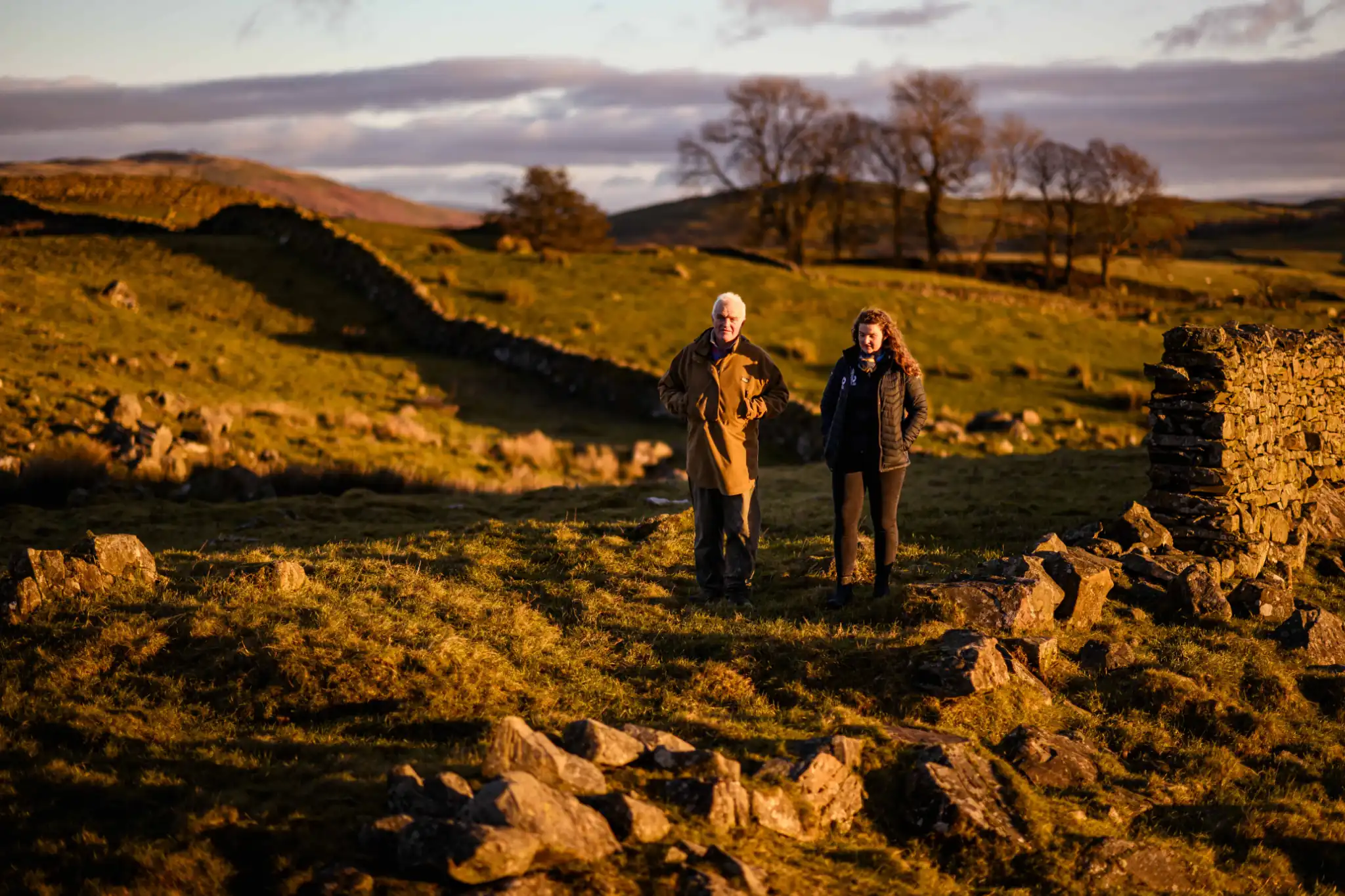
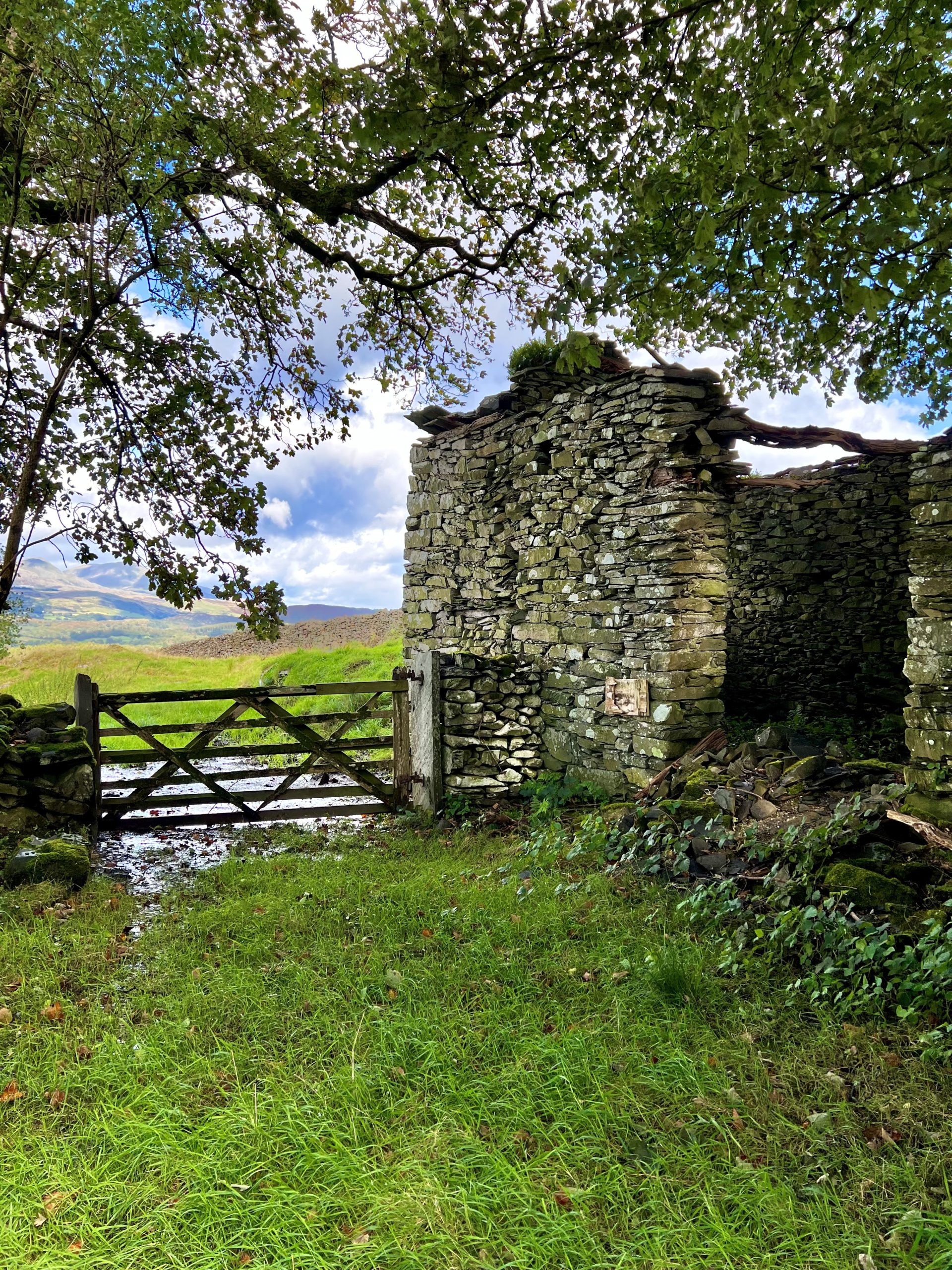
Conservation work has recently been completed at Far Houses, a rare example of a farmstead on the edge of Duddon Mosses, near Grizebeck, to secure the remains of its buildings and make the site safer for visitors.
Although now largely in ruins, Far Houses is an important and unusual archaeological site. Its surviving buildings provide evidence of how rural settlements developed and how people lived and worked in this part of the Lake District National Park and World Heritage Site over several centuries.
Far Houses lies within the upper Duddon Estuary, within a landscape that includes Duddon Mosses, a 311-hectare Special Area of Conservation managed by Natural England as a National Nature Reserve.
Why is the site historically important?
What makes Far Houses particularly interesting is that it appears to have developed from a group of relatively small structures into a more typical farmstead. Some of the earliest buildings may date from the 16th century, or possibly earlier.
Such survivals are rare. Many buildings of this cottage-sized scale have been demolished or substantially altered, making it difficult to understand their original form and function. At Far Houses, enough of the original structures remain to allow their development to be investigated.
There are also some potentially unusual architectural features. One building has characteristics resembling a ‘bastle’, a type of fortified farmhouse not generally thought to occur in this region. A similar example was recently recorded at Underbarrow near Kendal, colloquially known as Henry’s Castle, and received Grade II* listing.
Another building may originally have been a ‘laith house’, a combined dwelling and agricultural building. These are also not commonly found in the area.
These features make Far Houses an important part of the historic environment and provide opportunities to learn more about the development of farming and settlement in the Duddon Valley.
What restoration work did the farmstead require?
The farmhouse was abandoned in the mid-20th century and following the reduced use of the farm buildings over time, the site had become increasingly dangerous, with several sections at risk of collapse. A public footpath runs through the middle of the site, so work was needed to make the ruins safe while retaining as much of their historic fabric as possible.
Natural England commissioned a programme of consolidation involving a conservation-accredited architect and structural engineer, an archaeologist and the Lake District National Park’s Historic Environment team.
The buildings were surveyed and recorded before vegetation and loose material were removed. Further investigation and recording then informed a scheme of conservation works.
Some masonry had to be carefully taken down to remove dangerous sections and make the site maintainable. However, large areas of original stonework have been retained. Doorways and window openings have also been preserved wherever possible, helping visitors understand the layout and potential function of the buildings.
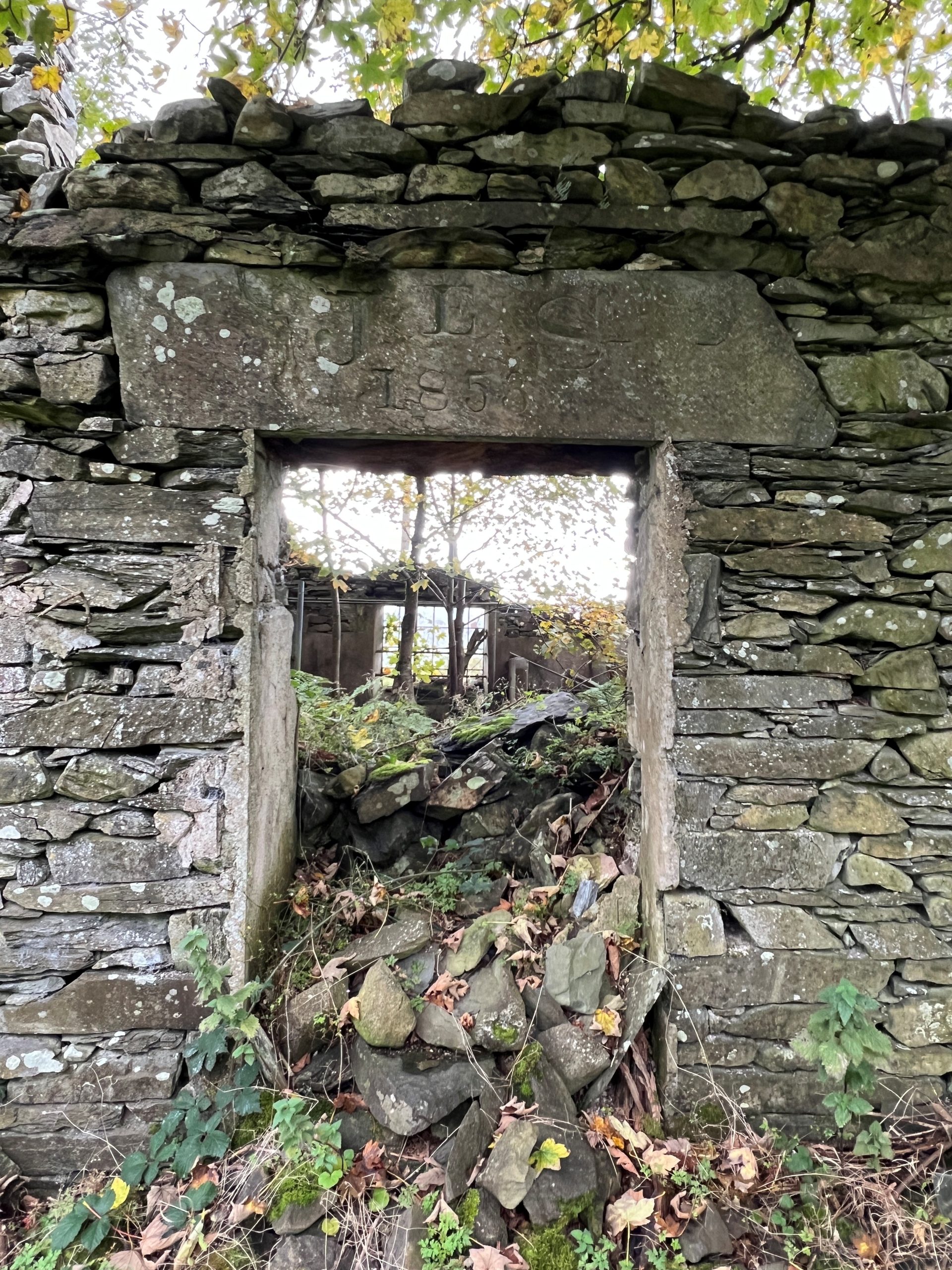
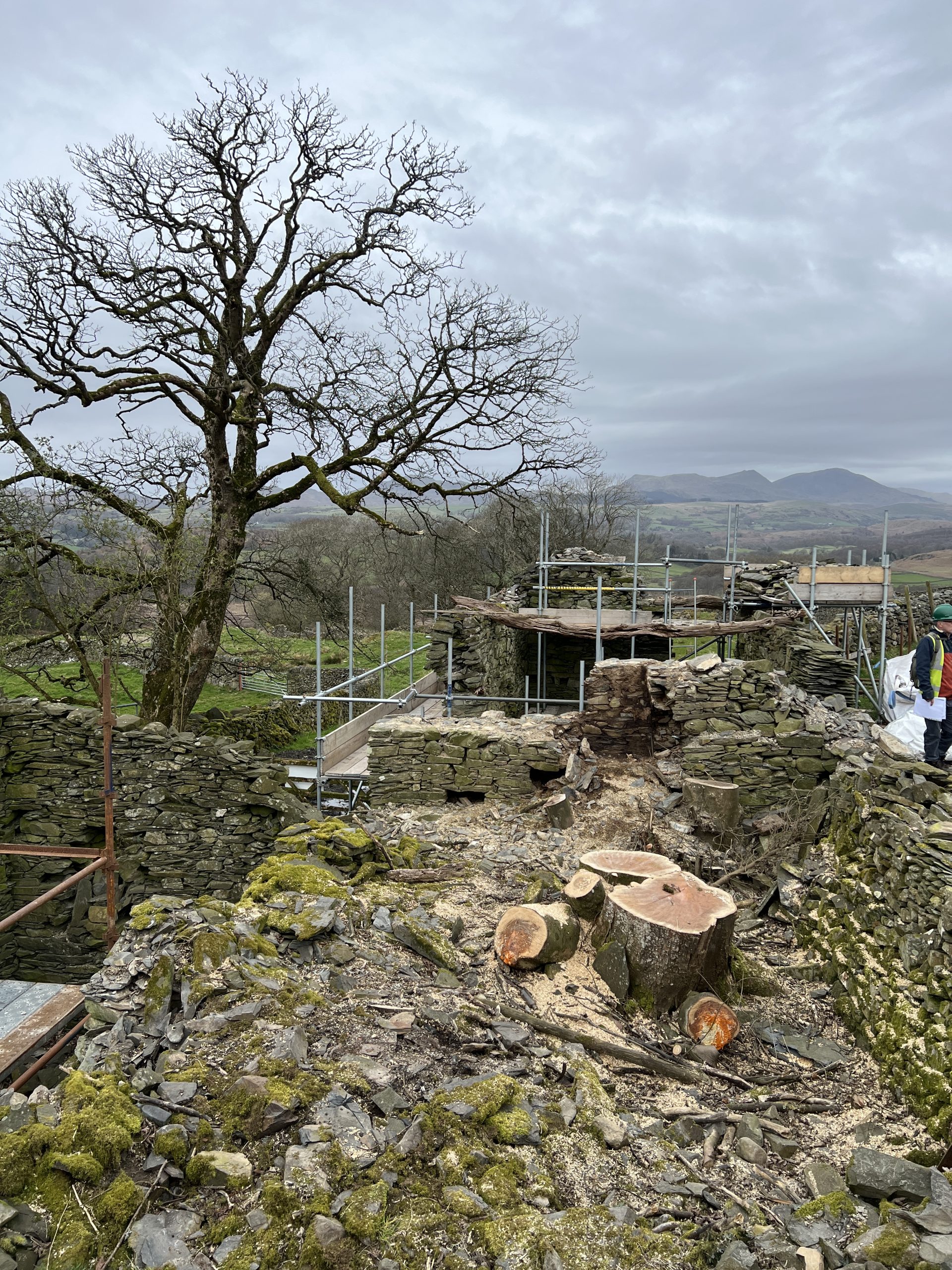
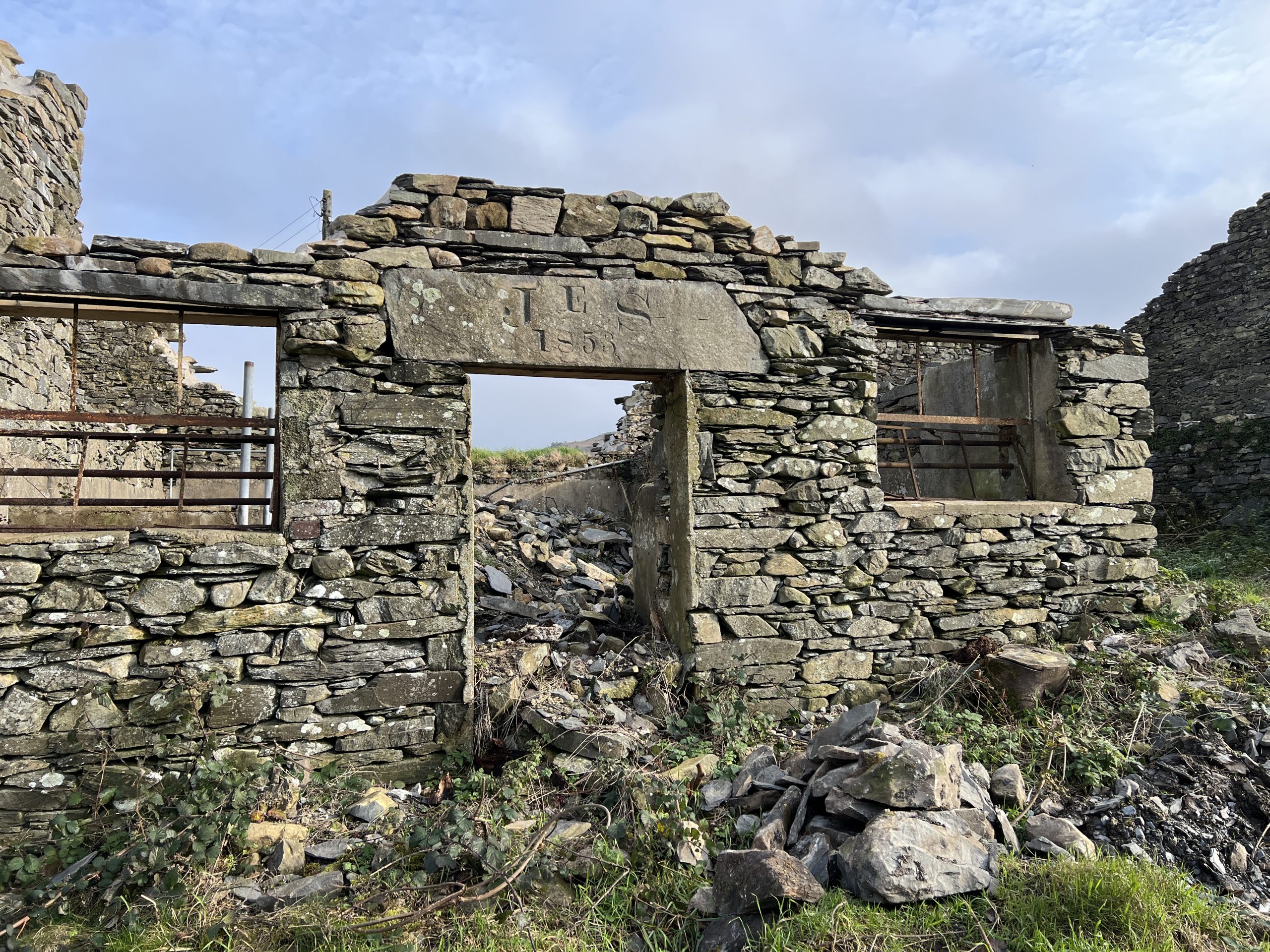
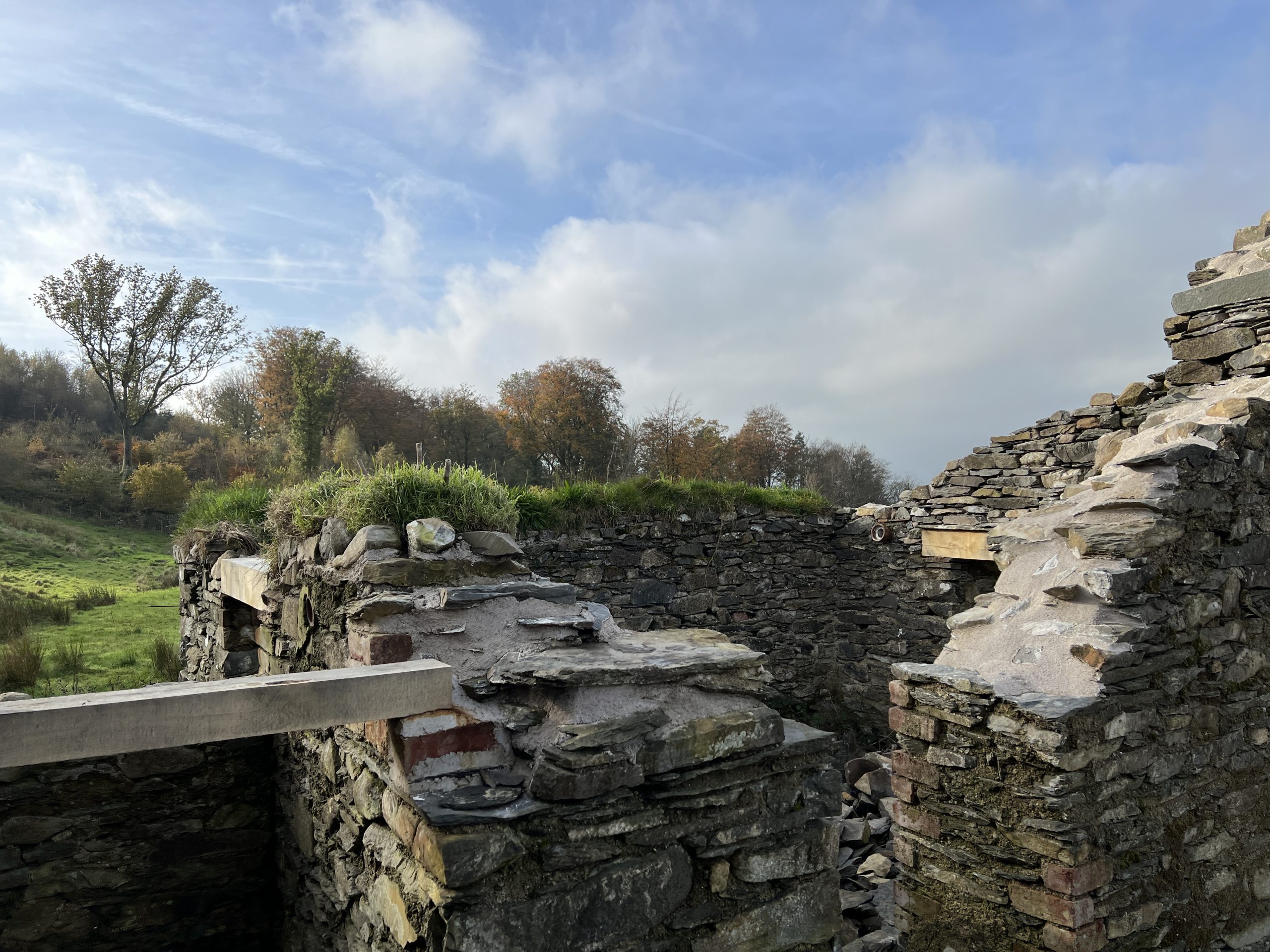
The remaining walls have been protected using hard and soft capping. This involves applying mortar to the tops of walls, and then either leaving them exposed or covering them with turf to protect the masonry from further deterioration.
The National Park’s Rights of Way team arranged a temporary footpath closure and diversion to allow the work to take place safely.
The conservation work is now complete, and plans are being developed for interpretation to explain the history and significance of the site.
How can visitors enjoy exploring the farmstead?
Visitors are encouraged to explore Far Houses, although the ground needs time to recover following the works. Later next spring, when conditions are drier, and the interpretation is hopefully in place, is the recommended time to visit! If you do decide to visit, be sensitive to this historic place by leaving no trace behind you.
The best approach is along the historic walled lane from Well Wood. This ancient route, in places barely wide enough for a pack pony, features substantial stone walls and links the site with another former farmstead.
Far Houses offers an opportunity to see how historic farm buildings developed and to appreciate the archaeological evidence that survives in the landscape. Its conservation through the efforts of Natural England, the National Park and expert consultants, means that this potentially rare example of the Lake District’s built heritage can continue to be studied and enjoyed by future generations.