
The hands that shape the fells
I remember the first time I met some of the fix the fells rangers.
I was in Borrowdale, on one of those mizzling days in the Lake District when the darkness never really conquers the light, but lingers, clinging on to the world. The mist was opaque that day, lacking that transparency that can make a wander through the low fells on such a day feel like wandering through a fairytale, waiting for a wisp, a sprite or fairy to appear and disappear from behind a boulder or ancient yew.
I was struggling with a lock, the key so well worn, you had to get it in just the right spot before you were rewarded with a satisfying clunk telling you the door had finally locked. And bang there they were – four figures teleported out the mist, or so it felt. They suddenly appeared walking across the yard. All in a line.
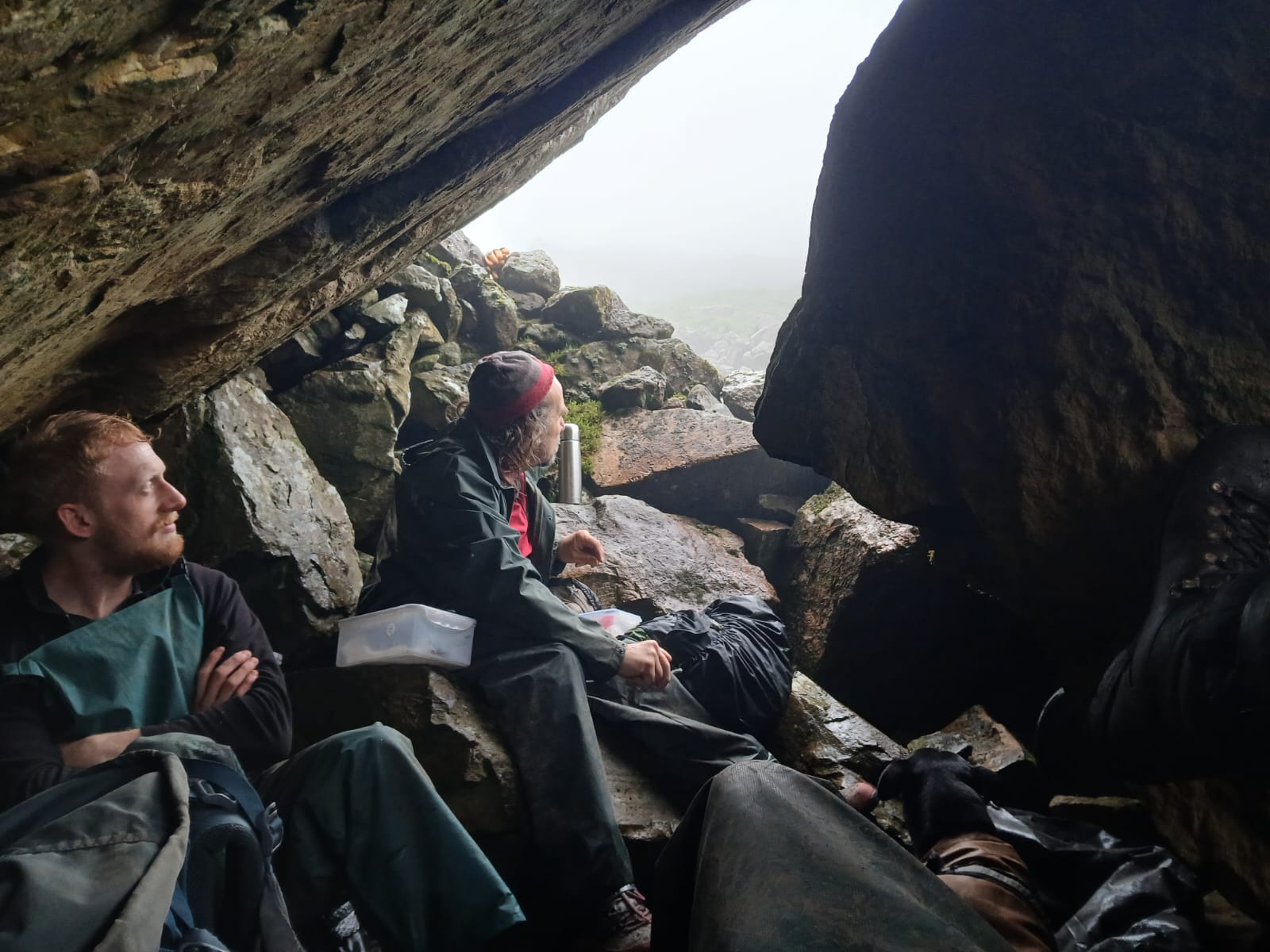
They were drenched. Not the kind of I’ve been caught out in a downpour without an umbrella drenched. But the kind of drenched where water has seeped into every pore, that no matter what level of waterproofing you are wearing you are soaked to the skin.
Sensing this was probably not the right time for introductions, rather they would be wanting a hot brew and dry clothes, I hurriedly unlocked the door I had spent the last ten minutes painstakingly locking. They filed past me into the barn, with not a word but a smile as they passed me. Their faces in the main obscured by mud.
As I sat in my car negotiating with it to start – having come from drier climes it sometimes struggled in the more temperate climate of Borrowdale – I observed all manner of objects being unpacked from their old Landy. Shovels, what looked like a pickaxe to me (I later learned was a mattock) & huge metal bars. All of which had one thing in common – they looked extremely heavy.
I headed home that evening knowing that I needed to find out more about these this group of individuals who disappeared up the fell long before any of us arrived and got back long after we locked up for the day and headed home.
And so started what I did not doubt would be a lifelong association with fix the fells.
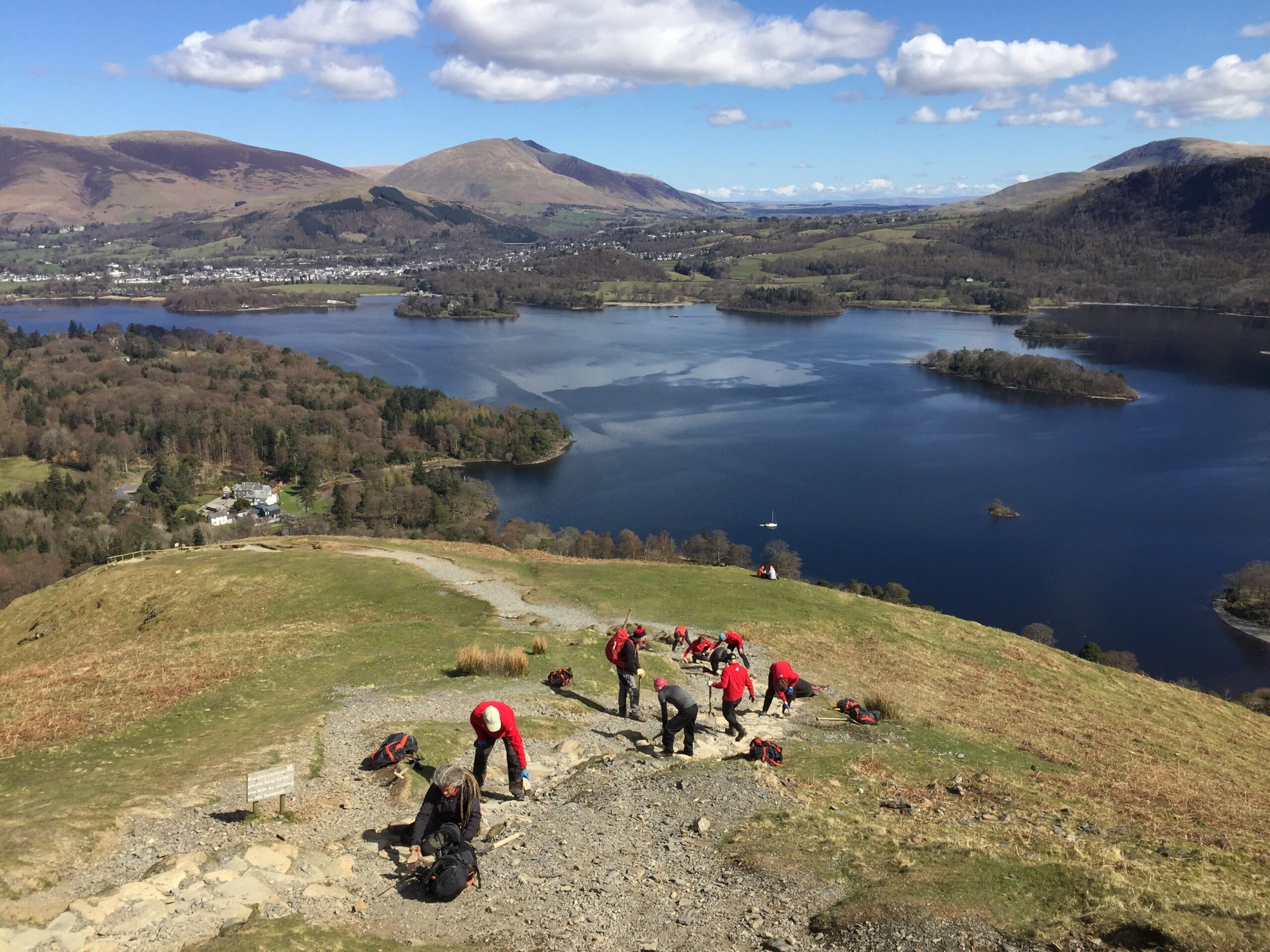
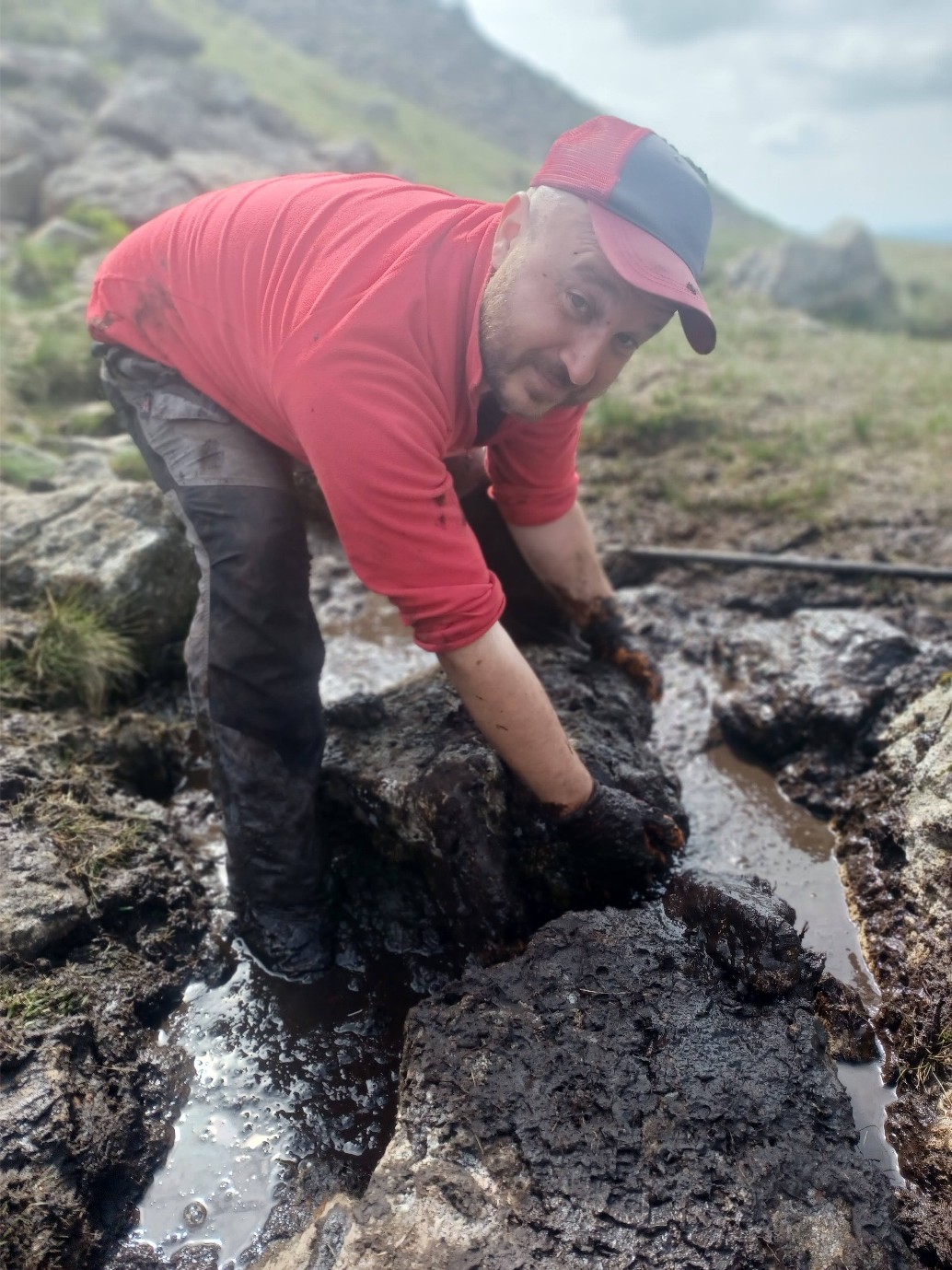
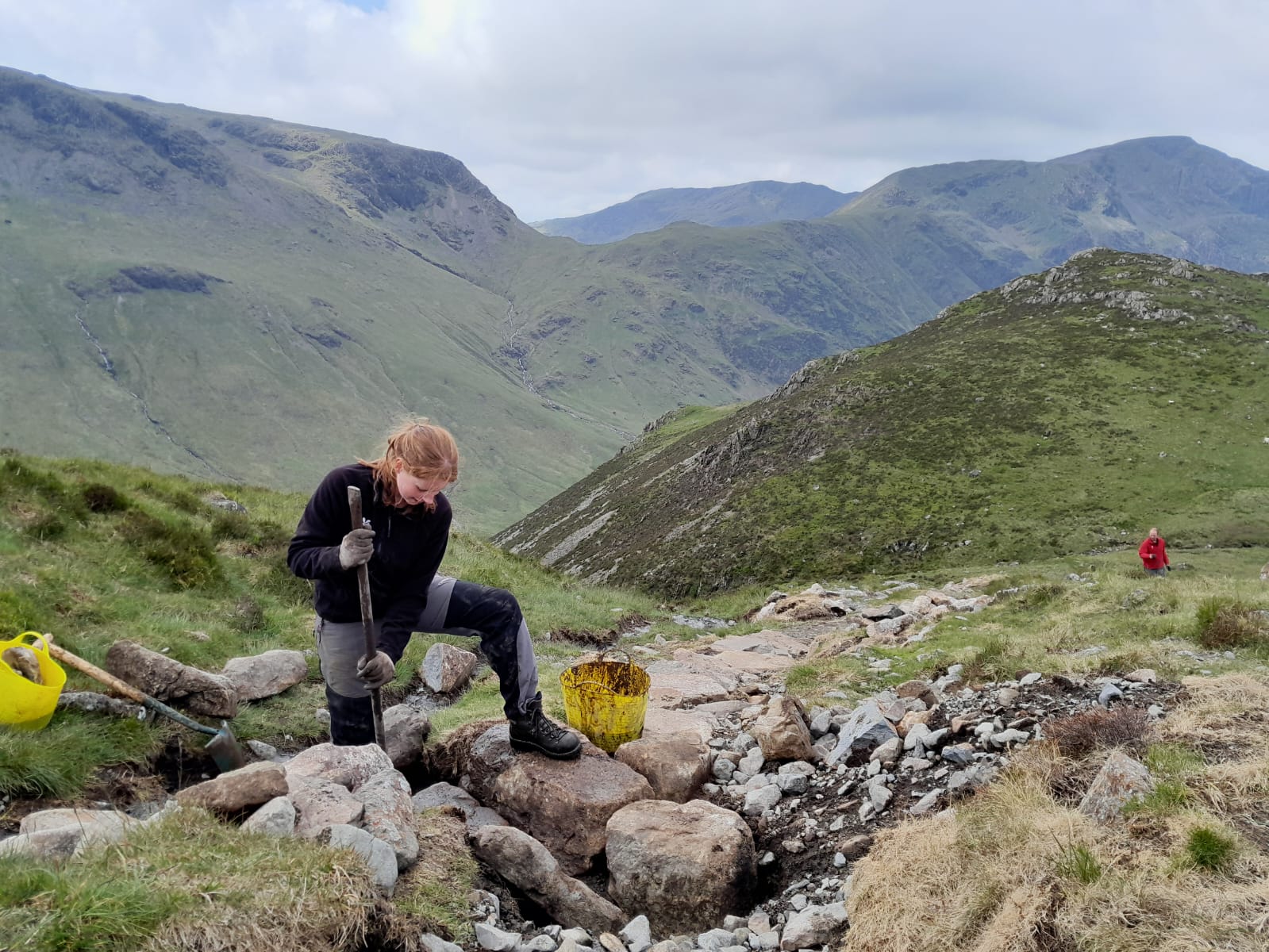
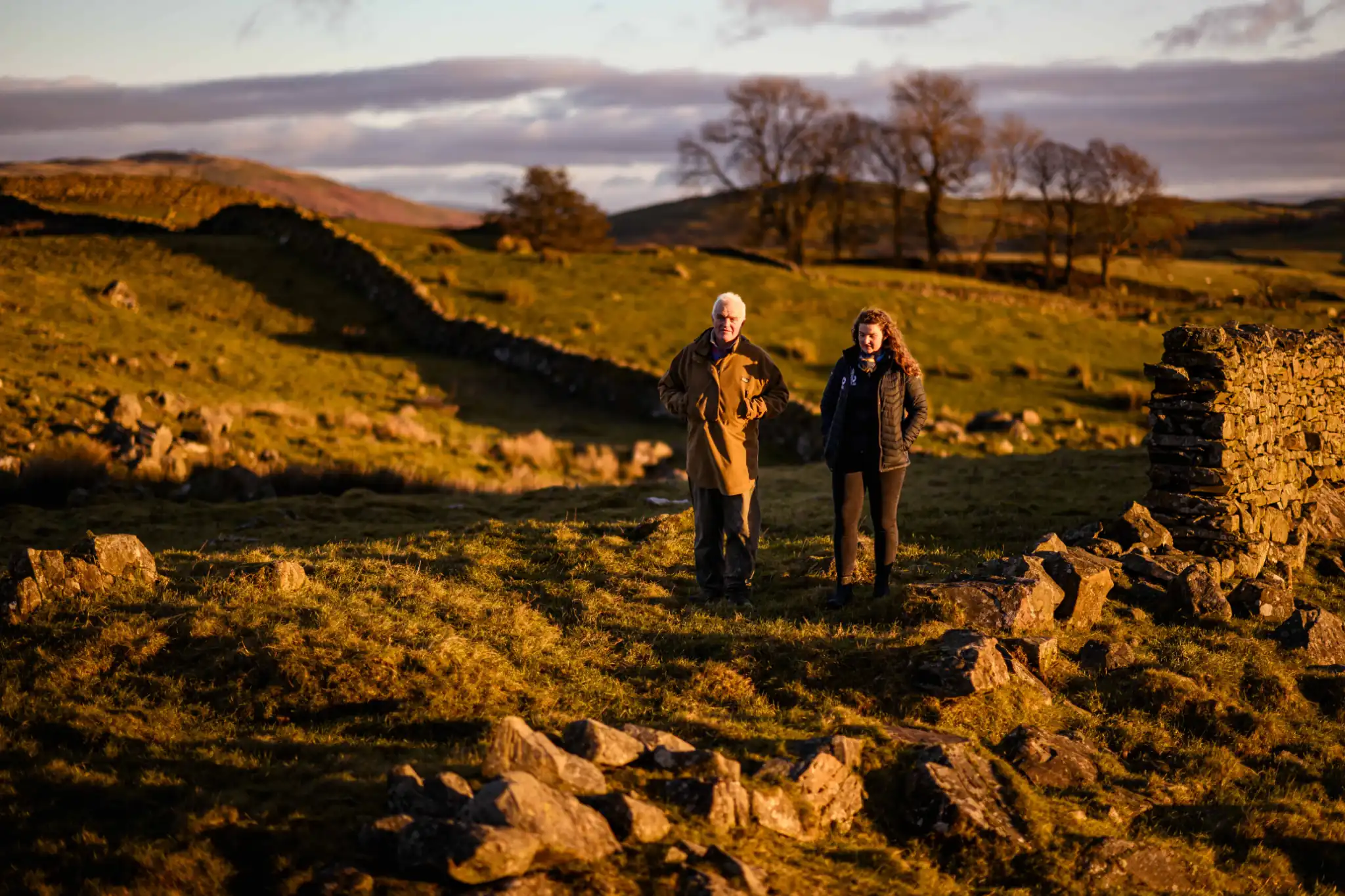
Since then, I have spent many hours up on the fells observing and capturing images of their work. I use the word work, but this is not work, it is art. Art created by skills honed over centuries, refined through packhorse routes and corpse roads long before rangers even existed.
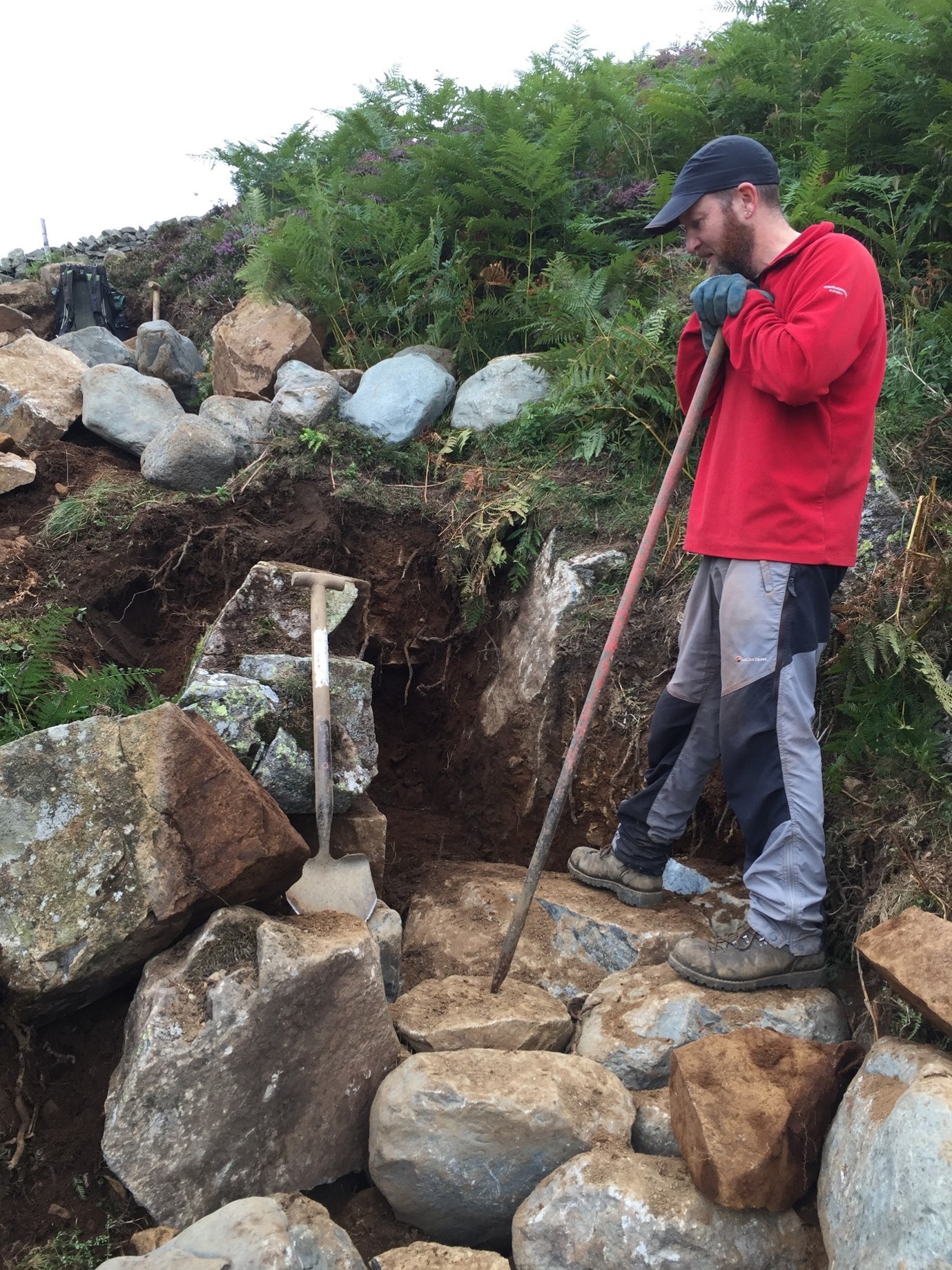
These are not path workers, they are craftspeople, highly trained and highly skilled. Watching them stone pitch paths is to watch an artist quietly creating a masterpiece which then disappears into the landscape into which it is built. Such is the care and skill that is put into it; it becomes invisible, as if it has existed always. Each and every stone is handpicked for its shape, its weight, its feel both in hand and under foot. Each path is unique in terms of its gradient, drainage and geology. No cut and paste option exists up here in the high fells. A bespoke creation is required for that particular stretch of path in front of them – and that is what they create. This very craft is one of the reasons that the Lake District became a world heritage site, not only for its wondrous landscapes alone but for centuries of humankind shaping this land. These Fix the Fells rangers are that story, still being written.
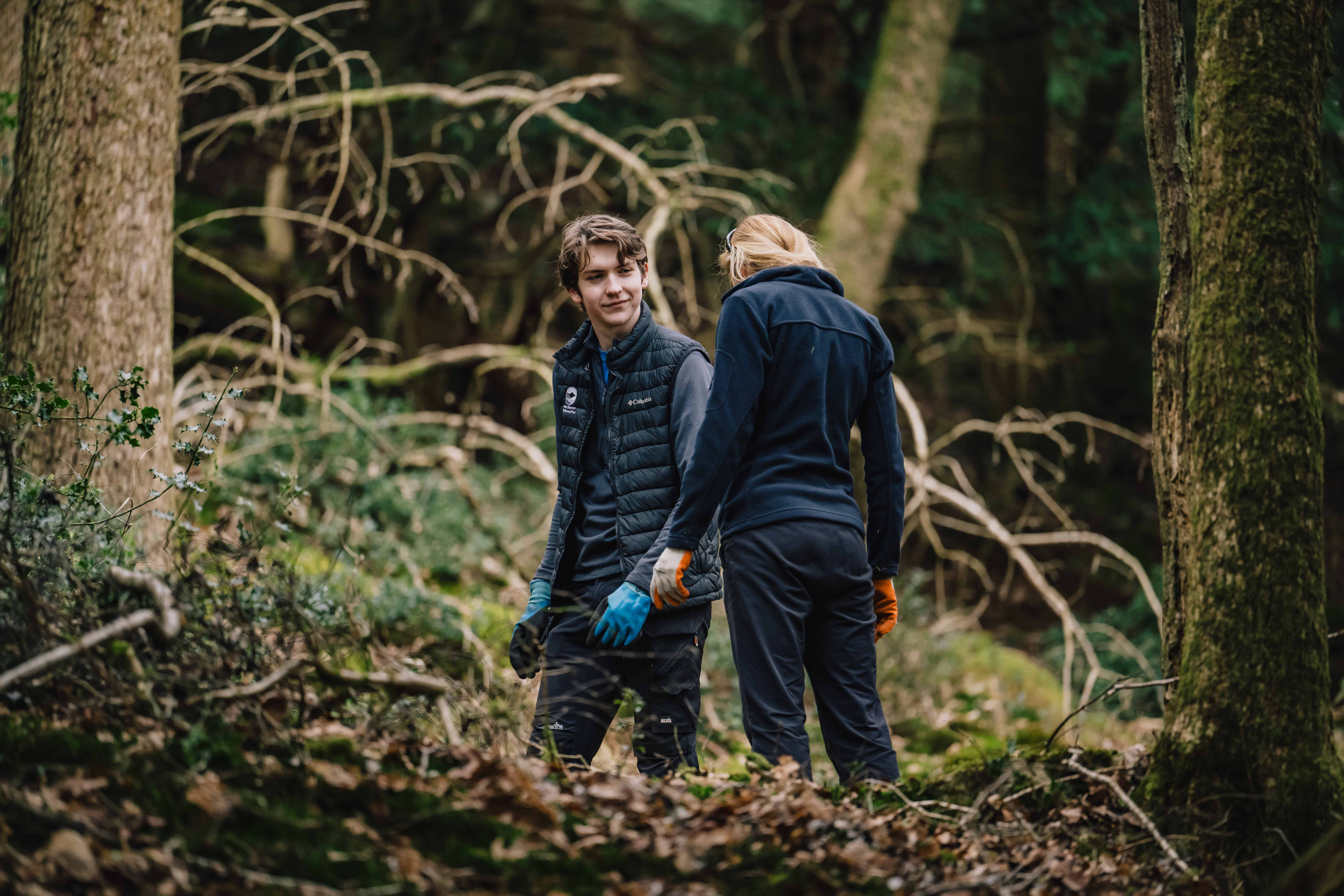
They are not only masters of stone, but of nature, conservation and restoration. Many hours I have spent being taught about the call of the ring ouzels, the patterns of the peregrines this season, the beautiful demoiselles that dance over the becks and searching for the elusive mountain ringlet butterflies. They talk with great knowledge and enthusiasm about sphagnum moss, lichens, grasses, ancient rowans and yews.
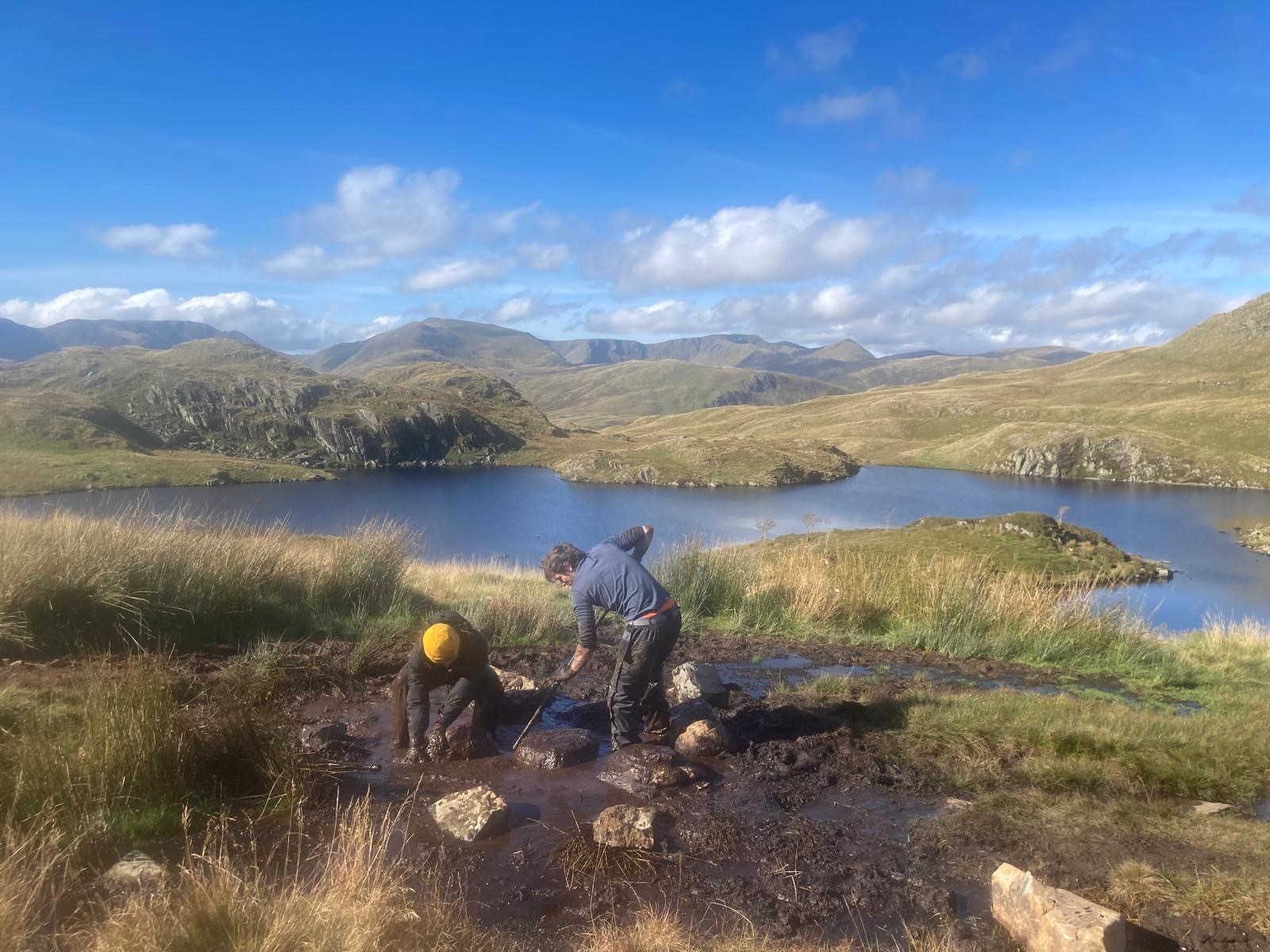
By painting a picture of art being created in the most wonderful of landscapes, I feel I am doing them a disservice, as it fails to account for the fact that they carry out some of the most gruelling and physically demanding tasks carried out at heights where most of us are happy to simply to put one foot in front of the other.
And then there’s the weather.
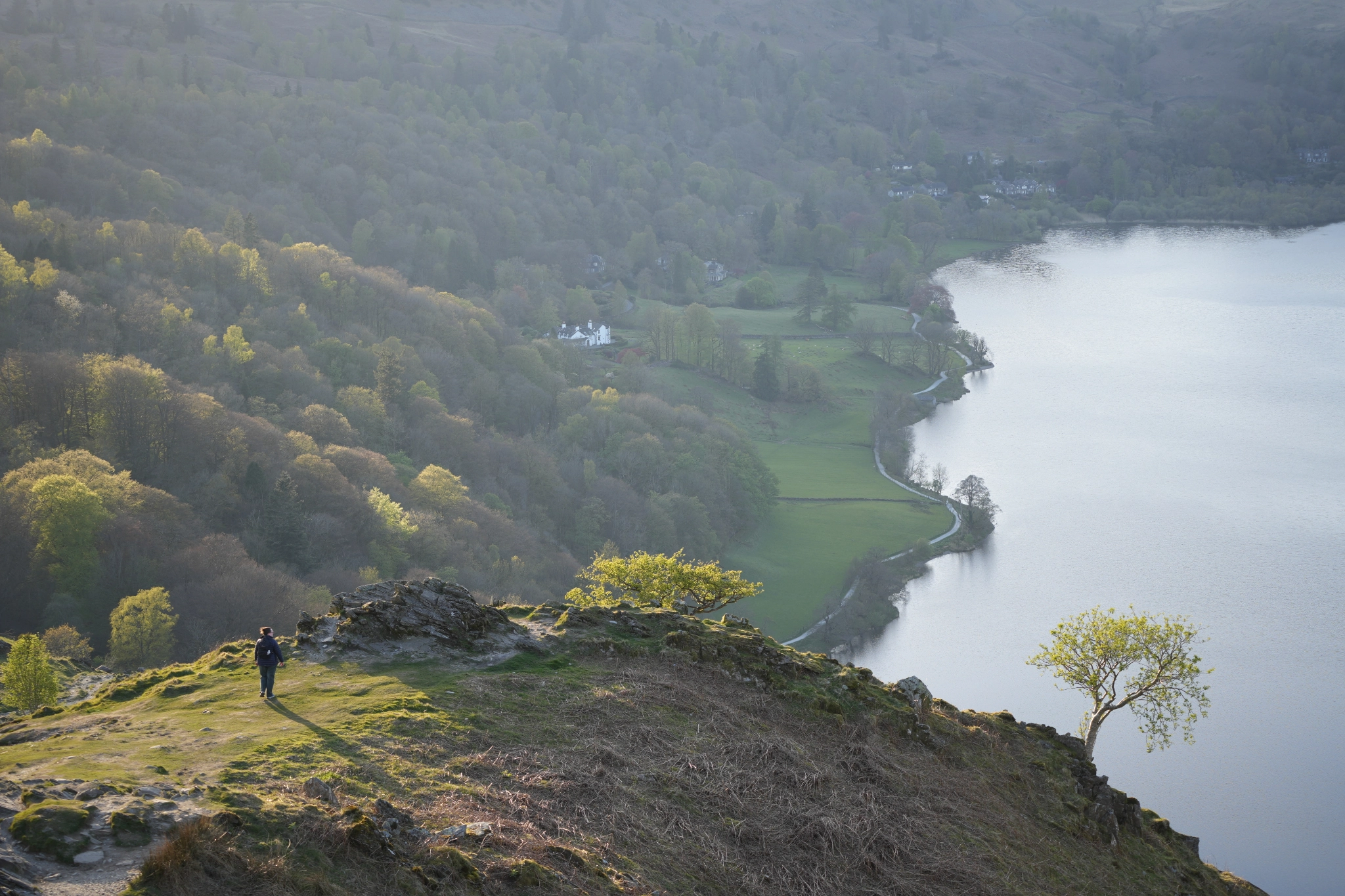
If there is a more beautiful place to be than up in the high fells in good weather, I have yet to find it. Those days are, however, in the minority. Working at over 700 metres, they are more often working in weather that I can only describe as relentless. Wind that doesn’t so much blow as lean on you, rain that finds its way in no matter how good your waterproofs are.
Hauling stone in the very worst of the weather, day after day is not for everyone. I have often asked myself why they do it; I think I understand a little more than I did before, but I also think that their reasons are as individual as the people themselves. This life is for the strongest, and in my experience the kindest and most thoughtful of humans.
Storytelling is supposed to be my craft, yet when it comes to writing about these particular humans it is one of the very few times in my life I feel I don’t have enough words. I will leave it on one – formidable. Formidable enough in fact to help earn this landscape its place amongst the world’s most treasured. The Lake District’s world heritage site status owes more to hands like theirs than most visitors will ever know.
Learn about Fix the Fells and World Heritage
Fix the Fells are on a mission to protect our spectacular Lakeland fells from erosion by repairing and maintaining the upland paths. Learn about the incredible volunteers, support organisations and work projects on the Fix the Fells website.
The Lake District National Park is an UNESCO World Heritage Site. Learn more about what this means for protecting our landscape, preserving our traditions, and how becoming a WHS can be used to promote our rich and diverse visitor economy.