



Smarter parasite management at Chapel Farm, Keswick
At Chapel Farm near Keswick in the Lake District National Park, beef and sheep farmer Bryan Fell is taking a proactive step towards healthier livestock and soils—supported by a Farming in Protected Landscapes (FiPL) grant.
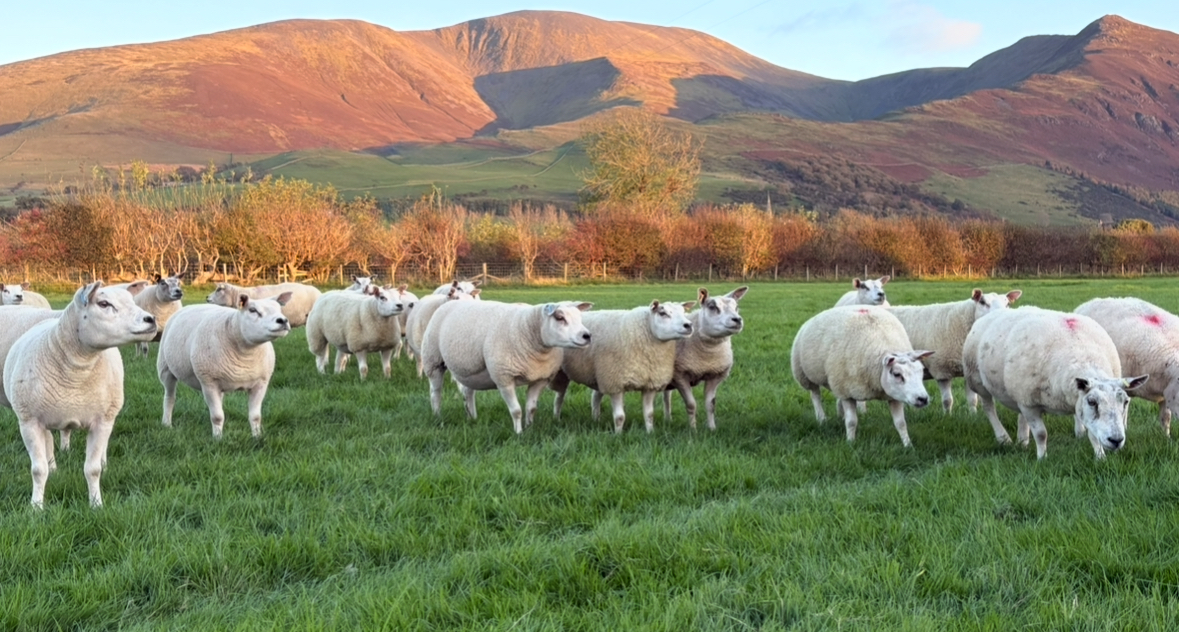
Bryan farms 320 acres, scattered and at varying altitudes, with his wife Anita and son Zak. They have 100 Limousin-cross cattle, 600 Texel/Beltex ewes producing quality export specification prime lambs.
Flock health is central to their business and monitoring parasite levels through faecal egg count (FEC) testing is key to understanding how well worming treatments are working. It helps ensure anthelmintics are used responsibly and only when needed. By introducing pre and post treatment testing Bryan also hopes to eliminate dosing resistance.
Bryan says 2025 has been very challenging with unpredictable weather affecting when parasites are around. “They don’t follow a calendar; they follow the weather. Extreme drought early season threw the parasite worm cycle,” says Bryan.
A simple but powerful on-farm tool
The FiPL grant, funded by Defra and allocated by the Lake District National Park Authority, enabled Bryan to purchase FECPAK, an on-farm parasite monitoring system that uses a portable digital microscope and cloud-based AI to deliver fast, accurate FEC results. At Chapel Farm, testing for fluke and roundworm is important, with fluke posing a particular risk on wetter ground.
“The kit means we can test on-farm and get results in minutes, so we can make better decisions and use wormers responsibly,” Bryan explains. “It’s straightforward, and the training and support from Charlotte at Aspatria Farmers was excellent.”
The four-step FECPAK process requires no specialist facilities, and each test is backed by an independent animal medicines advisor. “Regular FEC testing with FECPAK will ensure we’re treating the right animals at the right time,” he adds.
Protecting livestock, biodiversity and soil health
The benefits go beyond livestock. Awareness is growing around the impact some wormers can have on dung beetles and other soil organisms essential for nutrient cycling and pasture health. “We want healthy sheep, but we also want healthy soil,” Bryan says. “If we can cut down on treatments we don’t need, that’s good for dung beetles, good for the pasture, and good for the farm’s long-term sustainability.”
A system with long-term value
Bryan sees FECPAK becoming a routine part of farm management. It will help track emerging resistance, protect the effectiveness of treatments, and support ongoing monitoring of soil health.
With FiPL support, Chapel Farm is adopting a more sustainable method of parasite control—benefiting livestock, biodiversity and underpinning resilient farm ecosystems. “Ultimately, it’s about farming smarter, not harder,” Bryan says. “This kit helps us do exactly that.”