
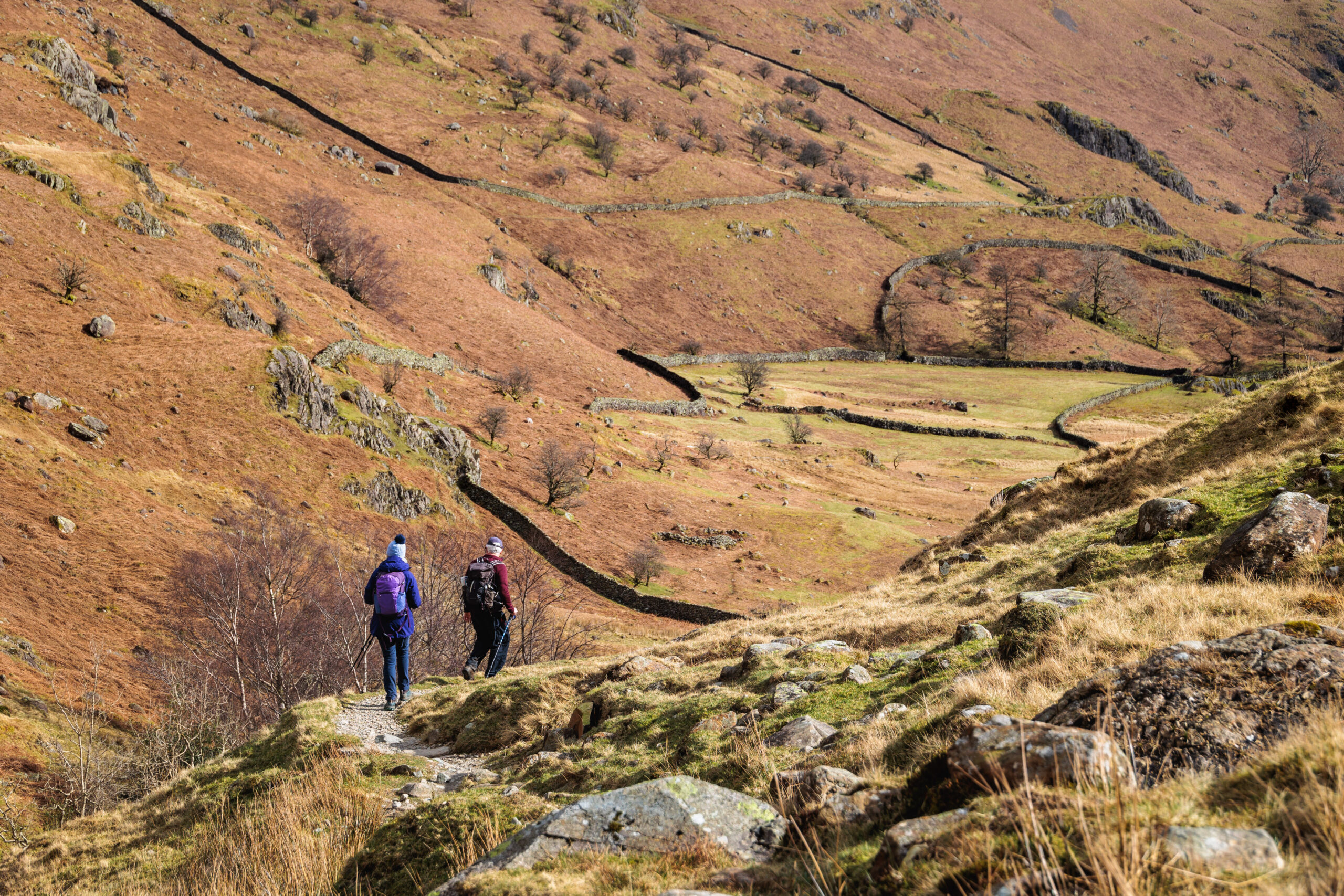
Coast to Coast National Trail upgrades: before and after
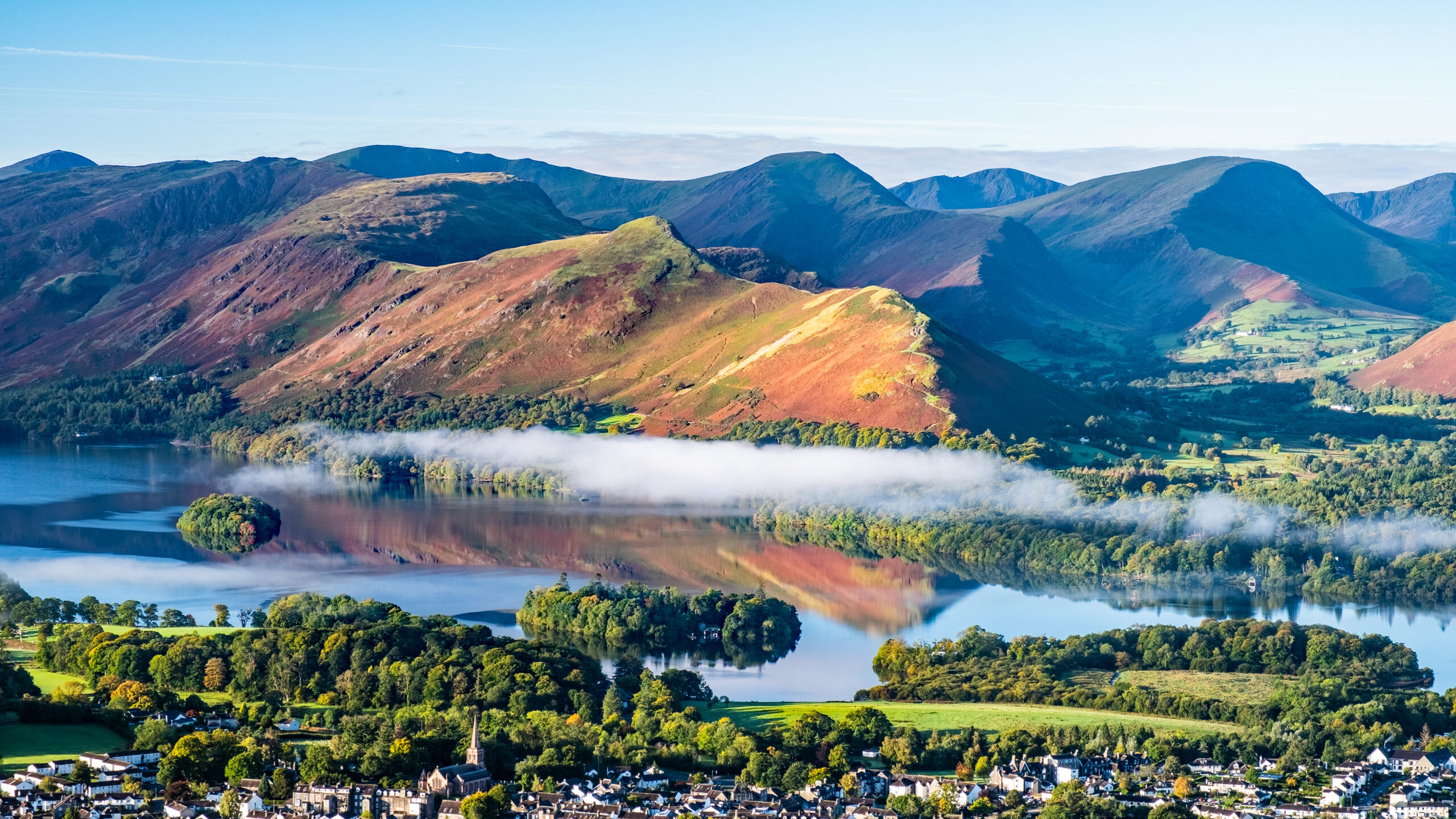
The Lake District is now part of a National Trail for the first time due to recently completed works on England’s Coast to Coast route, which runs through three National Parks. Over the last two years, major improvements have been made along the 192 mile-long trail thanks to the Lake District National Park team as well as the Yorkshire Dales and North York Moors National Parks, Natural England, the National Trust, Forestry England and local authorities along the route.
The long distance route was devised in 1973 by Alfred Wainwright and designated a National Trail in March 2026 following the completion of a project to make the route more accessible and repair environmental damage. Starting at St Bees on the West Coast of Cumbria, walkers who take on the Coast to Coast will find themselves winding through forests and fells in the Lake District on the first leg of their journey. The route continues through two more National Parks – the Yorkshire Dales National Park and the North York Moors National Park – before finishing at Robin Hood’s Bay on the East Coast of England.
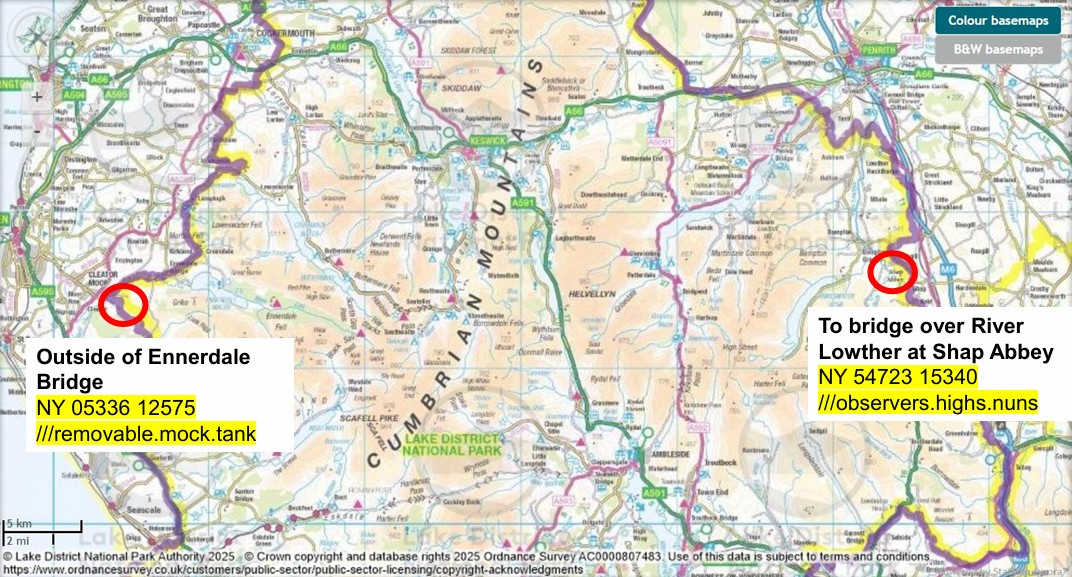
The map below shows the 50-mile stretch of the trail where the project has been taking place in the Lake District, beginning outside of Ennerdale Bridge and finishing at the bridge over the River Lowther at Shap Abbey.
The Coast to Coast in Cumbria
Behind the two-year project
Led by Project Ranger Jo Willmott, works have been carried out at locations such as Ennerdale Forest, Honister Old Toll Road, and on fells such as Loft Beck and Kidsty Pike. Paths and bridges have been repaired in remote locations, requiring specialist equipment to be disassembled and reassembled on site, to create a safer and more accessible trail for users and to minimise environmental damage such as peat erosion.
At the end of the project, Jo Willmott looked back at all that has been achieved in the last two years:
“It wouldn’t have been possible to deliver the improvements that have been made without the support of partnership organisations, landowners, local communities, wider supporters and expert staff and contractors. All Coast to Coast project team members are incredibly grateful to everyone who has helped contribute.
“Appealing to walkers from across the globe and showcasing some of the UK’s finest landscapes, the route is already much loved and valued by many. Its recognition as a National Trail will help to ensure the route is maintained and continues to be looked after.”
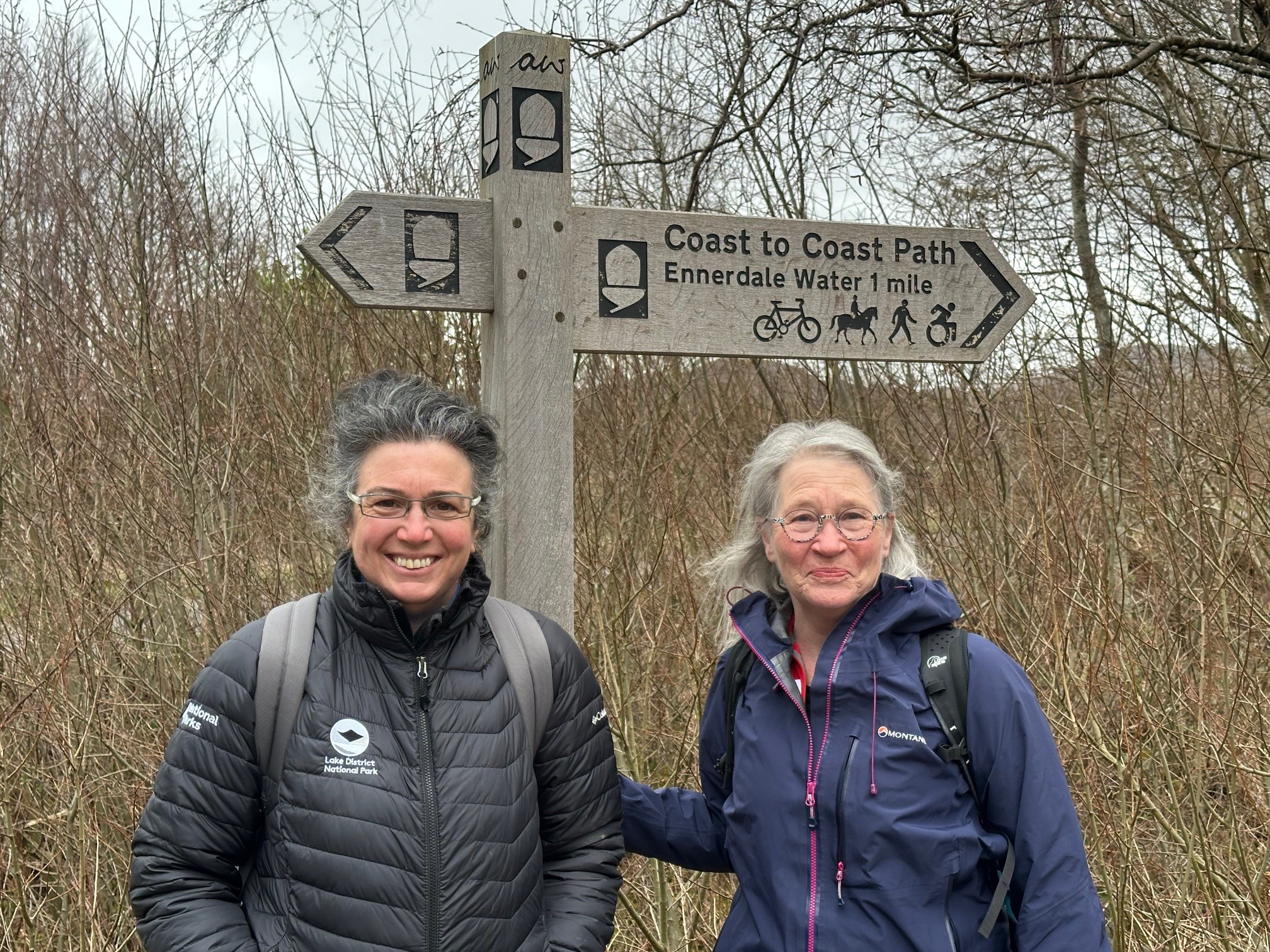
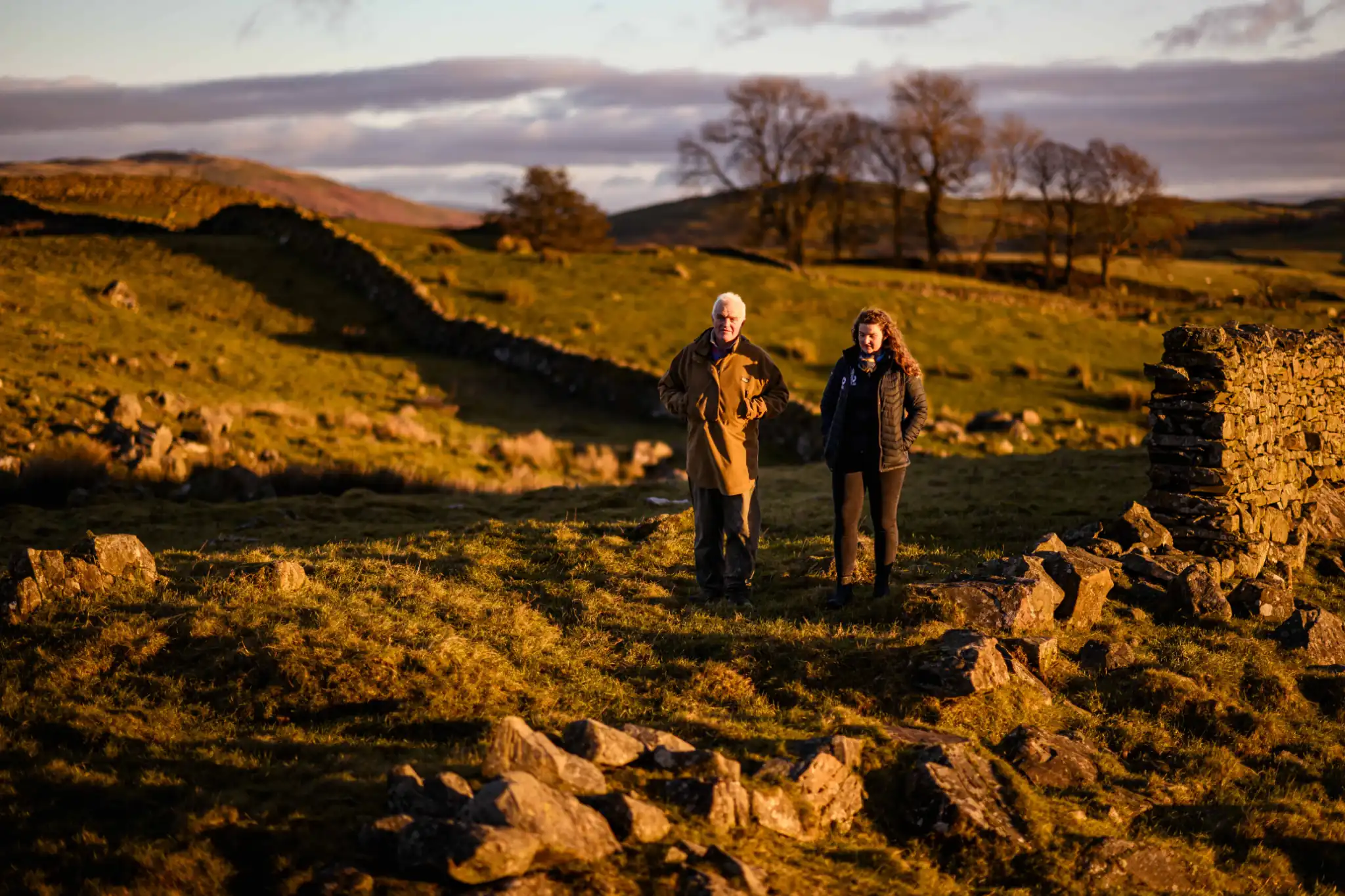
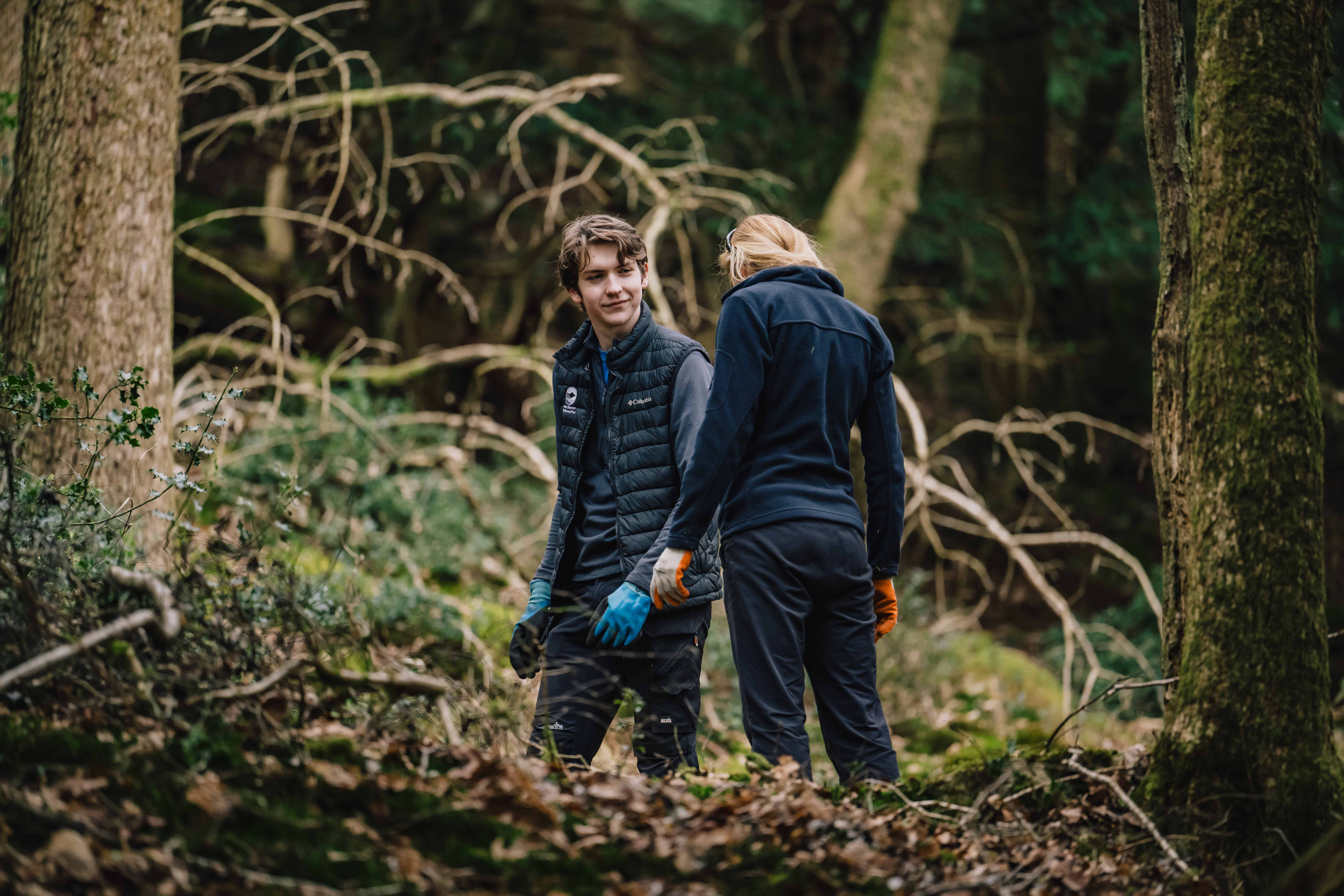
Jo Willmott (left) and Kate Young from the Wainwright Society (right)
Read on to see the ‘before and after’ successes of just some of the hard work that has gone into the project.
Ennerdale
Accessible bridges
Bridges have been replaced to make the Ennerdale Forest Loop more user-friendly for broad audience groups including wheelchair users, horse-riders and cyclists. The Forest Loop, roughly about half of which is on the Coast to Coast National Trail, is also an accessible Miles without Stiles route. Watch the video below and discover route information here.
Watch a video on the accessible section of Ennerdale, one of our Miles without Stiles rotues.
Ennerdale has special significance for the National Trail as one of the locations that readily lends itself to the broadest audience groups.
Wild Ennerdale and Lake District National Park Authority volunteers have been an integral part of the project delivery.
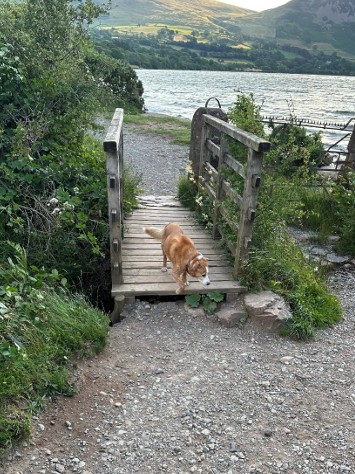
Before
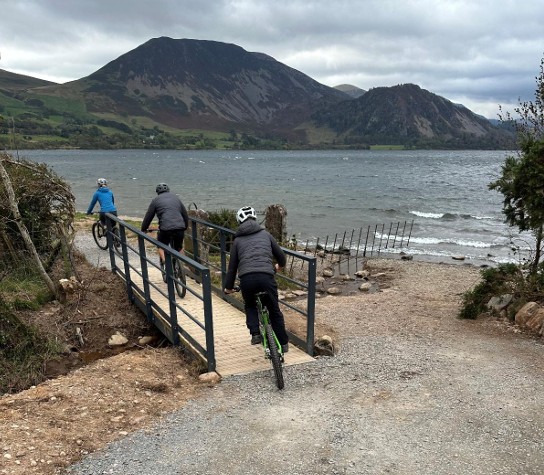
After
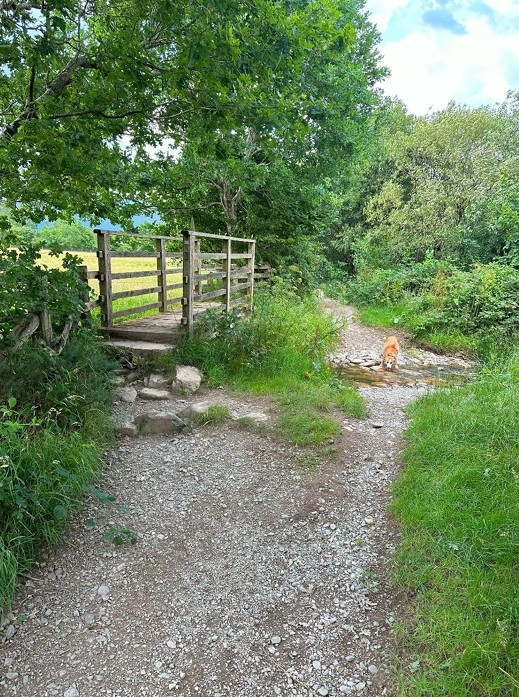
Before

After
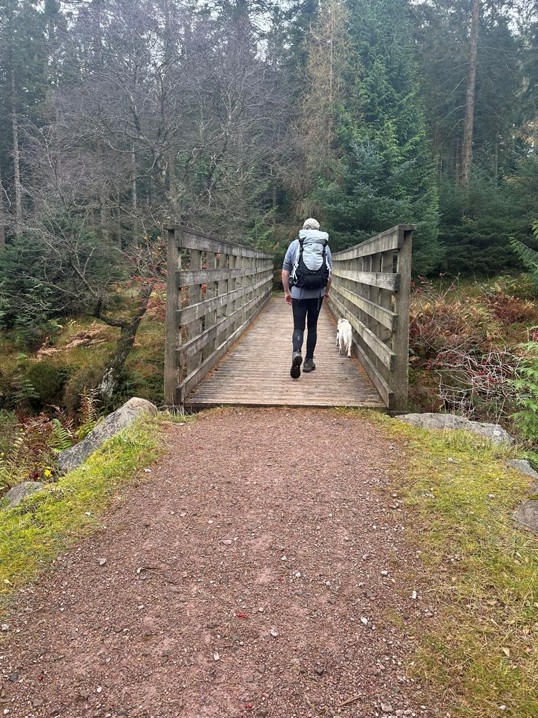
Before
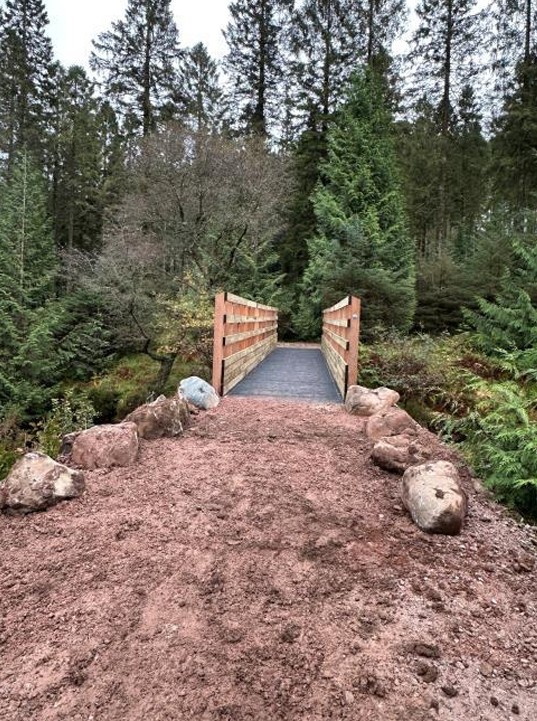
After
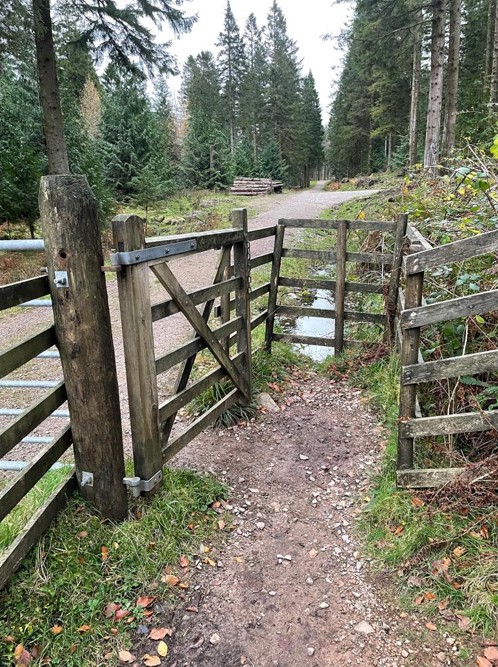
Replacing gate on the ‘Forest Loop’
Before the works, the gate was not user-friendly on a bike or All-Terrain-Wheelchair. Now, it is sturdier and has a wider access point.
Before

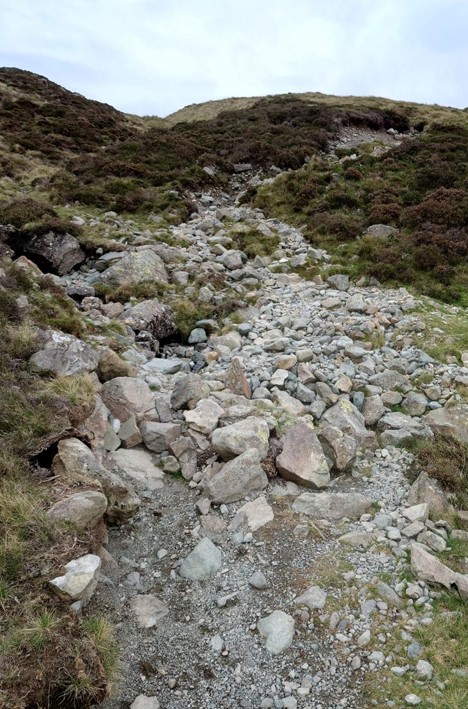
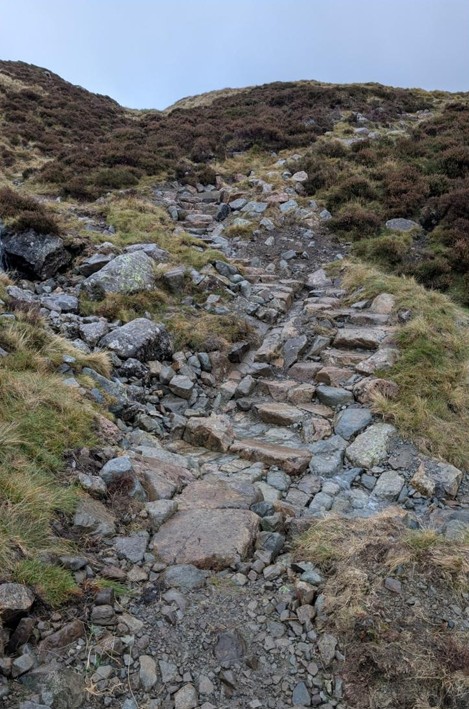
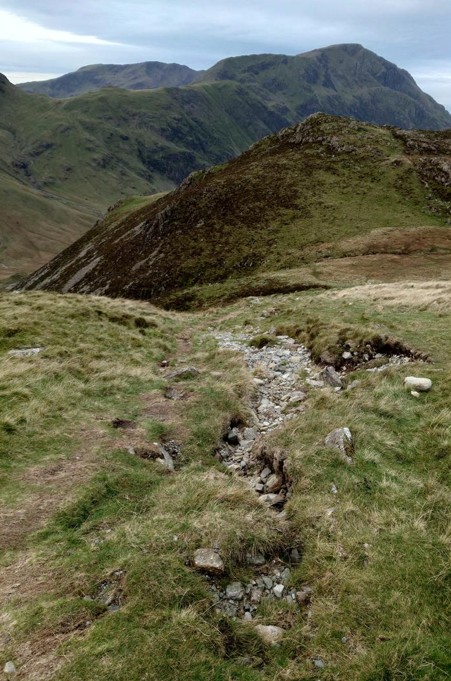
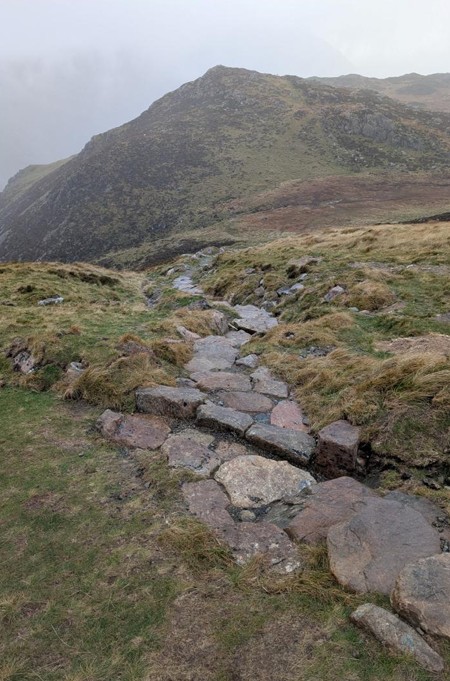
Loft Beck
Parts of the work took place in collaboration with Fix the Fells. Fix the Fells is a partnership between the National Trust, LDNPA, Natural England, Lake District Foundation and Friends of the Lake District. A team of 15 rangers are employed to repair erosion in the high fells, and with the support of 130 volunteers, they care for the mountain paths of the Lake District.
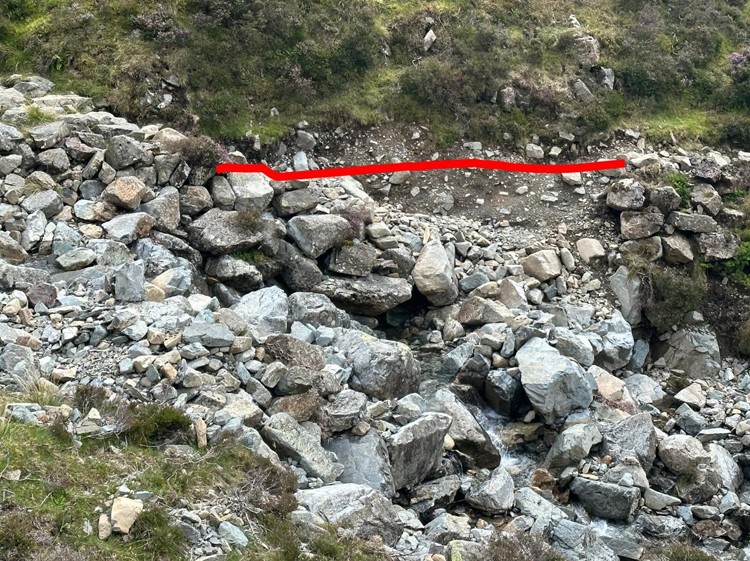
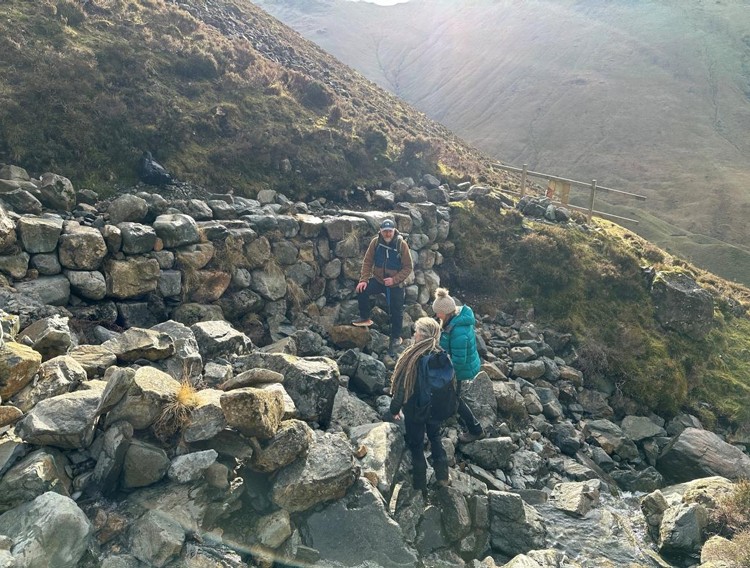
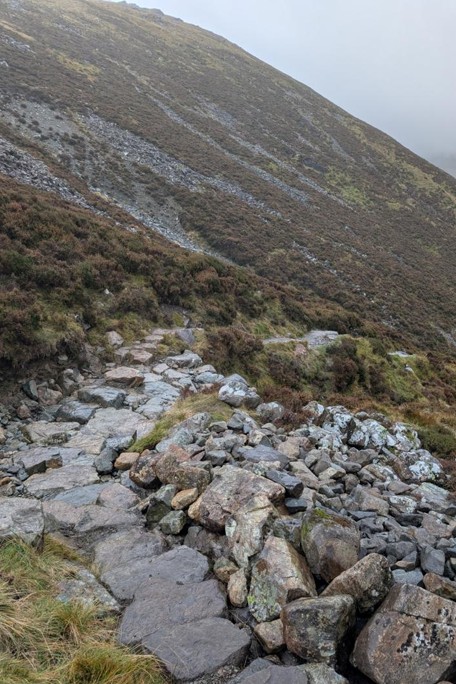
Paths up Loft Beck were repaired and further erosion was halted through careful placement of flagstones and steps.
Before
After

Before
After
Before
After
Before
After
Fleetwith Tramway
The path leading toward Fleetwith Tramway was indistinct and people were being drawn to cut the corner, which was leading to erosion of the peat bog and the harmful release of stored carbon dioxide. Now, the path has been made clearer, and water will no longer lie on the path as it used to due to the creation of drainage gullies.
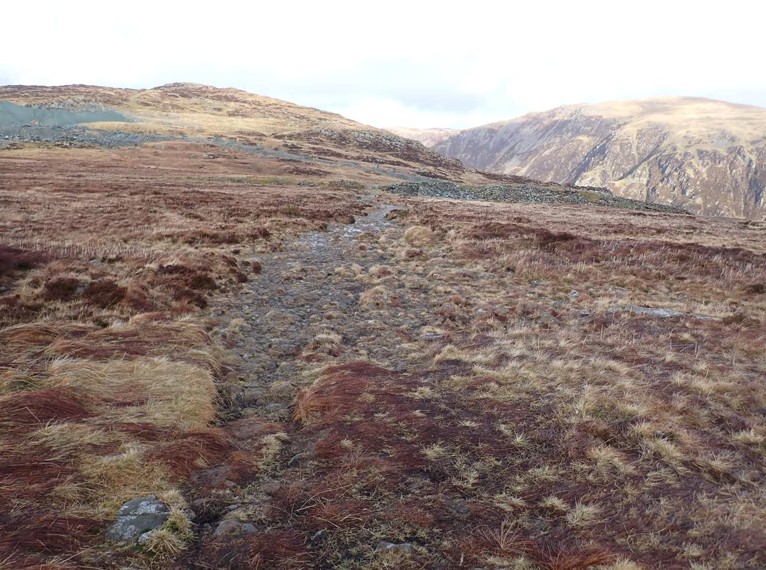
Before
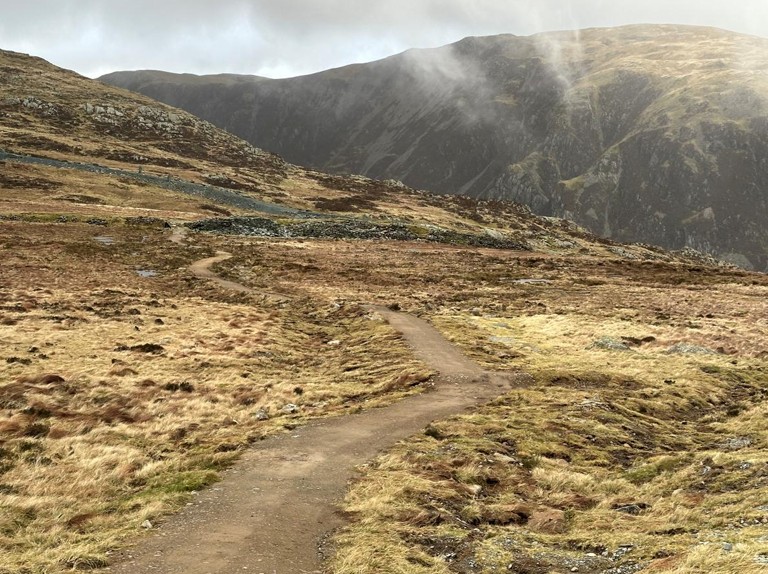
After

Before

Before
Honister Old Toll Road
Parts of the retaining wall alongside the route had been washed out dangerously onto the sides of the Honister Old Toll Road. This was dug out by the Coast to Coast team in order to reinstate the collapsed culvert, and a safer path was created.
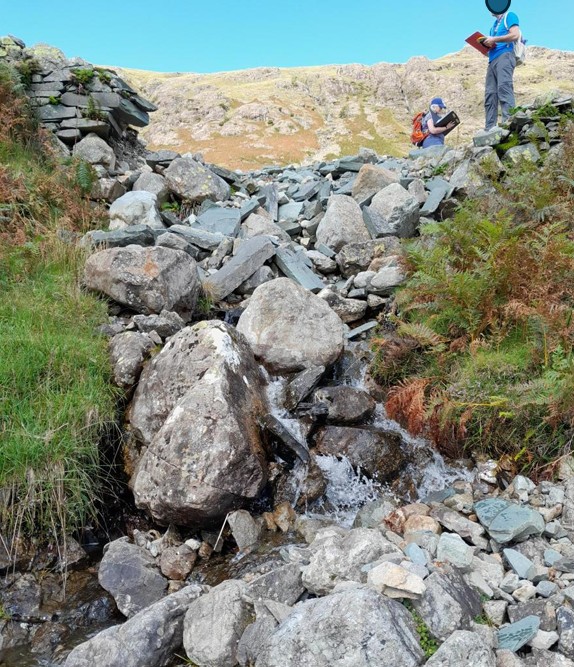
Before

During – Digging out, in order to reinstate the collapsed culvert

After
Between Lining Crag and Greenup Edge
This section of the trail included many areas of wet flush (areas of land where groundwater submerges to the surface), which is an important habitat for many species of plants, animals and mosses. The habitat is delicate and the ongoing passage of feet was leading to wide areas of degradation. The Coast to Coast project team have repaired the route by adding flagstones for people to walk over. It took two days to track the digger into this location to lay the flags right at the top of a mountain, with contractors having to walk in and out of the site every day.
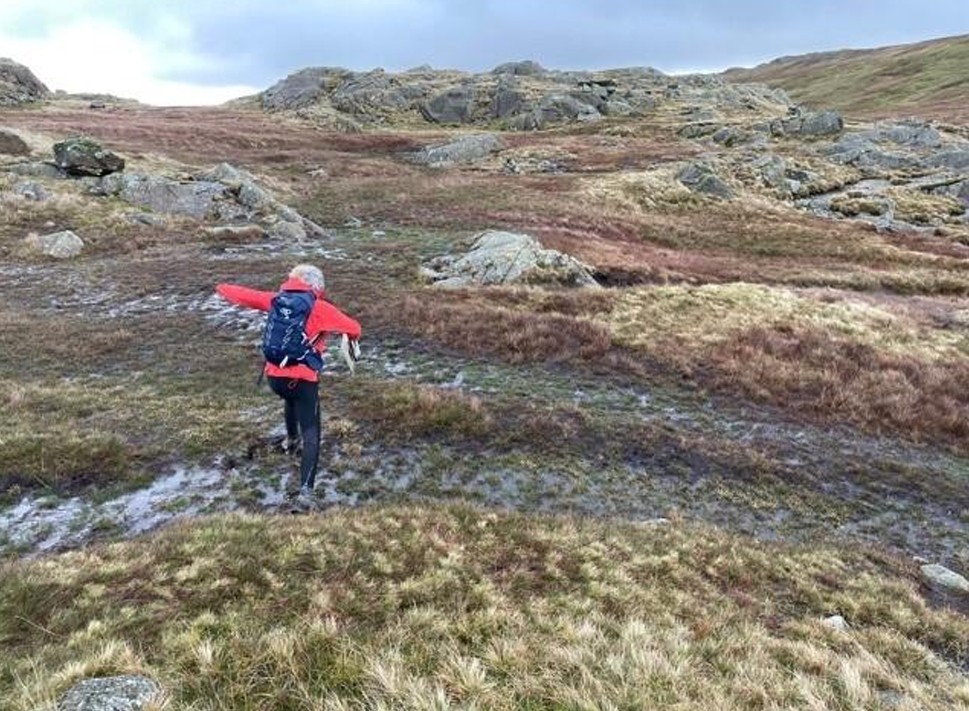
Before
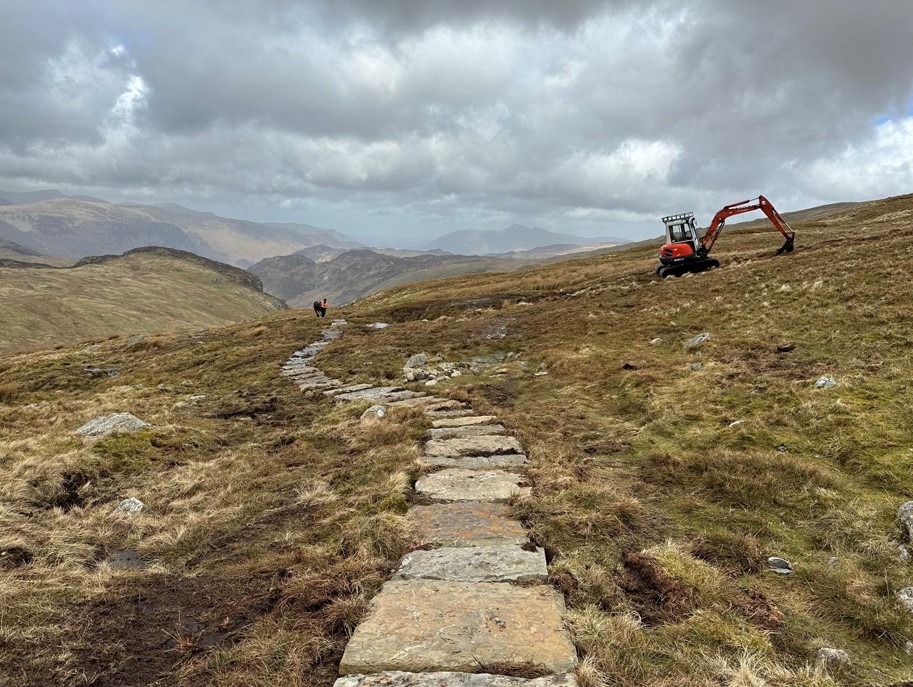
After
Peaty Bowl (between Greenup Edge and Far Easedale)
Active peat erosion was evident at various places across the ‘Peaty Bowl’ between Greenup Edge and Far Easedale, but especially at the locations where people would cross the beck. The banks of the stream had been particularly impacted by the movement of people, leading to lost vegetation and soil being swept away.
This was a challenging site for the contractor because it is very high in the hills. The walk in and out absorbed approximately two and half hours for workers every day. The digger had to be disassembled, flown up to the site, reassembled in situ, and then the process took place in reverse at the end of the day for taking the equipment away.
Sections that were worn to bare peat have been subsoiled and flagstones have been put in.
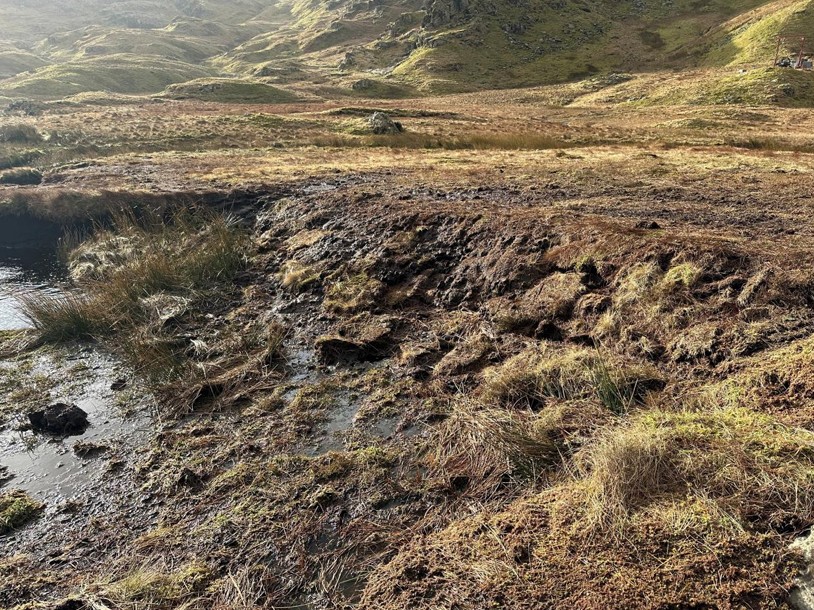
Before
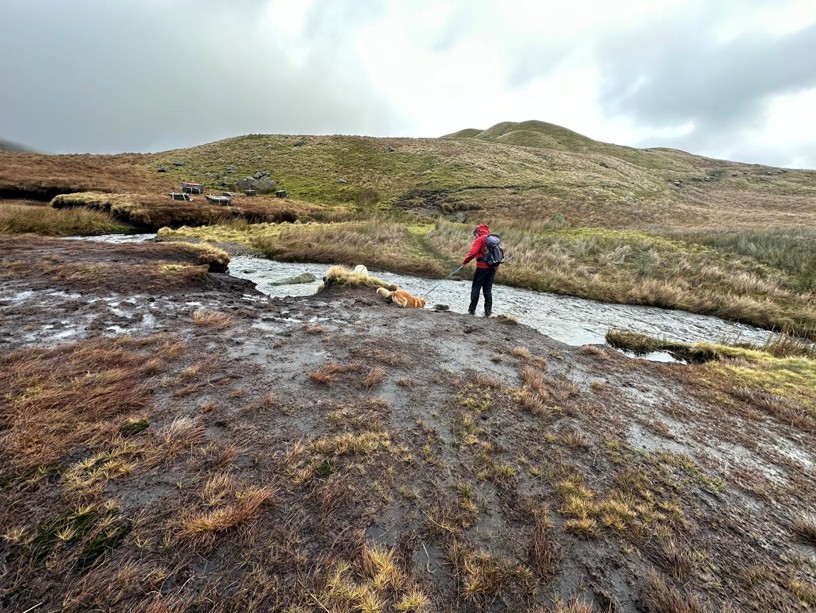
Before
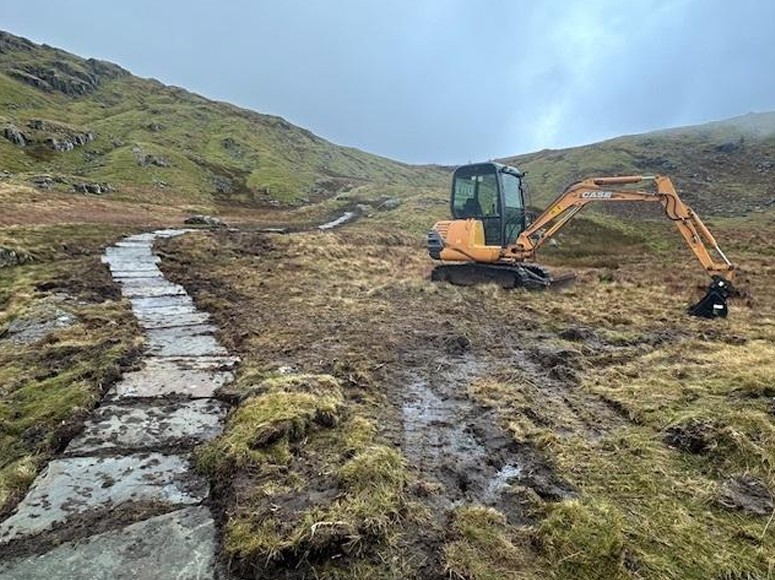
After

After
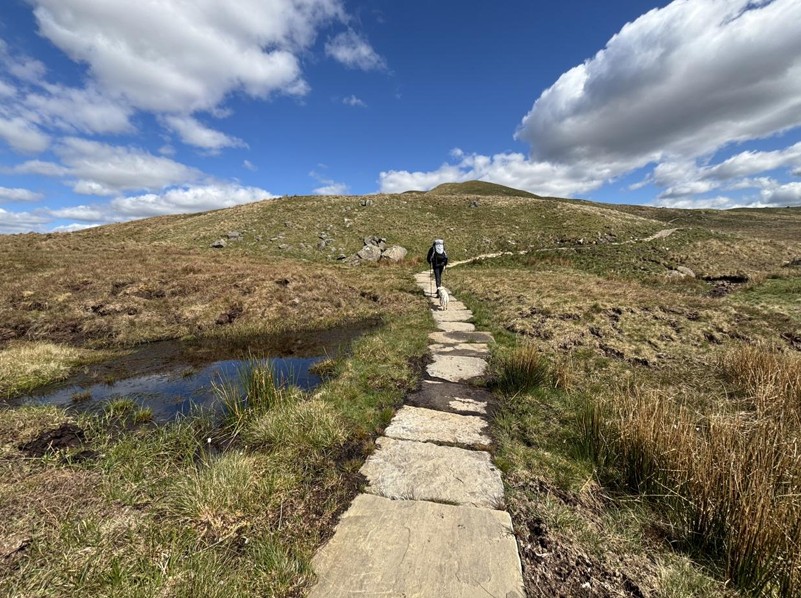
After
The route is now safer and more robust for walkers to take on the challenge of the Coast to Coast National Trail. If you decide to do so yourself, please be cautious of the living heritage of the Lake District – it is a sensitive natural environment with many people living and working in the area. Keep your dogs on leads, stay on the paths and leave no trace behind you.
Find out more about walking the trail: Coast to Coast Path National Trail – National Trails