
Skip to content
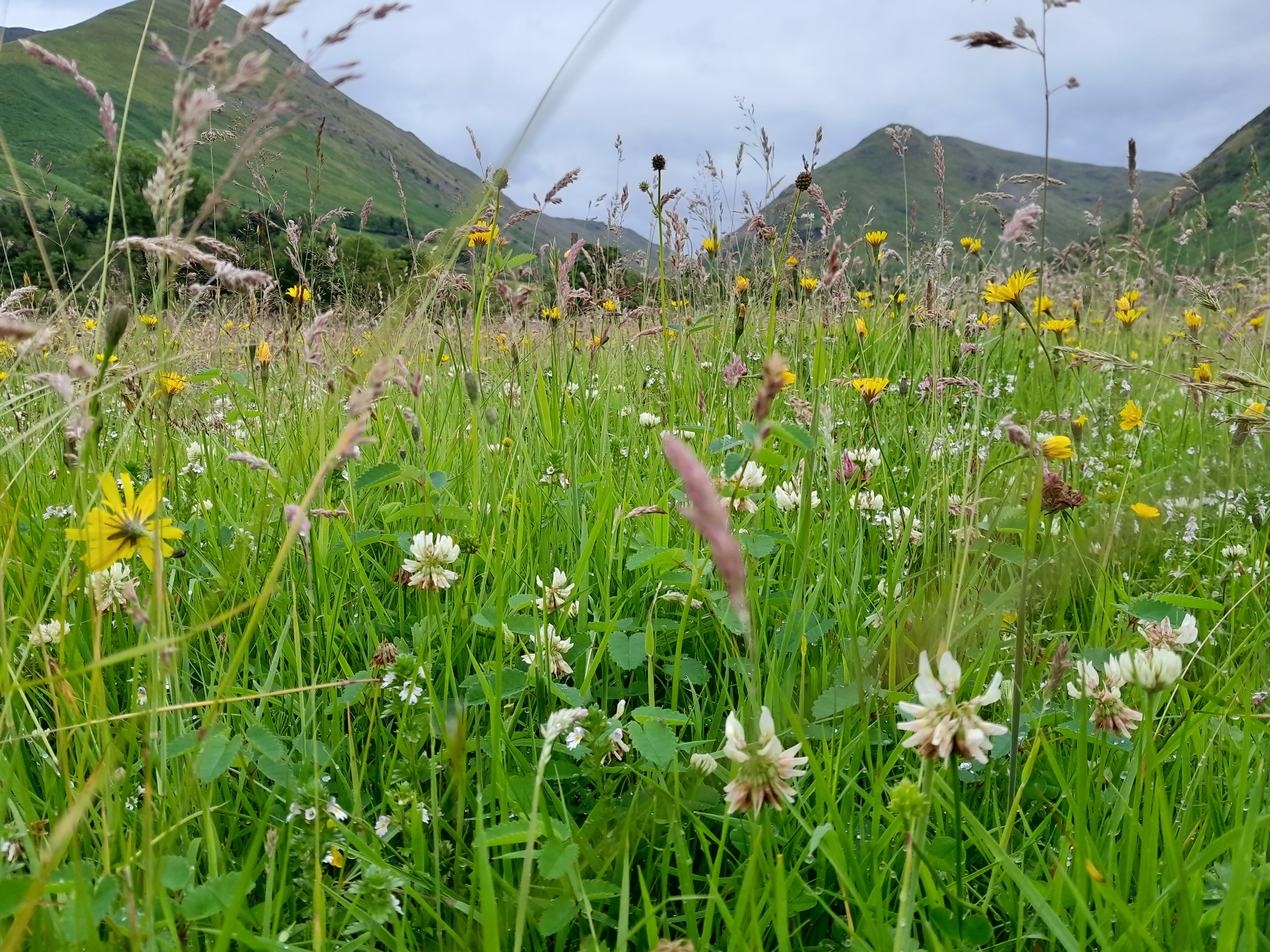
close up of wild flowers in a hay meadow with fells in the distance

Recharge in Nature Hay Meadow Restoration

Home Protect Farming Recharge in Nature Hay Meadow Restoration

The project

During 2025, 23 football pitches worth of hay meadows were restored in the Lake District thanks to the Recharge in Nature Project.

The joint project by Lake District National Park Authority and Cumbria Wildlife Trust saw 16 hectares of restoration work take place across the National Park. Supported through BMW UK’s Recharge in Nature Project in a partnership secured by National Parks Partnership, the £65,000 project helped enhance biodiversity on farmland across the region.

In just one restoration season, which runs in a short window from around late July to late September, teams working on the Recharge in Nature Project completed practical hay meadow restoration on five farms across the Lake District National Park, near Embleton, Loweswater, Crosthwaite, Collinfield and in the Newlands Valley.

For the Authority, this is the first project of its kind and a great achievement in a three month period. Hay meadow restoration work is inherently challenging, being highly dependent on the weather and suitable native, local provenance wildflower seed being available from nearby donor sites. Lots of factors need to align for hay meadow restoration to happen!

Electric car hire and charging points

LDNPA

The Recharge in Nature Project

BMW Discover

Celebrating farming and nature together

Species rich grasslands, including hay meadows, are a precious habitat which have been shaped by centuries of farming. The traditional farming calendar for these fields includes grazing during spring, closing up after lambing time, allowing time for wildflowers to flower and set seed, followed by cutting in late summer.

During hay time, repeated turning of the crop, helped along by machinery such as hay-bobs, allows seed to drop from the grasses and flowers and continue the life-cycle of these species in the meadow. After hay time, grazing through the autumn and winter completes this cycle of management, and allows suitable conditions for hay meadow species to survive without being smothered out by more competitive grasses. The hay crop is a valuable winter feed for livestock over the winter.

Delivering for nature

How to get involved

This is the first dedicated hay meadow restoration project led by the Lake District National Park, and we are keen to do more.

We hope to secure future funding to continue to support farmers to protect and enhance their hay meadows and make them even more species rich, valuable for wildlife, build climate resilience on their farms and contribute to our unique landscape.