
Frequently asked questions
There are a number of species of bat which are found in and around the Lake District National Park. Bats are protected by law, and it is a criminal offence to deliberately harm, capture, kill or disturb a bat or its resting place. When we consider an application we are required by law to have regard to the presence or potential presence of bats and their resting places in our decision.
In order fulfil our obligations, when it is reasonably likely that bats will be present at or affected by a scheme, we will insist that a bat survey (which is up to date and undertaken at the correct time of year) is submitted before we validate an application. This requirement applies for all types of application (including planning, listed building, and conservation area consent applications). More than one survey may be required.
Bats may be found in a wide range of places, including buildings, trees and caves. Annex A overleaf details the “Trigger List” of circumstances in which it is reasonably that bats will be present. If your development affects any of the places listed in Box A, you must submit a suitably detailed and appropriate bat survey with your application.
No. We will only accept bat surveys which meet the established standards of the Bat Conservation Trust Bat Surveys – Good Practice Guidelines, and which have been undertaken by a suitably qualified surveyor. When choosing a consultant you should make sure that they are familar with the Good Practice Guidelines, ask them about the amount of survey effort which they propose to undertake, and the survey methods they will use. If there are inadequacies with the survey, or not enough surveys have been done this can hold up your application for many months. A good consultant will be able to show you examples of work they have done elsewhere.
The timing of bat surveys is very important. Whilst surveys can be undertaken in the winter months to assess the potential of a building being used by bats, if that survey concludes that a building is likely to be used by bats, we will not be able to validate your application until you provide a full emergence/dawn-entry survey undertaken during the active season (May – end of September). Conversely, in rarer cases a summer survey may identify potential hibernacula, in which case a winter survey will be required. We will only validate an application with an out-of-season survey if that survey concludes that the site is of low potential and that no further surveys are required.
We expect all surveys to be produced in accordance with the Bat Conservation Trust guidelines. A full bat survey will include: a survey and site assessment; an impact assessment; details of any compensation, mitigation and enhancement measures required; details of post-development safeguarding; and a timetable of works. The survey must clearly state whether an EPS licence will be required.
No. If a winter survey finds the potential for bats to be present we need activity surveys to be provided before we can validate your application. Unless the building is of low potential at least three emergence and/or dawn re-entry or automated surveys per building during the summer are recommended as a minimum. At least one of the surveys should be a dawn re-entry or automated survey. At least two of the surveys should take place between mid-May and August. If the building has potential for use throughout the year, that must be reflected in the survey timings. Winter surveys alone will only be acceptable if they find negligible potential for bats to be present.
We need bat surveys to be up to date to be meaningful. Because circumstances and conditions can change, we will expect a submitted bat survey to be less than two years old. If your survey was done more than two years ago, you will need to have it updated before you submit your application.
If a bat survey finds bats or bat roosts at a site and concludes that any activities/aspects of the proposed development are likely to lead to:
- deliberate disturbance of bats
- deliberate killing, injury or capture of bats
- damage or destruction of a breeding site or resting place
carrying out the proposed development may lead to a criminal offence being committed.
You may be able to prove that a criminal offence can be avoided by identifying measures to avoid an offence under the provisions of the Conservation of Species and Habitats Regulations 2010. Such proposed measures must show a high degree of certainty for success and you will be required to implement such measures as conditions or planning obligations as part of any planning permission that may be granted.
If you are not able to propose satisfactory measures to avoid an offence you must prove that:
- there is no satisfactory alternative to the development proposed
- the proposals will not be detrimental to the maintenance of the population of the species concerned at a favourable conservation status in their natural range
- the development is necessary for imperative reasons of overriding public interest (including those of a social or economic nature and beneficial consequences of primary importance for the environment)
If these three tests cannot be passed, we have no choice other than to refuse the application. Therefore if your survey finds bats we strongly recommend that you submit a supporting statement providing details of any proposed mitigation measures or explaining how the development satisfies these three tests with your planning application.
Trigger list for bat presence
This trigger list is based upon the Bat Conservation Trust guidelines, and has been adapted to reflect the widespread presence of bats around the Lake District. Because of the excellent habitat and foraging which the area provides, bats are frequently found in a wide variety of buildings across the National Park.
Bats are likely to be found in:
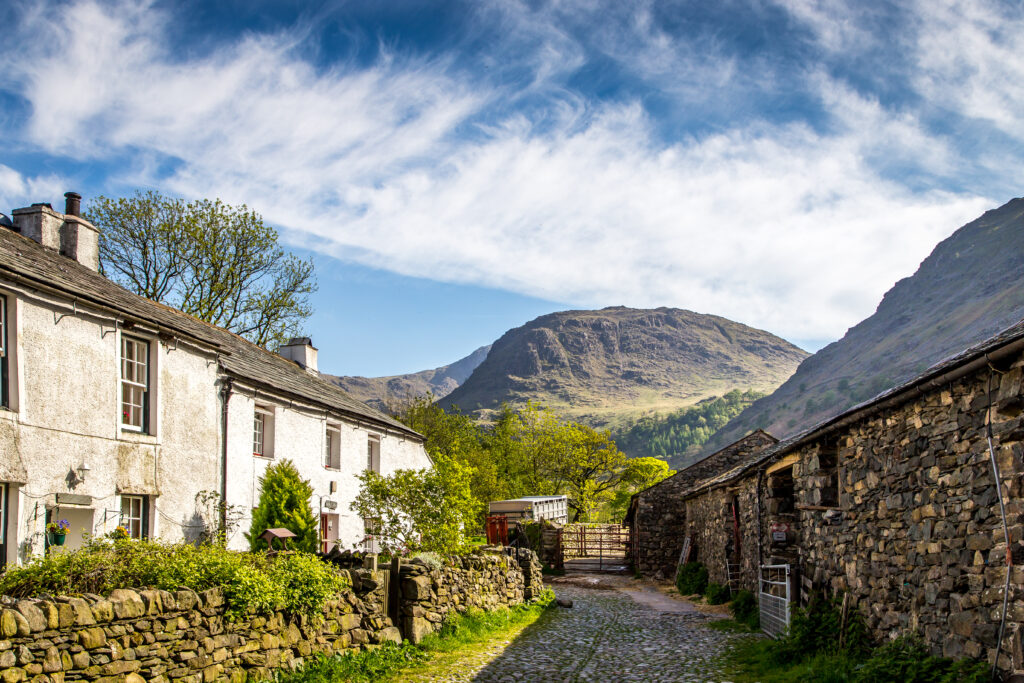
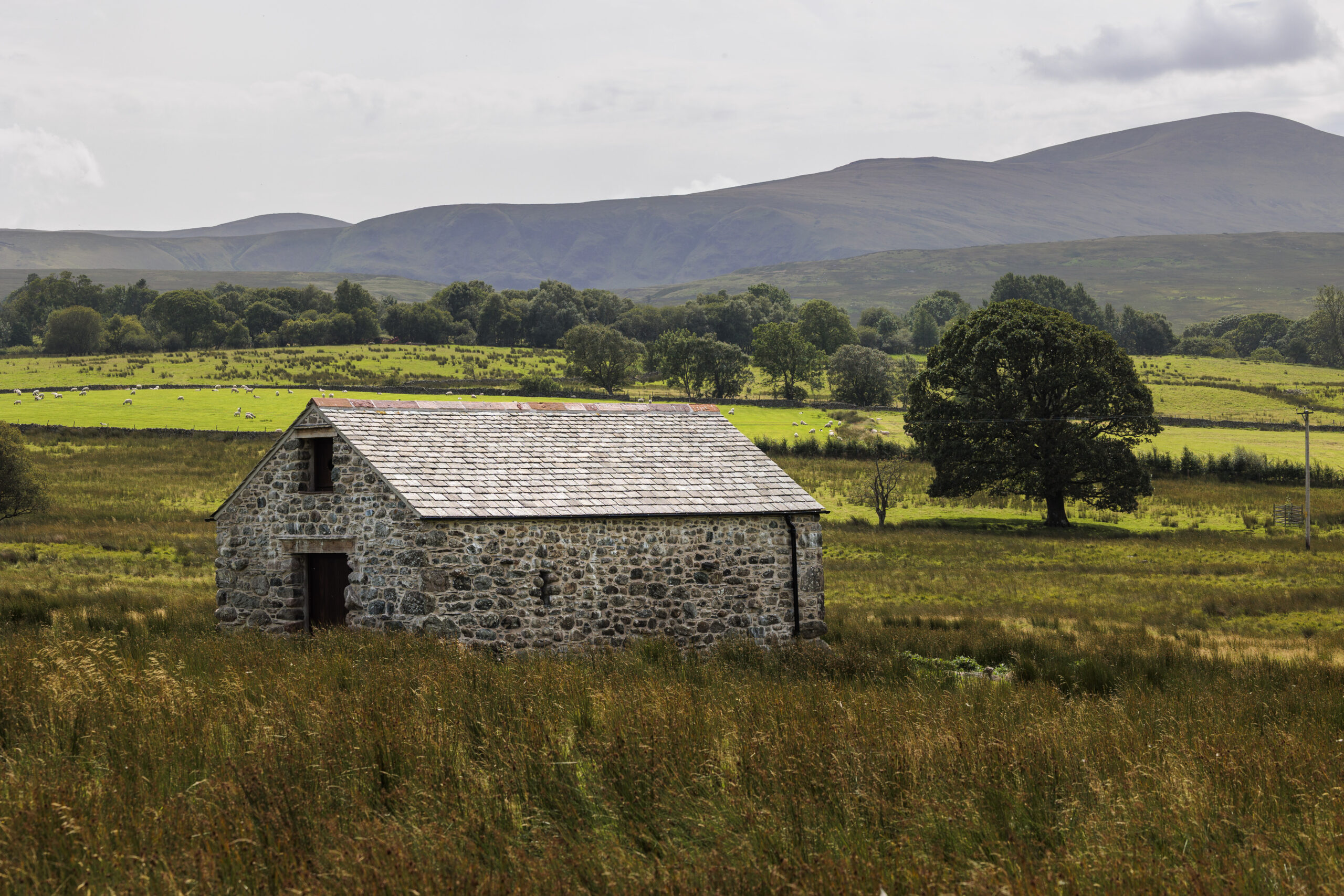
- agricultural buildings (e.g. farmhouses, barns and outbuildings) of traditional brick or stone construction and/or with exposed wooden beams;
- buildings and structures with slate roofs, stone walls, hanging slates, hanging tiles or weather boarding, in particular those within 400m of woodland and/or water;
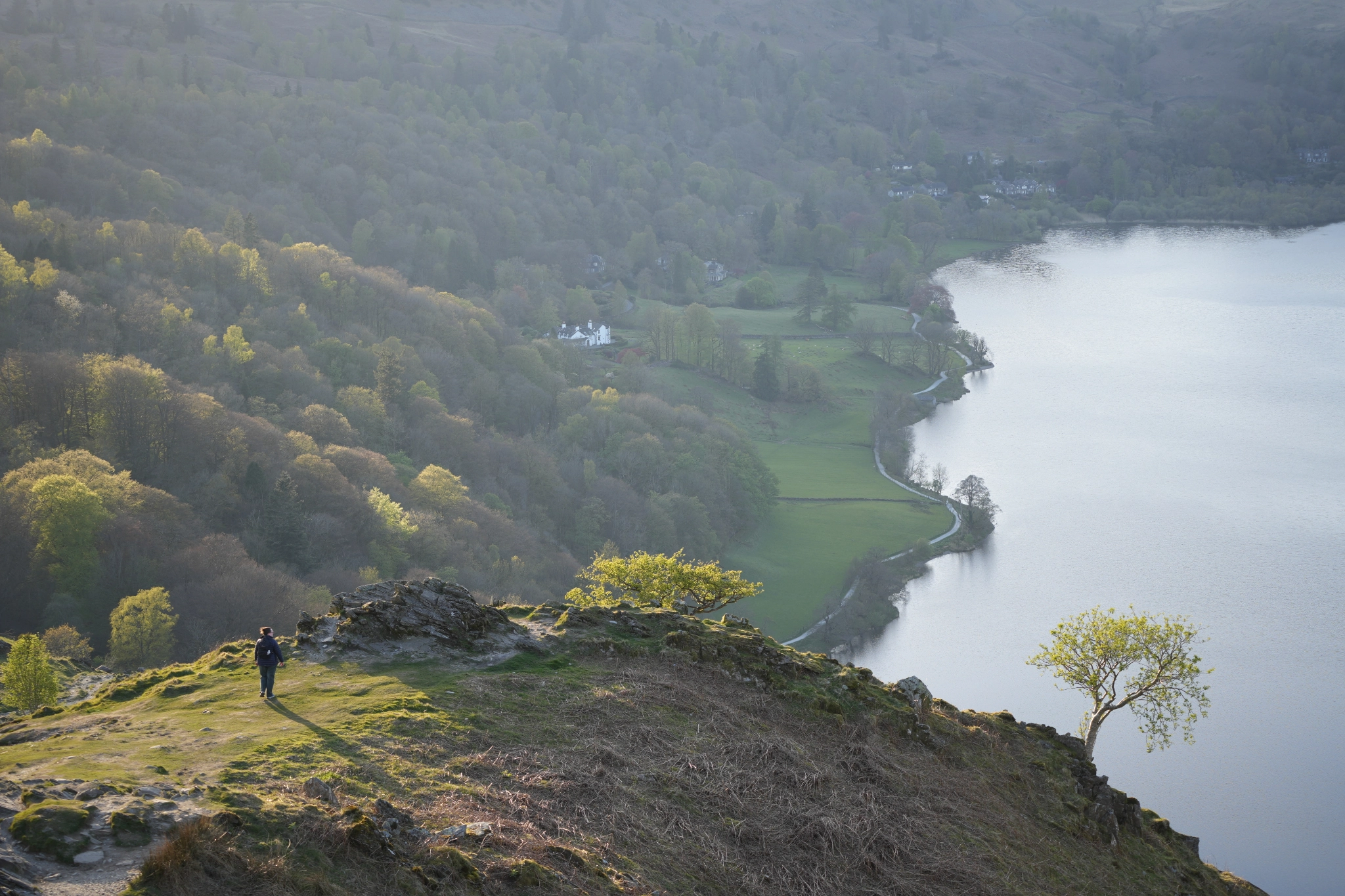
- any building located within, or immediately adjacent to woodland &/ or immediately adjacent to water
We will require an appropriate bat survey to be submitted if your scheme includes works to the roof, eaves, stone faced walls, weather boarding, or vertically hung slate of any of the above. We will require a bat survey to accompany all schemes to convert barns, outbuildings, and similar traditionally built buildings.
Surveys are not required for buildings with a single skin roof and Yorkshire board/profile sheet/open sides (e.g. modern agricultural buildings including portal buildings or Dutch barns).
Bats are likely to be found in:
- tunnels, mines, kilns, ice-houses, adits, military fortifications, air raid shelters, cellars and similar underground ducts and structures; unused industrial chimneys that are unlined and brick/stone construction
- bridge structures, aqueducts and viaducts (especially over water and wet ground).
We will require an appropriate bat survey to be submitted if your scheme affects any of the above
We will require an appropriate bat survey to accompany proposals for the floodlighting of any of the following:
- churches and listed buildings, green space (e.g. sports pitches) within 50m of woodland, water, field hedgerows or lines of trees with connectivity to woodland or water
- any building meeting the criteria listed in 1 above
We will require appropriate bat surveys to be submitted with applications which propose felling, removal or lopping of:
- woodland
- field hedgerows and/or lines of trees with connectivity to woodland or water bodies
- old and veteran trees that are older than 100 years;
- mature trees with obvious holes, cracks or cavities or ivy covered (and also large dead trees).
We will require an appropriate bat survey to be submitted with applications which propose development affecting:
- quarries or gravel pits
- natural cliff faces and rock outcrops with crevices or caves and swallets
Any application which proposes the development of wind turbines must be an appropriate bat survey.
Where a proposal would affect a building, structure, feature or location where bats are known to be present, an appropriate survey should be submitted with any application.