



About the Authority and our statutory purposes
The Authority is a legal entity established by Section 63 of the Environment Act 1995 which receives grant funding from DEFRA to undertake its work. The Lake District was one of the first areas to be designated a National Park in 1951. Though situated within the county of Cumbria and lying across the boundaries of two unitary authorities, the Authority is the Planning Authority for the area of the National Park.
The Authority was set up with purposes and duties to which it must adhere.
The National Park has two statutory purposes:
- To conserve and enhance the natural beauty, wildlife and cultural heritage of the Lake District National Park; and
- To promote opportunities for the understanding and enjoyment of the special qualities of the National Park by the public.
It also has a duty in pursuing those purposes:
- To seek to foster the economic and social wellbeing of local communities within the National Park by working closely with the agencies and local authorities responsible for these matters, but without incurring significant expenditure.
Section 11A (1A) of the National Parks and Access to the Countryside Act 1949 states that “in exercising or performing any functions in relation to, or so as to affect, land in any National Park in England, a relevant authority… must seek to further the purposes… and if it appears that there is a conflict between those purposes, must attach greater weight to the purpose of conserving and enhancing the natural beauty, wildlife and cultural heritage of the area comprised in the National Park”.
This is known as the ‘Sandford Principle’ and stems from the Sandford Committee’s recommendation, in 1974, that enjoyment of the National Parks ‘shall be in a manner and by such means as will leave their natural beauty unimpaired for the enjoyment of this and future generations’.
The Lake District National Park Authority’s governance model includes members and officers.
Members are appointed by various public bodies, including local councils and Secretary of State. There are 20 members of the Lake District National Park Authority. Their role is to set policies and ensure resources are allocated appropriately and effectively.
Officers are Authority employees who implement policies and member decisions through the delivery of work. The Chief Executive provides leadership to officers and is accountable to members, providing regular updates on progress and strategic delivery.
About us
Learn about what makes the Lake District such a special and unique place, how it became designated as a National Park, and find out about our purpose and vision for the future of the Lake District National Park, including how we work with partners and communities to conserve this unique landscape while encouraging enjoyment for all.
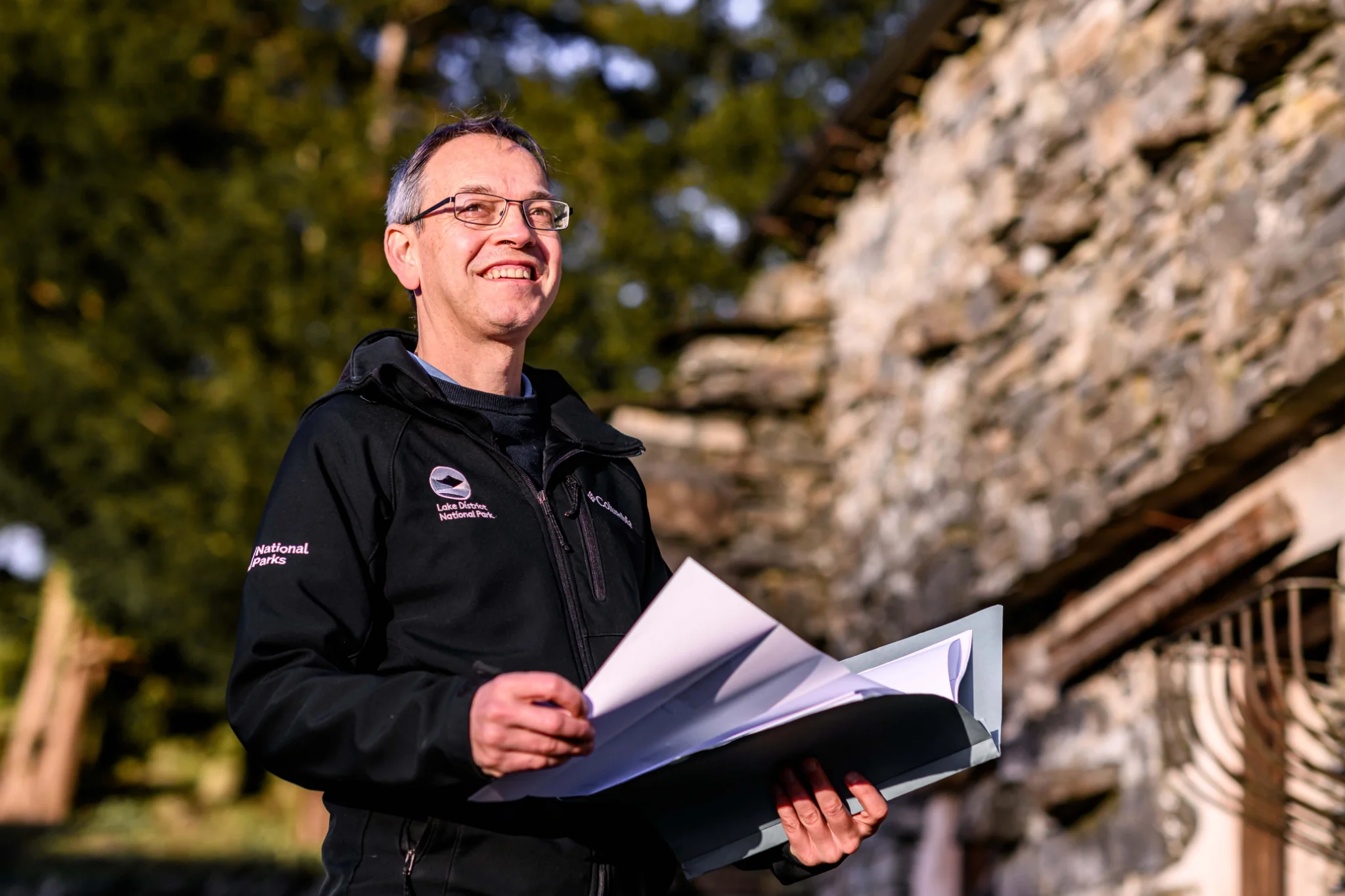
Work with us
Our people are the heart of the Lake District National Park Authority. Across all our departments the people of the park provide unrivalled expertise, local knowledge, collaborative ways of working and a dedication to conserve and enhance the Lake District’s flourishing spectacular landscape for everyone.
Join us in keeping this corner of England special. Nurture, enhance and educate alongside colleagues and communities who share a vision in a landscape like no other, and are proud to learn together. Climb your own mountain with a career at the Lake District National Park Authority.

Publications and plans
Our vision for the Lake District National Park is ‘an inspirational example of sustainable development in action’. Explore how the vision was developed, and the policies that underpin it in the Lake District National Park Partnership Plan, Business Plan, Local Plan and the State of the Park Plan. Here you’ll also find more information about who we are and what we do, what we spend and how we spend it, and how we make decisions.
How does the Authority work?
Our staff, volunteers and members play an important role in looking after this unique corner of England, by encouraging people to enjoy its beauty and helping those who live and work here thrive.
This is achieved through implementing the policies and strategies set out in our Local Plan and the Lake District National Park Partnership Plan.
The Local Plan outlines the strategic framework for development within the National Park. Find out more about the Local Plan.
The Lake District National Park Partnership Plan is a joint Management Plan for the Lake District. The partners who make up the Partnership represent communities, landowners, environmental groups and charities. They prepare the plan, presenting a series of targets and objectives for the upcoming five years. Read more about the Partnership Plan.
Both the Local Plan and the Partnership Plan are the result of consultation and engagement with our communities, farmers, businesses, organisations, partners and other stakeholders.
All our teams are instrumental in delivering a greater vision through key areas such as development management, providing advice via information centres, maintaining access routes, developing sustainable travel options, helping young people connect with nature, conserving the historic environment, managing woodlands and working closely with local communities.
The Authority’s work is supported by passionate volunteers who help in various service areas of the National Park, from maintaining paths on the fells to welcoming first-time visitors and providing advice. Learn more about volunteering in the Lake District.
To find other relevant information and resources related to the Lake District National Park Authority, what we do and how we operate, please visit our Who we are and what we do page.
How the Authority operates
To find relevant documents that provide more detailed information about how the Authority operates and makes decisions, including our Codes of Conduct, please view our Authority Handbook.
Schedule 7 of the Environment Act 1995 sets out the status and constitution of National Park Authorities. The Authority must also comply with other legislative provisions and sets out how it operates, how decisions are made, and the procedures it follows in its Core Documents.
The Core Documents are:
- Part A – “Proceedings and Business of the Authority”
- Part B – “Contract Standing Orders”
- Part C – “Financial Standing Orders”
- Part D – “Scheme of Delegation”
The Authority’s Annual Authority Committee meeting is held in June. This meeting deals with administrative matters including –
- Electing a Chair and Deputy Chair;
- Appointing Members to Committees; and
- Appointing Members to Outside Bodies and Partnerships.
The Authority meets as required – usually four times a year – and meetings are usually held at 10am in the Boardroom at the Wayfaring House, Murley Moss, Oxenholme Road, Kendal, LA9 7RL.
Occasionally, an Authority Committee meeting may need to be held to consider matters which require special or urgent consideration. The dates of the meetings are included in our list of committee meetings.
Learn about the principal functions exercised by the Authority on our Authority Committee page.
Meetings of the Authority’s Committees are open to the public except where personal or confidential matters (known as Part 2 matters) are being discussed. The Authority has established the following Committees. Detailed Terms of Reference of each of the Committees of the Authority can be found in the Authority’s Scheme of Delegation.
The dates of the meetings are included in our list of Committee meetings. Each Committee has its own section on the website, outlining the scope of its jurisdiction. For each Committee, there is also a section containing agendas, minutes of previous meetings and associated papers. You can also look at paper copies of Committee agendas and associated papers in the reception area of Murley Moss headquarters.
Below is a brief overview of the areas that each Committee deals with:
To consider planning applications and property control matters including planning enforcement.
To undertake audit activity including the appointment of the Authority’s external auditor; commissioning work from internal and external audit and the consideration of reports from such bodies. In addition this Committee undertakes the role promoting and maintaining high standards of conduct by the members of the Authority including the adoption of the Member Code of Conduct and the determination of complaints made against Members.
Considers the formulation of all policies relating to the work of the Authority, making recommendations to the Authority for the adoption of new policies and the review and amendment of existing policies of the Authority. Also the Meeting oversees the Local Plan, the Lake District National Park Partnership Management Plan and the Vision for the Lake District National Park.
The Resources Meeting is responsible for the authority’s capital and revenue budgets and all matters relating to the planning and monitoring of the Authority’s finances, Risk Management, Performance Indicators and Procurement.
Considers and determines all applications for the making of agreements, the making and confirmation of orders and to discharge any other function of the Authority under the Highway Acts.
We have adopted formal codes of conduct defining standards of personal behaviour for Members and Officers.
We maintain the Governance Committee to raise awareness and take the lead in ensuring high standards of conduct are embedded within the Authority’s culture.
The Authority has put in place arrangements to ensure that Members and Officers of the Authority are not influenced by prejudice, bias or conflicts of interest in dealing with different stakeholders; ensuring that these arrangements are workable by means of the Authority’s Anti-Fraud, Theft and Corruption Policy; Confidential Reporting (Whistleblowing) Policy; Members and Staff Working Together Policy and declaration of interests processes set out in the Member Code of Conduct and Officer Code of Conduct.
Authority structure
There are various people involved in protecting and championing the Lake District National Park.
Get to know our different teams on the Meet our teams page where you can learn more about those involved in the National Park Authority, from rangers and planners to finance and communications, including our Executive Board and Strategic Leadership Team.
To find out more about our Members, volunteers and the Lake District National Park Partnership, visit our People of the Park page.
The Authority has people working for it (known as Officers) to give advice, implement decisions, and manage the day-to-day delivery of its services. Some Officers have specific duties to ensure that the Authority acts within the law and uses its resources wisely. A Code of Practice governs the relationship between Officers and Members of the Authority.
Every local authority must appoint a Head of Paid Service. The Chief Executive is the Head of Paid Service and has the overall corporate management and operational responsibility (including overall management responsibility for all Officers). The Chief Executive also provides professional advice to all parties in the decision making process and together with the Monitoring Officer, has the responsibility for a system of record keeping for all of the Authority’s decisions.
The Head of Resources is the Section 151 Officer for the Authority.
Section 151 of the Local Government Act 1972 (website) requires local authorities to make arrangements for the proper administration of their financial affairs and appoint a S151 Officer, also known as a Chief Financial Officer (CFO), to have responsibility for those arrangements. As such, the CFO must lead on a local authority’s financial functions and ensure they are fit for purpose. CFOs must be professionally qualified and suitably experienced.
The Director of Sustainable Development has the overall management and operational responsibility for all aspects of the Sustainable Development Directorate and the Lake District National Park Partnership.
Section 5 of the Local Government & Housing Act 1989 provides that it is the duty of every local authority to designate one of their officers as its Monitoring Officer. The Director of Sustainable Development is the Authority’s Monitoring Officer and has three main roles:
- To report on matters they believe are, or are likely to be, illegal or amount to maladministration;
- To be responsible for matters relating to the conduct of Members and officers; and
- To be responsible for the operation of the Authority’s Constitution.
The Monitoring Officer also has significant functions in relation to Members’ and Parish Council Members’ conduct. The Monitoring Officer is the registration officer for the purposes of the Members’ Code of Conduct and supports the work of the Governance Committee.
Full details of the responsibilities of the Senior Officers of the Authority can be found in Part D4 of the Authority’s Scheme of Delegations in the Authority Handbook.