

Watch our video
Frequently asked questions about driverless pods
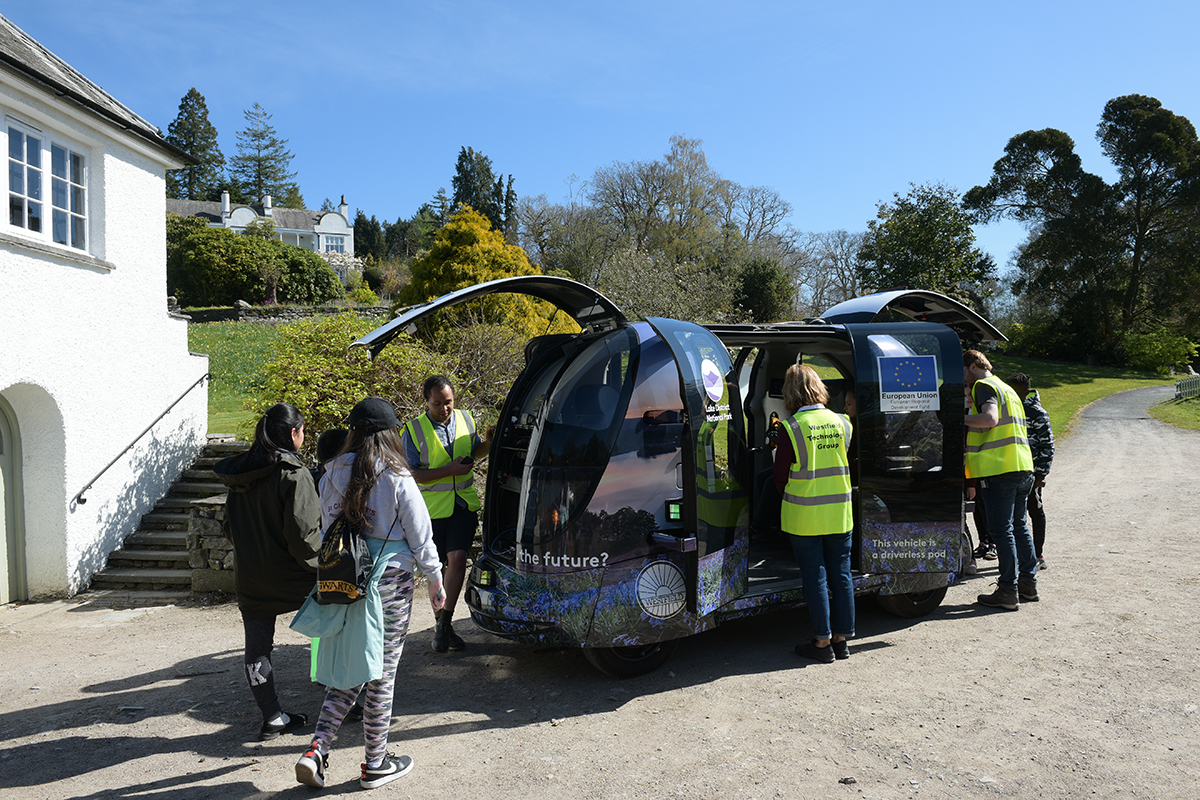
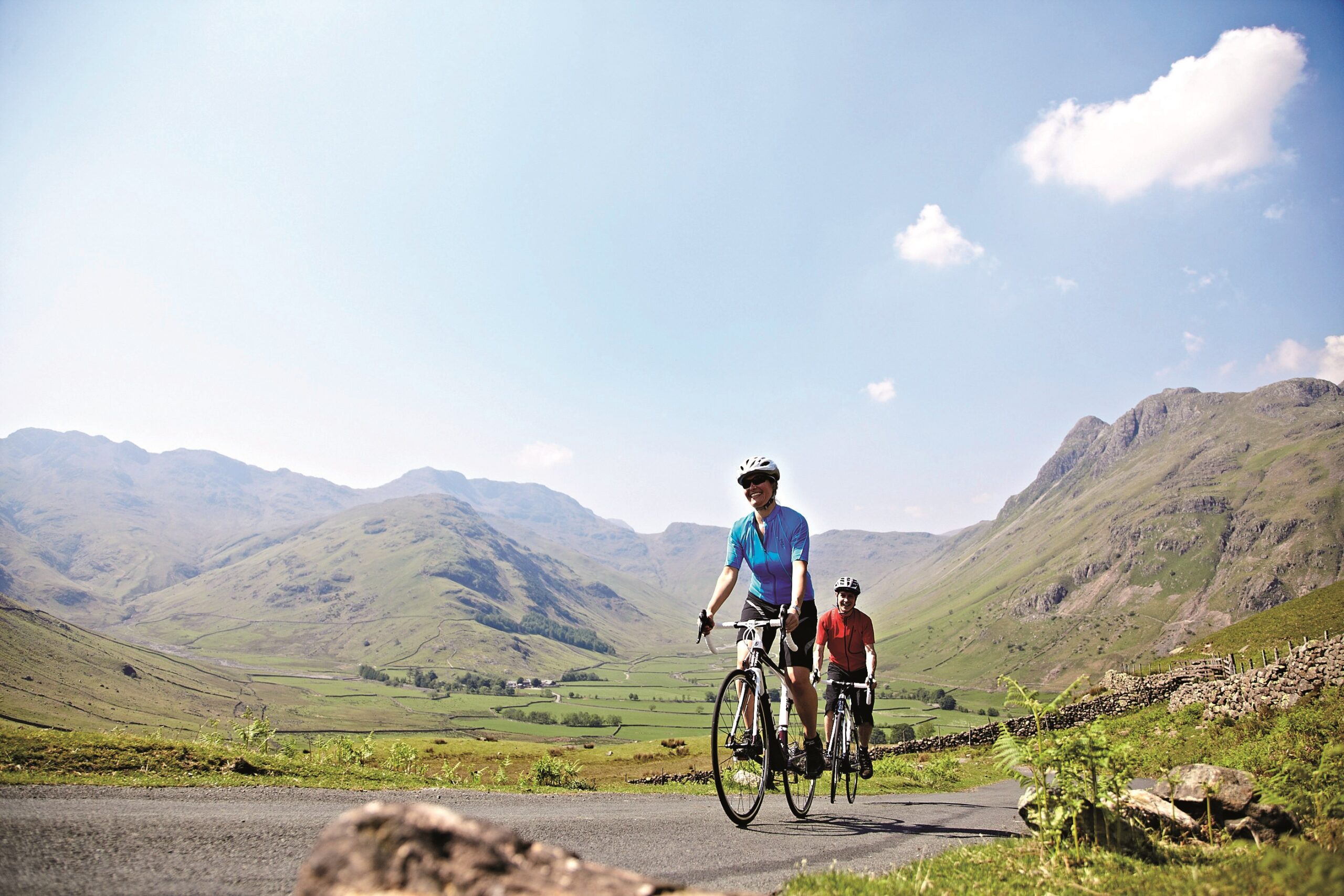
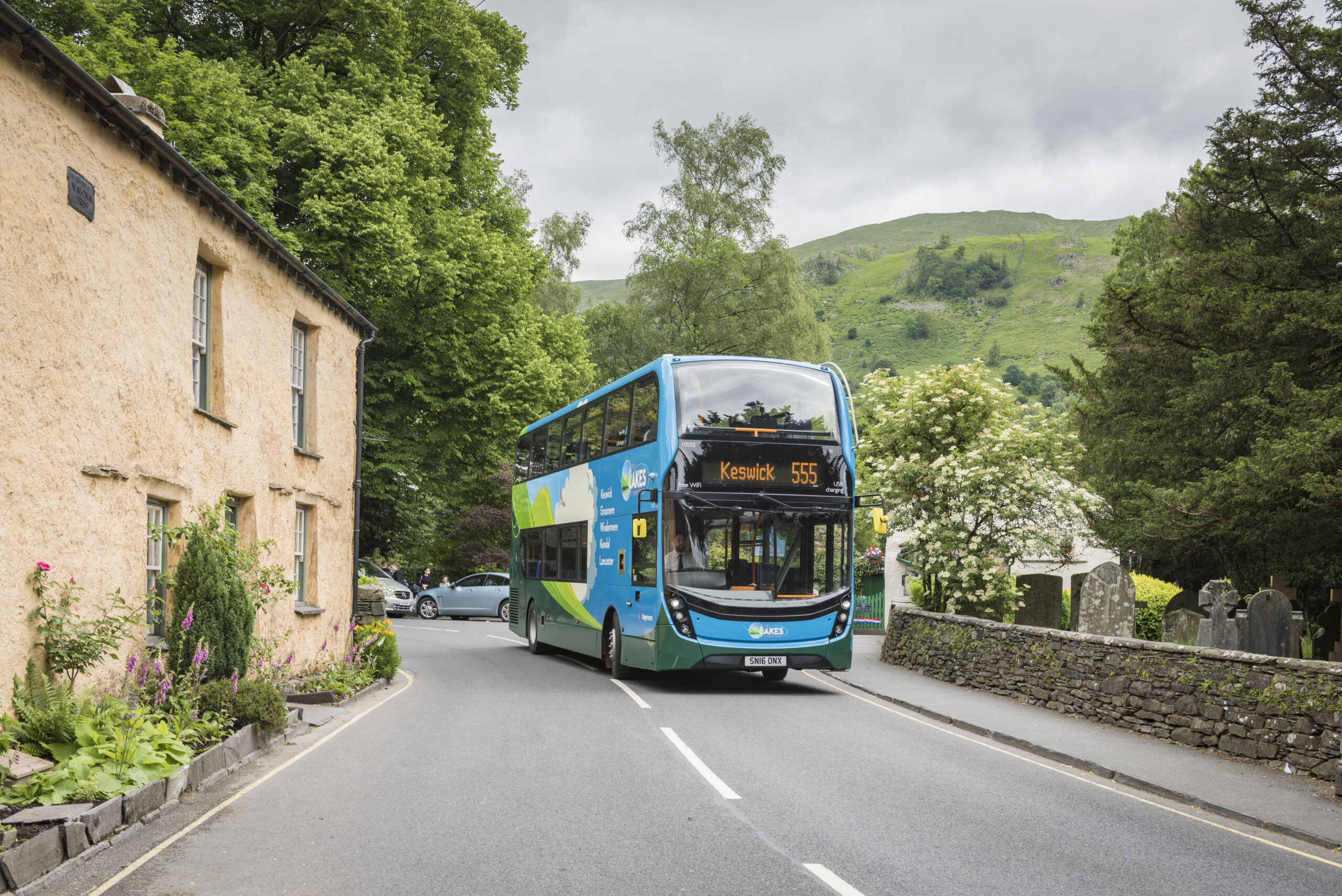
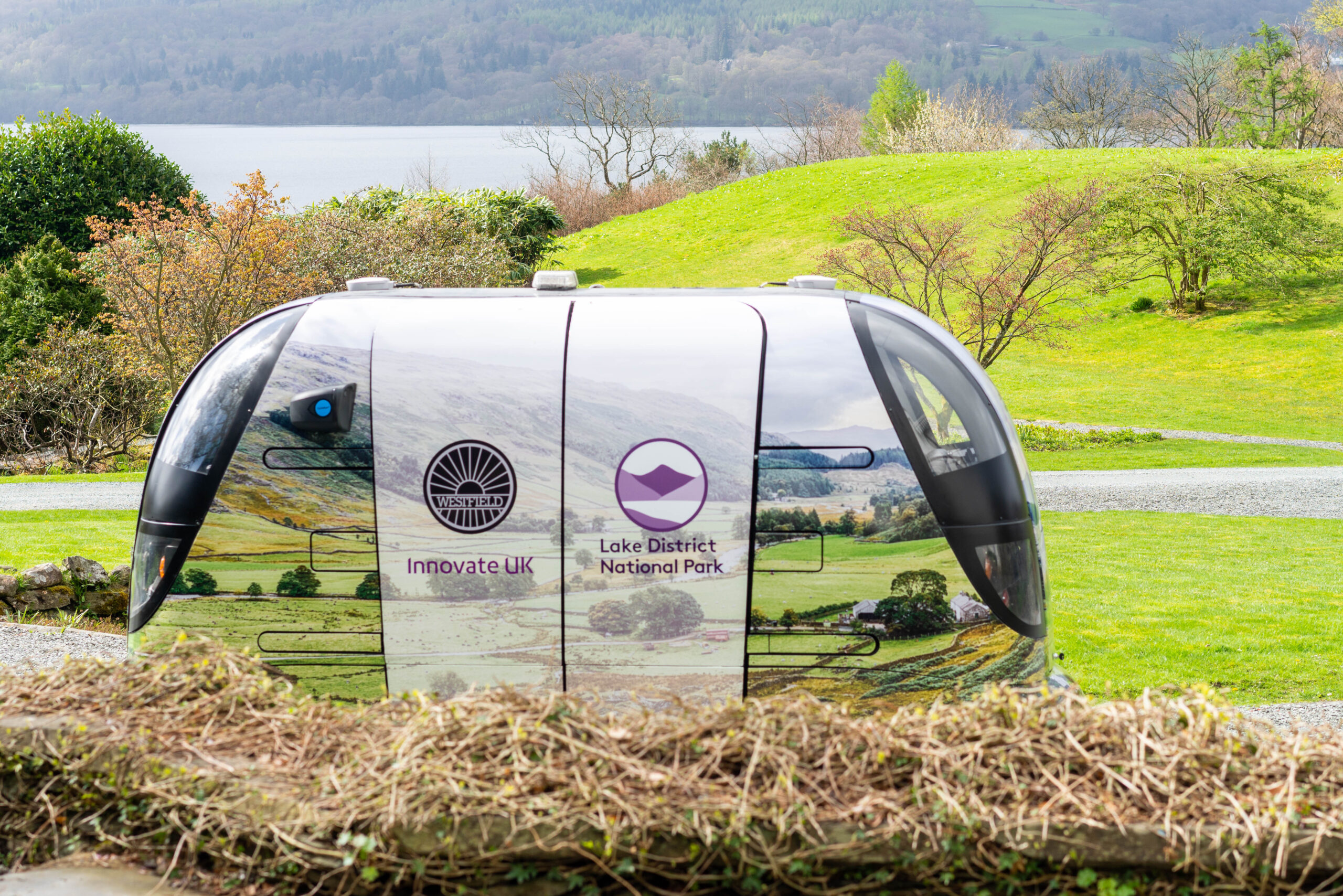
The Lake District National Park works to protect and maintain the National Park environment whilst also encouraging visitors to enjoy the area. This trial is part of wider work to reduce carbon emissions and enable people to travel sustainably. This sustainable travel includes rail, bus, lake cruises cycling and walking but we are also exploring new technologies that allow people to access the National Park. The PODs are electric and in future will be on-demand, offering a sustainable, flexible and convenient mobility solution. This trial is to see how we could take advantage of this technology to reduce carbon emissions, enable people to get around the Lake District without a car and improve the quality of life for people that live here and the 19 million visitors who come here every year.
The PODs can be shared by multiple passengers, reducing the need to rely solely on a privately-owned vehicle, and will help us to move from a world where people feel they need to own a car to one of shared transport, saving road and parking space. The PODs operate on an on-demand basis, offering a reliable and convenient mobility option for travellers. Whilst it is operating fixed routes for this trial, the technology is being developed to enable them to be called from a smartphone and a destination chosen. The POD can also connect up with other vehicles to work in a ‘virtual train’ to minimise congestion and improve efficiencies of aero dynamics.
For the past 10 years the Lake District National Park have been working to reduce greenhouse gas emissions which lead to climate change. We are aiming toward Net Zero Carbon by 2037. As part of this we are delivering this Low Carbon Lake District, which is funded by the European Regional Development Fund. As well as the POD this project also contributed towards the reconnection of the four mile trail between Keswick and Threlkeld, and developing renewable energy supplies and energy efficiency at Brockhole.
Read more about low carbon Lake District.