
Statement of Outstanding Universal Value
Brief synthesis
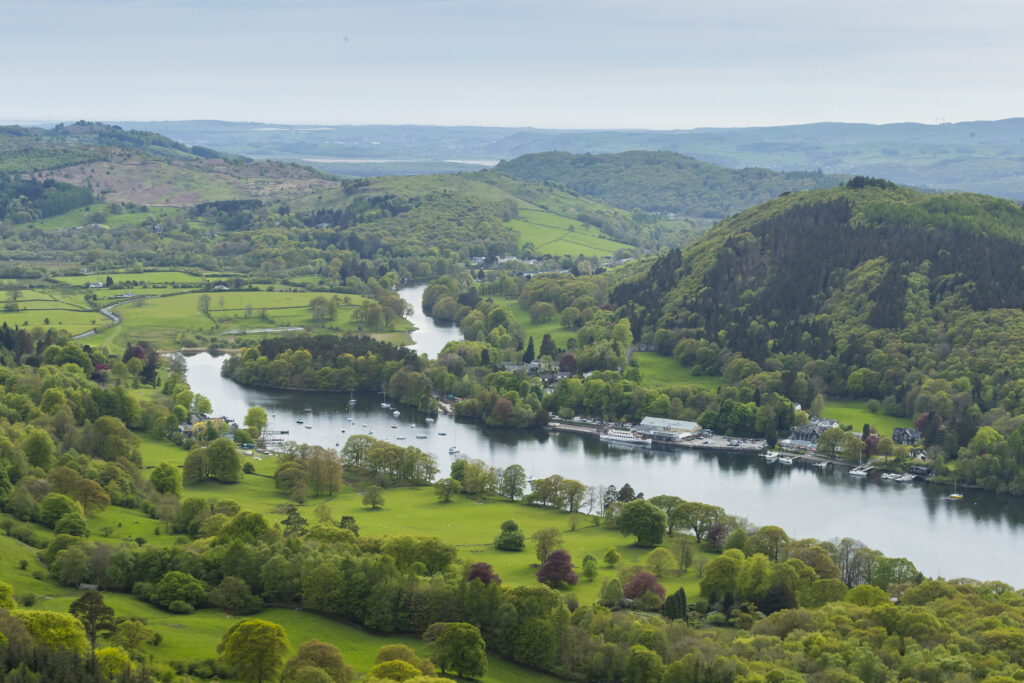
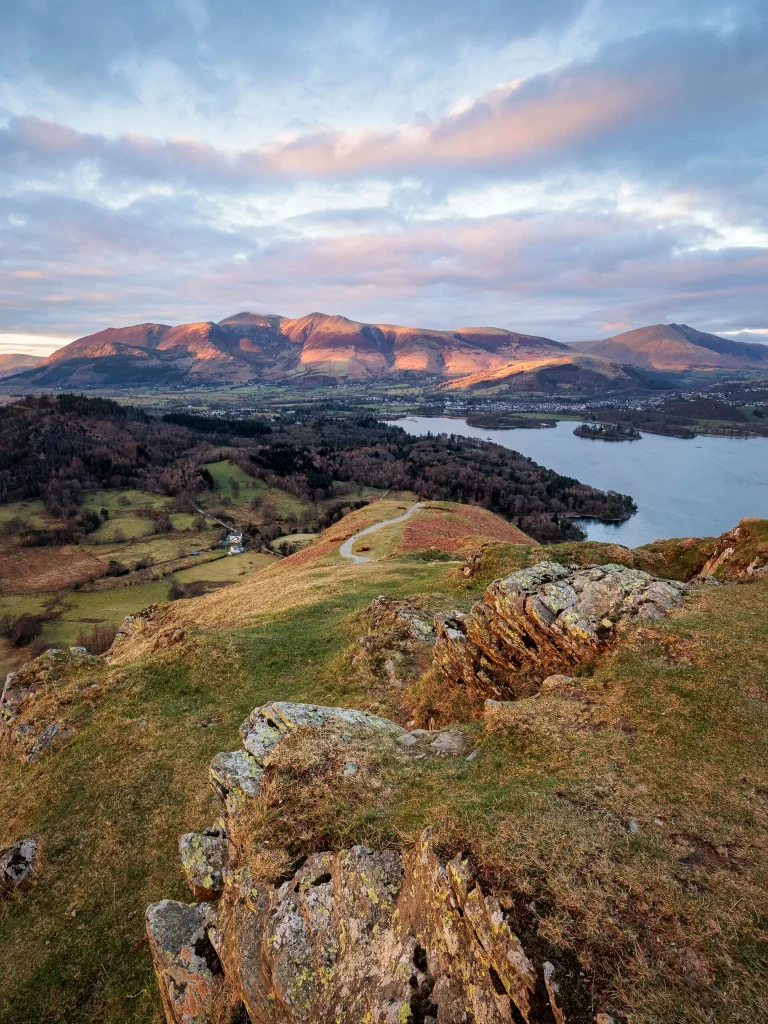
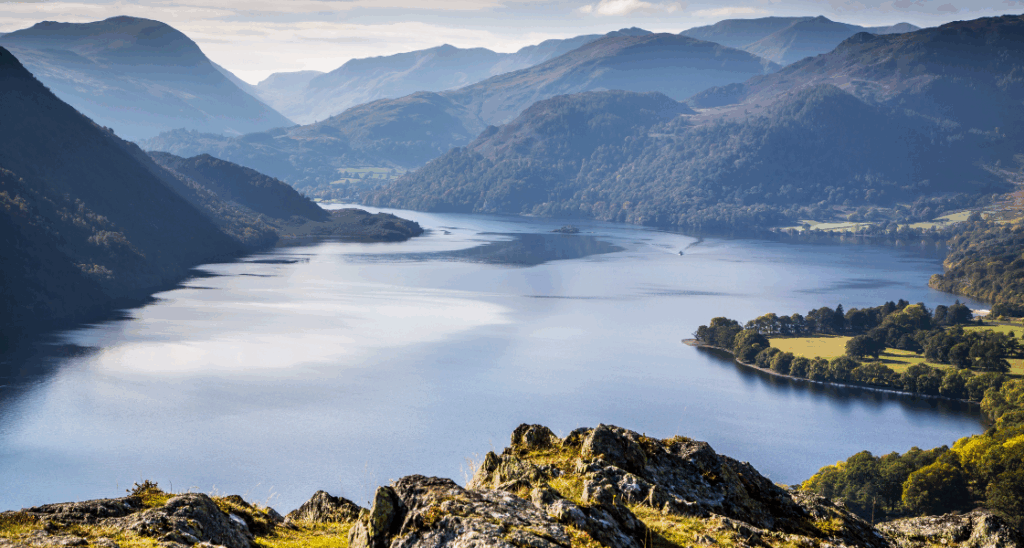
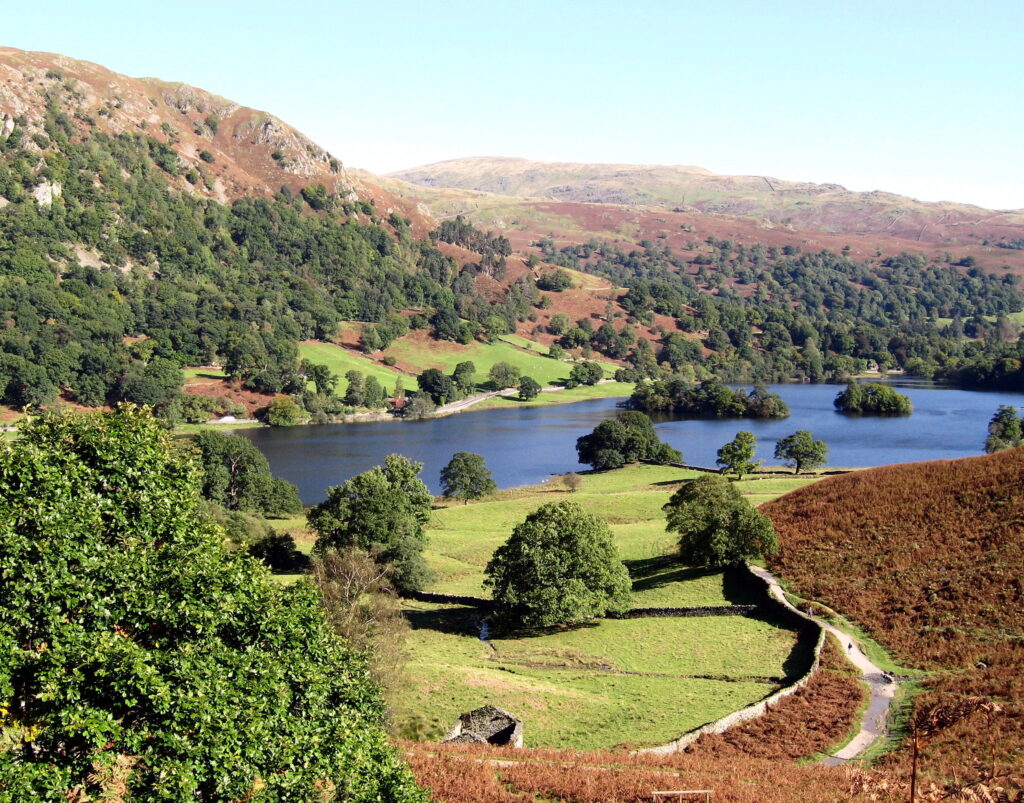
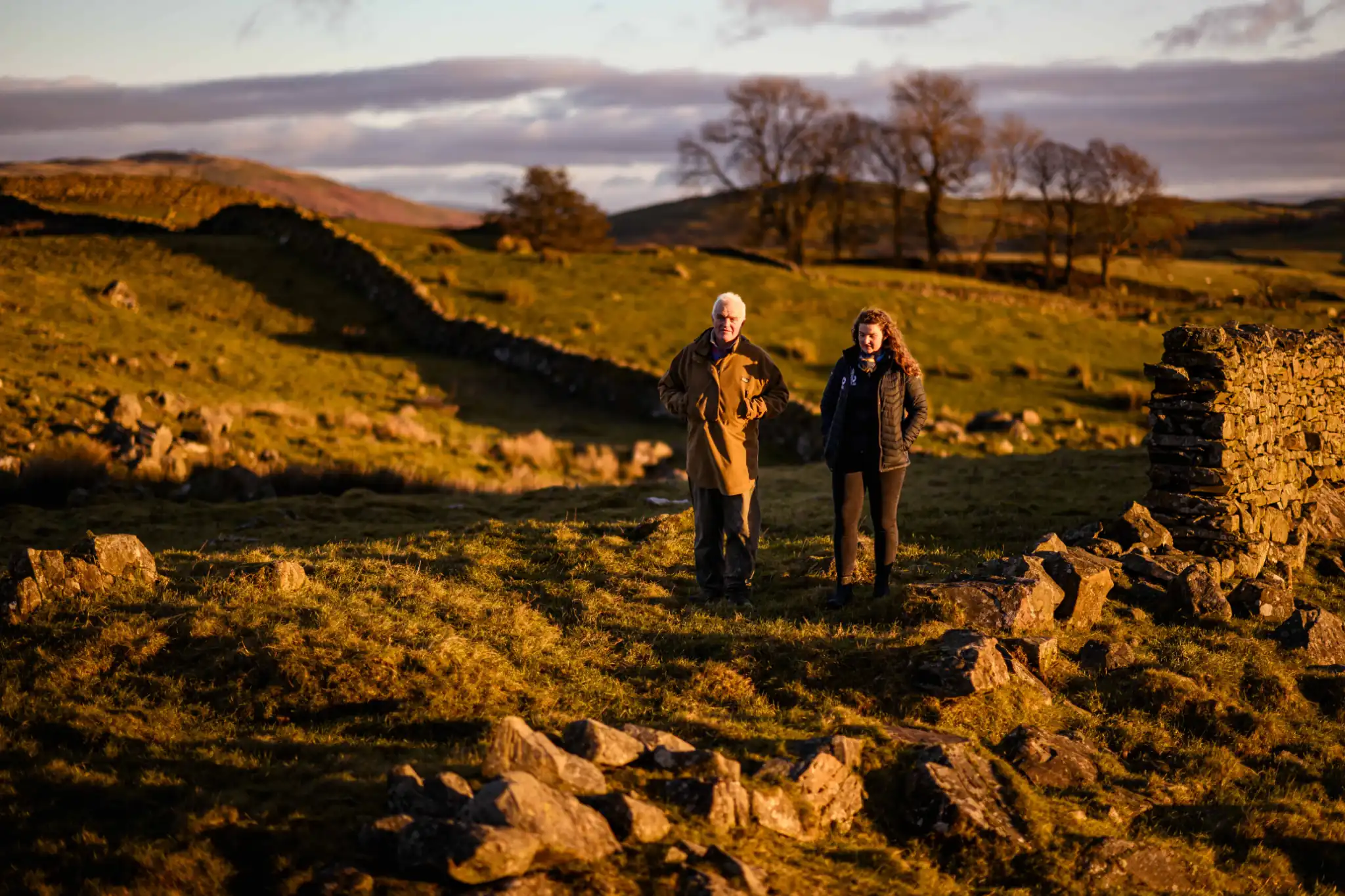
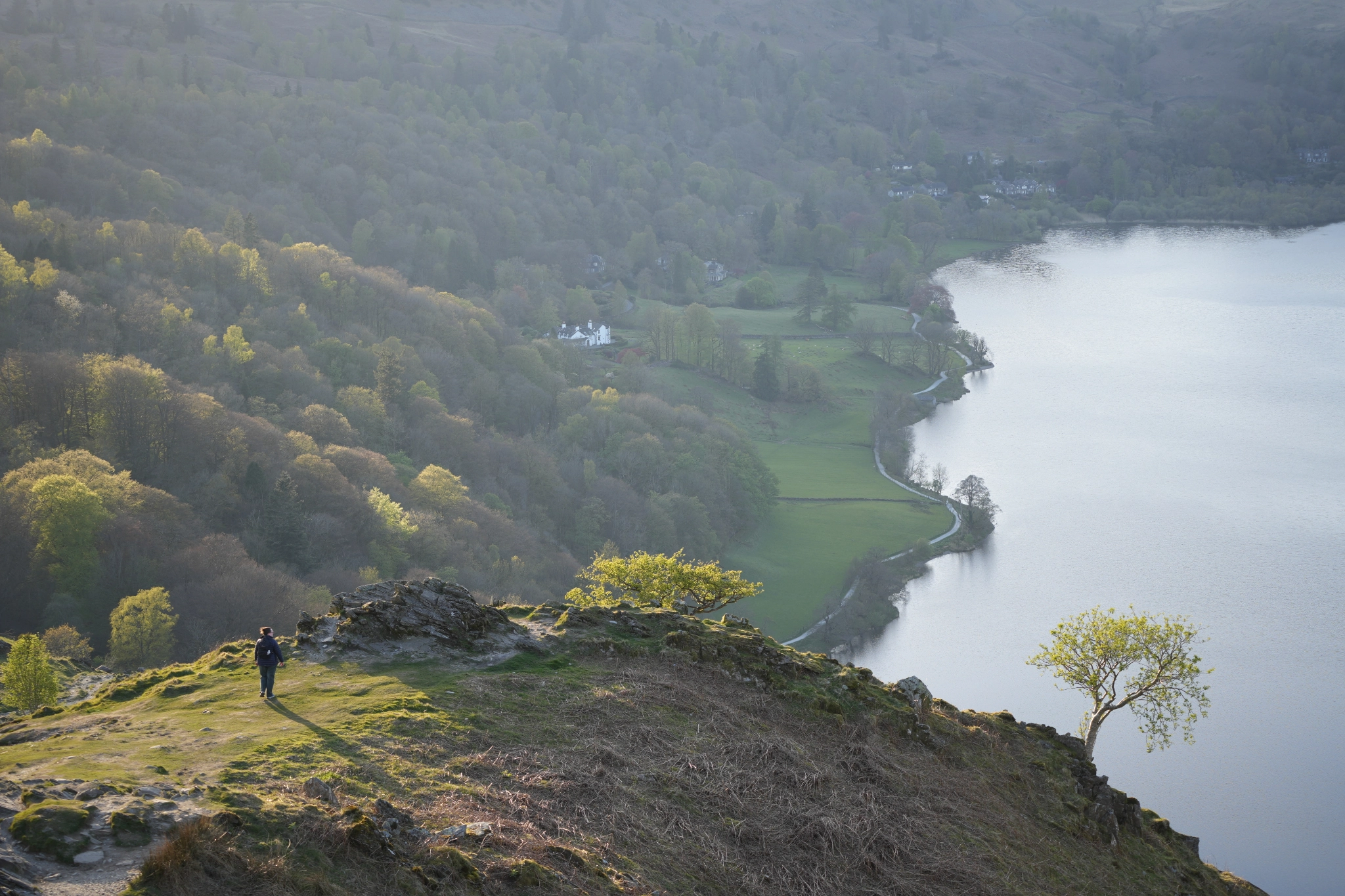
The English Lake District is a self-contained mountainous area in North West England of some 2,292 square kilometres. Its narrow, glaciated valleys radiating from the central massif with their steep hillsides and slender lakes exhibit an extraordinary beauty and harmony. This is the result of the Lake District’s continuing distinctive agro-pastoral traditions based on local breeds of sheep including the Herdwick, on common fell-grazing and relatively independent farmers. These traditions have evolved under the influence of the physical constraints of its mountain setting.
The stone-walled fields and rugged farm buildings in their spectacular natural backdrop, form an harmonious beauty that has attracted visitors from the 18th century onwards. Picturesque and Romantic interest stimulated globally-significant social and cultural forces to appreciate and protect scenic landscapes. Distinguished villas, gardens and formal landscapes were added to augment its picturesque beauty.
The Romantic engagement with the English Lake District generated new ideas about the relationship between humanity and its environment, including the recognition of harmonious landscape beauty and the validity of emotional response by people to their landscapes. A third key development was the idea that landscape has a value, and that everyone has a right to appreciate and enjoy it.
These ideas underpin the global movement of protected areas and the development of recreational experience within them. The development in the English Lake District of the idea of the universal value of scenic landscape, both in itself and in its capacity to nurture and uplift imagination, creativity and spirit, along with threats to the area, led directly to the development of a conservation movement and the establishment of the National Trust movement, which spread to many countries, and contributed to the formation of the modern concept of legally-protected landscapes.
Criterion (ii): The harmonious beauty of the English Lake District is rooted in the vital interaction between an agro-pastoral land use system and the spectacular natural landscape of mountains, valleys and lakes of glacial origins. In the 18th century, the quality of the landscape was recognised and celebrated by the Picturesque Movement, based on ideas related to both Italian and Northern European styles of landscape painting. These ideas were applied to the English Lake District in the form of villas and designed features intended to further augment its beauty. The Picturesque values of landscape appreciation were subsequently transformed by Romantic engagement with the English Lake District into a deeper and more balanced appreciation of the significance of landscape, local society and place. This inspired the development of a number of powerful ideas and values including a new relationship between humans and landscape based on emotional engagement; the value of the landscape for inspiring and restoring the human spirit; and the universal value of scenic and cultural landscapes, which transcends traditional property rights. In the English Lake District these values led directly to practical conservation initiatives to protect its scenic and cultural qualities and to the development of recreational activities to experience the landscape, all of which continue today. These values and initiatives, including the concept of protected areas, have been widely adopted and have had global impact as an important stimulus for landscape conservation and enjoyment. Landscape architects in North America were similarly influenced, directly or indirectly, by British practice, including Frederick Law Olmsted, one of the most influential American landscape architects of the 19th century.
Criterion (v): Land use in the English Lake District derives from a long history of agro-pastoralism. This landscape is an unrivalled example of a northern European upland agro-pastoral system based on the rearing of cattle and native breeds of sheep, shaped and adapted for over 1,000 years to its spectacular mountain environment. This land use continues today in the face of social, economic and environmental pressures. From the late 18th century and throughout the 19th century, a new land use developed in parts of the Lake District, designed to augment its beauty through the addition of villas and designed landscapes. Conservation land management in the Lake District developed directly from the early conservation initiatives of the 18th and 19th centuries. The primary aims in the Lake District have traditionally been, and continue to be, to maintain the scenic and harmonious beauty of the cultural landscape; to support and maintain traditional agro-pastoral farming; and to provide access and opportunities for people to enjoy the special qualities of the area, and have developed in recent times to include enhancement and resilience of the natural environment. Together these surviving attributes of land use form a distinctive cultural landscape which is outstanding in its harmonious beauty, quality, integrity and on-going utility and its demonstration of human interaction with the environment. The English Lake District and its current land use and management exemplify the practical application of the powerful ideas about the value of landscape which originated here and which directly stimulated a landscape conservation movement of global importance.
Criterion (vi): A number of ideas of universal significance are directly and tangibly associated with the English Lake District. These are the recognition of harmonious landscape beauty through the Picturesque Movement; a new relationship between people and landscape built around an emotional response to it, derived initially from Romantic engagement; the idea that landscape has a value and that everyone has a right to appreciate and enjoy it; and the need to protect and manage landscape, which led to the development of the National Trust movement, which spread across many countries with a similar rights system. All these ideas that have derived from the interaction between people and landscape are manifest in the English Lake District today and many of them have left their physical mark, contributing to the harmonious beauty of a natural landscape modified by: a persisting agro-pastoral system (and supported in many cases by conservation initiatives); villas and Picturesque and later landscape improvements; the extent of, and quality of land management within, the National Trust property; the absence of railways and other modern industrial developments as a result of the success of the conservation movement.
Integrity
The English Lake District World Heritage property is a single, discrete, mountainous area. All the radiating valleys of the English Lake District are contained within it. The property is of sufficient size to contain all the attributes of Outstanding Universal Value needed to demonstrate the processes that make this a unique and globally-significant property. The boundary of the property is the Lake District National Park boundary as designated in 1951 and is established on the basis of both topographic features and local government boundaries. The attributes of Outstanding Universal Value are in generally good condition. Risks affecting the site include the impact of long-term climate change, economic pressures on the system of traditional agro-pastoral farming, changing schemes for subsidies, and development pressures from tourism. These risks are managed through established systems of land management overseen by members of the Lake District National Park Partnership and through a comprehensive system of development management administered by the National Park Authority.
Authenticity
As an evolving cultural landscape, the English Lake District conveys its Outstanding Universal Value not only through individual attributes but also in the pattern of their distribution amongst the 13 constituent valleys and their combination to produce an over-arching pattern and system of land use. The key attributes relate to a unique natural landscape which has been shaped by a distinctive and persistent system of agro-pastoral agriculture and local industries, with the later overlay of distinguished villas, gardens and formal landscapes influenced by the Picturesque Movement; the resulting harmonious beauty of the landscape; the stimulus of the Lake District for artistic creativity and globally influential ideas about landscape; the early origins and ongoing influence of the tourism industry and outdoor movement; and the physical legacy of the conservation movement that developed to protect the Lake District.
Protection and management requirements
As a National Park, designated under the ‘National Parks and Access to the Countryside Act 1949’ and subsequent legislation, the English Lake District has the highest level of landscape protection afforded under United Kingdom law. Over 20 per cent of the site is owned and managed by the National Trust, which also has influence over a further two per cent of the site through legal covenants. The National Park Authority owns around four per cent of the site, and other members of the Lake District National Park Partnership, including the Forestry Commission and United Utilities Ltd, own a further 16 per cent. A substantial number of individual cultural and natural sites within the English Lake District are designated and have legal protection. The Lake District National Park Partnership has adopted the bid for World Heritage nomination. This provides long-term assurance of management through a World Heritage Forum (formally a sub-group of the Partnership). The National Park Authority has created a post of World Heritage Coordinator and will manage and monitor implementation of the Management Plan on behalf of the Partnership. The Management Plan will be reviewed every five years. A communications plan has been developed in order to inform residents and visitors of the World Heritage bid and this will be developed and extended. The Management Plan seeks to address the long-term challenges faced by the property including threats faced by climate change, development pressures, changing agricultural practices and diseases, and tourism.
Attributes of Outstanding Universal Value
As a World Heritage Site, the Lake District National Park has attributes (features of interest or traditions) which are aspects of a World Heritage Site that are associated with or express the Outstanding Universal Value as set out in the Statement of Outstanding Universal Value.
The Lake District National Park Partnership has agreed the attributes below and the measurable indicators for each one, so that they can be monitored to make sure that we are looking after the World Heritage Site.
A landscape of exceptional beauty, shaped by persistent and distinctive agro-pastoral and local industry which gives it special character.
- The physical natural landscape of mountains, rivers, lakes, and valleys.
- The physical cultural landscape in the main the product of agro-pastoralism, settlements and local industry, including woodlands.
- The variety and combination of differing landscape characters and physical attributes of each of the 13 valleys.
- Evidence, intactness, and legibility of settlements and the agro pastoral character and function of the field systems and their waterways.
- Farmsteads and Farmhouses.
- Shepherds meets/shows and traditional sports.
- The unique practices of the agro-pastoral farming system.
- The surviving physical and social elements of hill farming e.g. shepherding and common gathering.
- Local techniques of landscape maintenance (stonewalling, hedging, pollarding).
- Local management and governance of Lake District farming systems, e.g. activities of breeders associations and commons committees.
- Common land and the long standing and continuing traditions of Common land management.
- Semi-natural habitats created and sustained as a result of a continuing agro-pastoral systems, for example hay meadows, pollards, wood pasture, and coppiced woodland. The mosaic of semi natural habitats above the fell wall within an actively grazed landscape.
- Ancient Semi-Natural Woodlands.
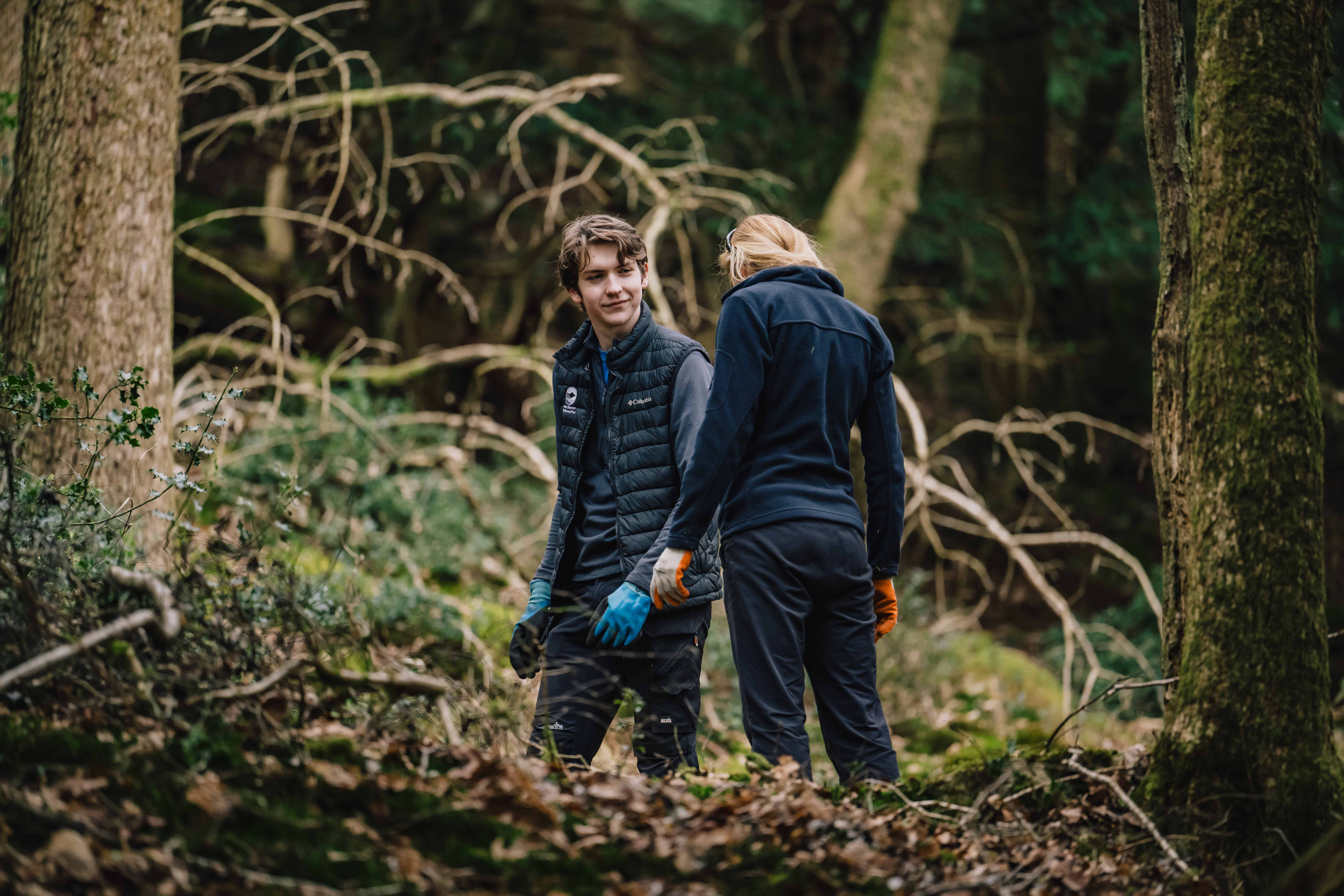
- Traditional local woodland industries, people and skills.
- The physical remains of past woodland industries, buildings, structures (i.e. Bark Barns, Charcoal Sheds).
- The physical remains of historic mines and quarries which have shaped the landscape.
- The English Lake District’s settlement pattern of individual farms, small hamlets, large villages and market towns, historically derived and functionally.
- Medieval buildings.
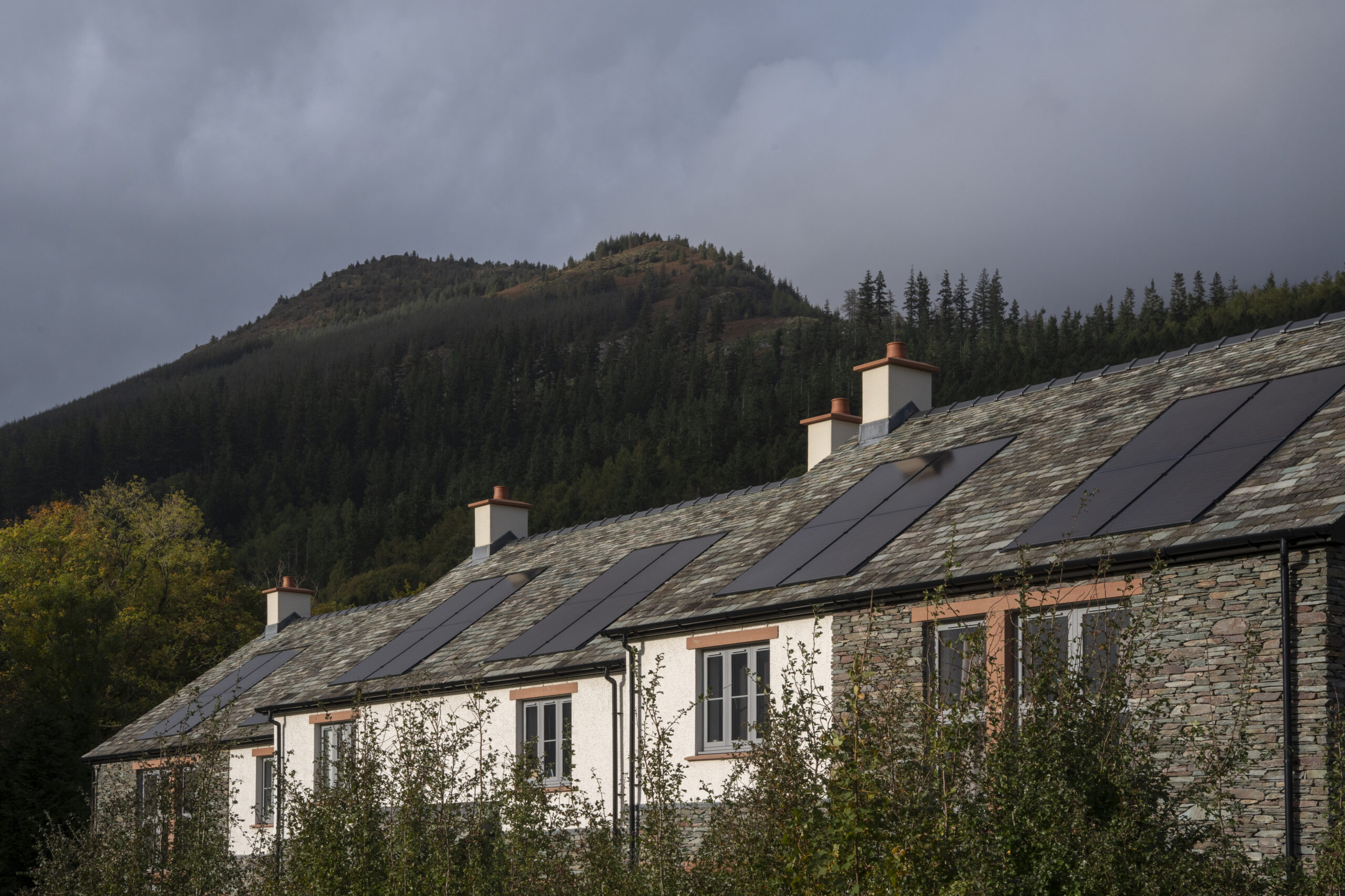
- Vernacular buildings.
A landscape which has inspired artistic and literary movements and generated ideas about landscapes that have had global influence and left their physical mark.
- Places and collections associated with early tourism.
- Early tourist infrastructure.
- The location of viewing stations, including structures in very limited cases.
- Other key views that form the image of the Lake District.
- The values, aesthetic ideals and perceptions which led to the creation of early tourism.
- Villa Landscapes – their buildings, gardens and surrounding designed landscapes.
- The values, aesthetic ideals and perceptions which led to their creation.
- Physical designed landscapes.
- Residences and places associated with significant writers and poets.
- Key literary and artistic associations with Landscape. Surviving landscape which inspired literature and art.
- The value and significance of ideas and writings of writers and poets and artist.
- Perception and enjoyment of sites and collections associated with Picturesque and Romanticism.
- Key associations with the origins of the outdoor movement.
- Buildings linked to early outdoor holiday movement.
- Surviving landscape which inspired early climbing, outdoors recreation and the early outdoor holiday movement.
- The Romantic emphasis on outdoor activity and experience – principally walking.
- The open access to the Lake District Fells and lakes for recreation.
A landscape which has been the catalyst for key developments in the national and international protection of landscapes.
- Areas of the World Heritage property where historic landscape conservation battles were both won and lost.
- The idea of landscape conservation inspired by the English Lake District landscape and the universal value of scenic and cultural landscape transcending traditional property rights.
- The landscape is protected for its scenic and cultural value and is protected for the Nation.
- The perception that the landscape is protected for its scenic and cultural value and is protected for the Nation by public and state support.
- Properties owned or managed by the National Trust.
- The knowledge and perception that the creation of the National Trust was inspired by the English Lake District.
- Landscapes owned and sympathetically managed to sustain our Outstanding Universal Values by the Partnership and other landscape conservation bodies.
- Farms and land purchased by individuals and public subscription to protect the landscape and our Outstanding Universal Values e.g. traditional farming.
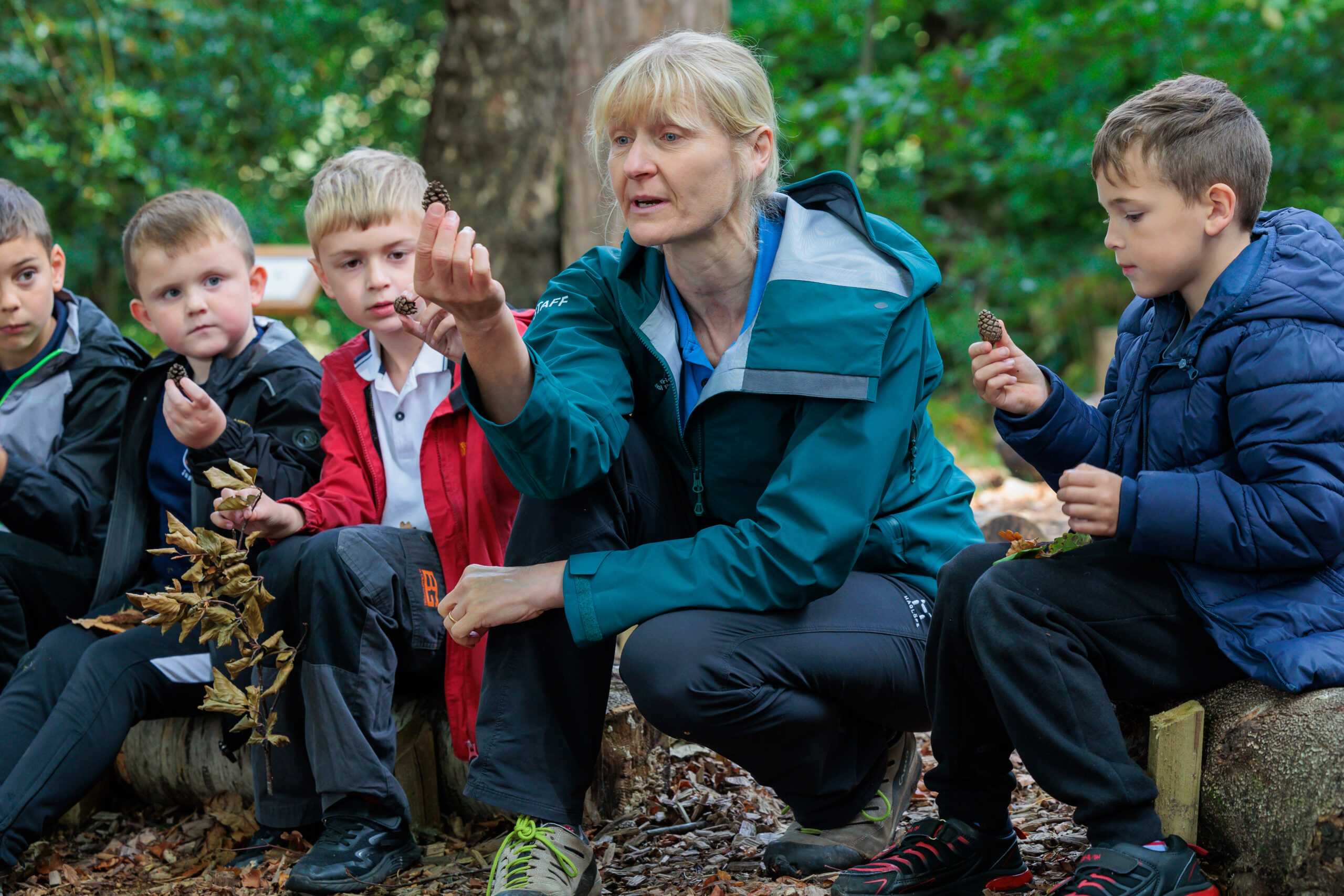
- Organisations and public participating in landscape conservation.
- The perception and enjoyment of an open landscape.
- The ability to feel the values, ideas and perceptions of harmonious beauty and other significance derived from the Picturesque and Romantic traditions specific to the English Lake District.
- The value of landscape for restoring the human spirit and wellbeing.
- Opportunities for quiet enjoyment and spiritual refreshment.